
Rakuten Ichiba opened with 13 stores. Six people traveling the country signed up only about 5 a month
Rakuten's official timeline says Rakuten Ichiba opened in May 1997 with six employees, one server and 13 stores. Hiroshi Mikitani recalled in his own essay that even with six staff visiting shops across Japan, they won only about five stores a month. A compilation says the store fee was a fixed ¥50,000 a month with six months paid in advance. In December 1998, a year and seven months later, there were about 320 stores.
By the Small Start editorial desk. We count every case in the archive by hand. The figures belong to the sources. The judgments are ours.
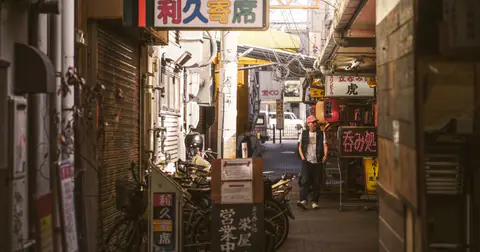
Rakuten Ichiba rode the internet wave and filled up with shops right away, didn't it?
The founder’s own numbers point the other way.
Five stores a month.
- A timeline from the opening day's six people, one server and 13 stores to about 1,800 stores
- What six people traveling the country for five stores a month tells you
- Our reading of how a fixed ¥50,000 monthly fee, prepaid six months ahead, carried slow sales
- What the sources confirm, and what they don't
Rakuten Ichiba opened in May 1997.
Rakuten’s official timeline records that day’s setup in three numbers: six employees, one server, 13 stores.
How did it grow from those 13 stores? In a 2010 essay of his own, Hiroshi Mikitani looked back.
Even with six staff visiting shops around the country, they could win only about five stores a month.
Reckoned backwards from Rakuten Ichiba’s size today, the number is too small to notice.
Yet six people traveling the country for five stores a month shows clearly where an online mall first spent its time.
This column lays the official timeline, Mikitani’s essay and a third-party compilation side by side. It reads how the store count moved from opening to the over-the-counter listing.
Listed companies fall outside the criteria for case articles, so it’s handled as a column rather than a case.
From 13 stores to about 1,800
| When | What happened | Figures | Source |
|---|---|---|---|
| February 1997 | MDM Inc. founded in Minato, Tokyo | capital ¥10 million | securities report |
| May 1997 | Rakuten Ichiba opens | 6 employees, 1 server, 13 stores | official timeline |
| Right after opening | Six people visit shops nationwide | about 5 stores a month | Mikitani’s essay |
| From opening | Fixed monthly store fee, six months prepaid | ¥50,000 a month | third-party compilation |
| December 1998 | about 320 stores | third-party compilation | |
| June 1999 | Renamed Rakuten, Inc. | securities report | |
| 1999 | about 1,800 stores | third-party compilation | |
| April 2000 | Registered for over-the-counter trading | raised about ¥49.5 billion | securities report, third-party compilation |
The three opening-day numbers are in the official timeline, and five a month is in Mikitani’s own essay.
The store fee and store counts from 1998 on come from a third-party compilation citing Nikkei Business and others. They weren’t confirmed in company documents.
It had the server. What it lacked were shops
According to the third-party compilation, Mikitani came from the Industrial Bank of Japan and left it in May 1996.
MDM was founded in February 1997, when he was 31.
Nine months passed from leaving the bank to founding the company, and three more from founding to opening Rakuten Ichiba.
The securities report gives the company’s purpose as developing servers for online commerce and running Rakuten Ichiba.
So the company began by building, for itself, the system that would let shops sell online. It did that before gathering any shops.
On opening day it had one server.
What it lacked were the shops to line up on it.
Six people traveling the country, five stores a month
According to Mikitani’s essay, large companies were struggling with online shopping malls at the time, and people around him were negative.
He writes that he too was told “it can’t possibly work.” Even so, he visited small and medium shops across the country himself to sell.
Divide five stores a month by six people.
That’s under one store per person per month.
Travel the country, listen to shop owners, get them to decide to open a store. Each signing took that much time.
In the essay, Mikitani writes that as he listened to shop owners, he came to feel online shopping could invigorate small regional shops.
The slowness of five a month was also the number of times the founder talked directly with shop owners.
A fixed ¥50,000 a month, six months in advance
According to the third-party compilation, Rakuten Ichiba’s store fee was a fixed ¥50,000 a month.
The same compilation says malls run by department stores charged in units of ¥1 million a month. And merchants paid six months in advance.
From the merchant’s side, six months at ¥50,000 is ¥300,000. For a small shop, that keeps the up-front cost of opening online within reach.
From the mall’s side, every time a shop signed, six months of cash came in first.
What follows is inference. We read this prepayment as a large part of what let the company keep running while it grew by only five stores a month. If each signing takes time, collect the cash from that signing first. A low fixed fee plus prepayment looks like a design that absorbed both slow sales and thin funds.
No material in which the company or Mikitani explains the effect of prepayment was read, though. This remains our reading.
About 320 stores in a year and seven months, with a gap in between
According to the compilation, the store count reached about 320 by December 1998.
That’s roughly 25 times the 13 stores, in a year and seven months from opening. By 1999 it had grown to about 1,800.
The same compilation says the company posted ordinary profits for two consecutive years from the year ended December 1998. In the year the store count reached about 320, the company was starting to turn a profit.
At five stores a month, 320 stores would be out of reach in a year and seven months.
The pattern of growth must have changed somewhere.
What changed isn’t written in the sources read. Mikitani’s essay tells of the five-store period, and the compilation records the results of 320 and 1,800. Nothing found connects the two.
What we can state plainly is the order.
Rakuten Ichiba’s first year and a half consisted of building the system, then time spent by people visiting shops one at a time.
One server was enough. What was short were the shops, and the feet of six people filled that gap.
- February 1997: founded with ¥10 million
Before gathering shops, it builds the servers that let shops sell online.
- May 1997: opens with 13 stores
Six people travel the country for about five stores a month.
- December 1998: about 320 stores
Two straight years of ordinary profit begin. By 1999, about 1,800 stores.
- April 2000: over-the-counter listing
Less than three years after opening, it raises about ¥49.5 billion.
That’s the range of its first three years, for a company that started with ¥10 million of capital.
A mall that began as a shop found its first users differently
Even among companies that built systems for shops, the starts differ.
Shopify began with software its founders wrote for their own snowboard shop. They were the shop, so they didn’t need to go looking for their first user.
Rakuten Ichiba began as a company that wasn’t a shop, gathering shops. It found its first users by visiting them one at a time.
The list setting Rakuten beside other legendary companies is in the column tracing 22 founding stories to their sources.
What could not be confirmed
The ¥50,000 monthly fee, six months of prepayment, the comparison with department-store malls and the store counts from 1998 on come from a third-party compilation. They weren't confirmed in Rakuten's official materials or in the free portion of Mikitani's essay. That compilation dates the roughly 1,800 stores to June 1999 in its timeline and December 1999 in its text. The widely known story that gross merchandise sales in the first month were ¥320,000 couldn't be confirmed in readable sources and isn't used here.
The number five a month survives
Seen after its success, Rakuten Ichiba’s founding looks like riding a great wave of the internet.
What the official timeline keeps are small numbers: six people, one server, 13 stores. What the founder’s essay keeps is the slowness of traveling the country for five stores a month.
A mall’s value is set by its number of shops.
What first gathered those shops was neither a server nor advertising. It was the number of times six people went to meet shop owners.
The founder wrote that slowness down himself, in numbers. We consider it the most valuable record of this company’s founding years.
If this one impressed you
This column is the editorial desk's own reading of the cases published on Small Start (all public information, all sourced) and of other public information. It is not a recommendation of any particular business, investment or side venture.
Read more columns →Most read
- 1
Chiikawa took ¥16.85 billion at the box office in 66 days. It started on a shelf anyone could stock
24 recent visits - 2
AdSense pays ¥386 per 1,000 pageviews. What 225 blogs sold on Rakko M&A say about the distance between PV and revenue
13 recent visits - 3
In the 1960s Nintendo ran taxis and sold instant rice, then pulled out by 1969. Neither appears in its official history
- 4
In 1982, SoftBank founder Masayoshi Son was diagnosed with chronic hepatitis. Before he recovered, the company hired an outside president
- 5
Nidec began with 4 employees in a prefab hut. The hut now sits on the ground floor of its headquarters, beside the life insurance policy pledged for a loan
Latest articles
- 2026-11-07
In Kyocera's third year, 11 high-school hires demanded guaranteed pay. Kazuo Inamori was not even president of the ¥3 million company
- 2026-11-06
Uniqlo's first store closed in 1991, and its official timeline says so. The Shimonoseki prototype store shut the same year
- 2026-11-05
Sony's first consumer product cost ¥160,000, more than 80% of the company's ¥190,000 capital
- 2026-11-04
Konosuke Matsushita's first product sold under ¥10 in ten days. What kept the business alive was ¥80 of profit on 1,000 parts ordered by another firm
- 2026-11-03
Honda imported ¥400M of machine tools in a year its capital was ¥60M. Its first product reused surplus army engines
Sources
- Founder 楽天グループ公式の25周年年表。1997年2月に株式会社エム・ディー・エムを設立、同年5月に楽天市場を開設、従業員6人・サーバー1台・13店舗でスタート。1999年に楽天株式会社へ社名変更、2000年に株式公開、2002年に楽天ポイント開始
- Founder 有価証券報告書の【沿革】。1997年2月にオンラインコマースサーバーの開発と楽天市場の運営を目的として、資本金1,000万円で東京都港区に株式会社エム・ディー・エムを設立。1997年5月に楽天市場のサービス開始、2000年4月に店頭登録
- Founder PRESIDENT Online(2012年1月31日、初出『プレジデント』2010年2月15日号)、三木谷浩史の寄稿の無料公開部分。創業時の出店数は13店舗、スタッフ6人で全国の店舗を回っても月に獲得できたのは5店舗ほど、「うまくいくはずがない」と言われた
- Reported 有価証券報告書(沿革)、日経ビジネス2000年10月23日号などを典拠とする整理。三木谷氏は元日本興業銀行で1996年5月に退職、設立時31歳。出店料は月額5万円の固定、半年分の前払い。店舗数は1997年5月13店、1998年12月約320店、1999年に約1,800店(年表は6月、本文は12月と食い違い)。1998年12月期から2期連続で経常黒字、2000年4月の店頭公開で約495億円を調達
This article summarizes and analyzes the public sources above. Please refer to the primary sources for details.