
Honda imported ¥400M of machine tools in a year its capital was ¥60M. Its first product reused surplus army engines
Honda's official history begins in 1946, when Soichiro Honda came across small generator engines from army radio sets and used them to power bicycles. The A-type, with Honda's own engine, came in 1947. Honda Motor was incorporated in 1948 with capital of ¥1M, and in 1952 a company with capital of around ¥60M is recorded as importing ¥400M of machine tools.
By the Small Start editorial desk. We count every case in the archive by hand. The figures belong to the sources. The judgments are ours.
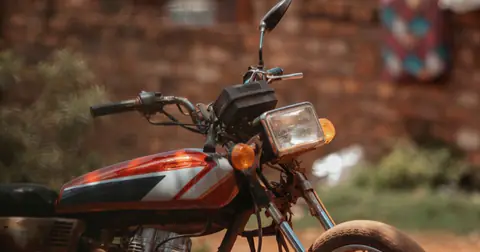
Honda’s official history begins not with an engine Soichiro Honda built but with one he found. In 1946 he happened upon small engines the former army had used to power its radio sets. Thinking that fitted to a bicycle they would make an auxiliary power source, he began building prototypes.
The first product carrying the company’s own engine, the Honda A-type, came out the following year, 1947. Honda’s first business, in other words, was fitting engines someone else had built and no longer needed onto a different use.
Six years later the same company, with capital of around ¥60M, imported ¥400M of machine tools. From leftover engines to buying machinery worth nearly seven times its capital: this column follows those six years through recorded numbers. Listed companies fall outside this site’s criteria for cases, so only the founding years are covered here, as a column.
From the 1946 research institute to the ¥400M of 1952
| When | What happened | Figures | Source |
|---|---|---|---|
| October 1946 | Honda Technical Research Institute founded as a sole proprietorship in Hamamatsu | not stated | explainer site (securities reports and others) |
| 1946 | Finds army radio generator engines and makes them a bicycle auxiliary power unit | not stated | official |
| 1947 | Launches the Honda A-type, Honda’s first original product | not stated | official |
| September 1948 | Honda Motor Co. incorporated | capital ¥1M | explainer site |
| August 1949 | Moves to complete motorcycles with the Dream D-type. Takeo Fujisawa joins | not stated | explainer site |
| 1951 | Announces the “Three Joys” in the company newsletter | not stated | official |
| 1952 | Launches the Cub F-type and expands dealers by mail | from just over 400 to about 13,000 | official |
| 1952 | Imports machine tools | ¥400M, with capital around ¥60M | explainer site (company newsletter) |
The official digest describes the starting point as “34 employees, capital of ¥1 million, a small workshop in Hamamatsu,” but does not say what year that was.
The first year was a business of refitting someone else’s engines
The army’s generator engines were parts that had lost their purpose when the war ended. What Soichiro did was refit them to a different vessel, the bicycle. The technology and equipment to build an engine from scratch did not yet exist; what he had was the idea of tying a leftover to a new use.
The A-type with the company’s own engine came out the next year. What the desk wants to state plainly is that Honda’s first year began as a company that combined things, not one that made them. It tested demand with leftover parts and replaced them with its own product once demand was visible. The order runs opposite to making first and selling later.
The first test rider was his mother
The official history also records who first rode the prototype. Soichiro reportedly told his mother: here’s what I made, go on, ride it. The first user was family, not a market customer.
The same official history preserves words Soichiro published in the company newsletter in 1951: the joy of making, the joy of selling, the joy of buying. Known as the “Three Joys,” these words are recorded not as a recollection after success but as an internal company text from five years after the founding. Setting maker, seller and buyer side by side suits a company that began by combining things.
Engineering and management, split between two people
In August 1949, the same month the Dream D-type took the company into complete motorcycles, Takeo Fujisawa joined. From then on, a division of labour reportedly set in: engineering to Honda, management to Fujisawa.
The founder concentrates on engineering and leaves selling and money to someone else. At the turning point from a combining business to a maker of complete vehicles, the company’s roles were reorganized too. Records of a business started by two people running on divided roles exist for small businesses as well. Jammsworks, two childhood friends who released 49 escape games, reached ¥600M in cumulative sales.
A 400-shop sales network grown to 13,000 by letter
With the 1952 Cub F-type, Honda also changed how it sold. According to the official digest, it sent direct mail to bicycle shops across the country and grew a network of just over 400 shops to about 13,000.
It did not build its own shops nationwide. It rode by letter onto a shelf that already existed across the country, the bicycle shop. The Cub F-type was an auxiliary engine fitted to bicycles, so bicycle shops became the sales floor as they were. The idea from the founding year, fitting a leftover engine to a bicycle, was repeated six years later as a way of selling that borrowed bicycle shops’ shelves.
A company with ¥60M of capital bought ¥400M of machines
That same year, 1952, Honda is recorded as importing ¥400M of machine tools. Its capital at the time was around ¥60M. It spent nearly seven times its capital not on products but on the machines that make them.
What follows is inference: this sequence reads as the counterpart of the founding year. First it tested demand with someone else’s engines, then built its own engine, then spread its sales network on others’ shelves, and only after that poured several times its capital into its own factory. It began by combining and ended by moving to the heaviest owned equipment.
What could be confirmed
The limits need stating. The founding month in 1946, the ¥1M capital in 1948, Fujisawa joining in 1949, and the ¥400M with capital around ¥60M in 1952 were checked against a third-party compilation citing securities reports and a company newsletter, not the documents of the time themselves. How many army engines were refitted, and how many A-types sold at what price, could not be confirmed in the sources read. The official digest’s “34 employees, capital of ¥1 million” does not say which year it refers to.
The list setting Honda beside other legendary companies is in the column tracing 22 founding legends to their sources.
It started with leftovers and bought the heaviest thing last
Follow Honda’s founding years through numbers and an order from light to heavy remains. First leftover engines, then its own engine, then other people’s shop shelves, and last, machine tools worth several times its capital.
The legend is usually told as a story of Soichiro’s engineering. On the record, though, what stands out is the order of what to own and what to make do with from others. Test without owning, then own once tested. The ¥400M of machines sat at the end of that order.
If this one impressed you
This column is the editorial desk's own reading of the cases published on Small Start (all public information, all sourced) and of other public information. It is not a recommendation of any particular business, investment or side venture.
Read more columns →Most read
- 1
Chiikawa took ¥16.85 billion at the box office in 66 days. It started on a shelf anyone could stock
37 recent visits - 2
AdSense pays ¥386 per 1,000 pageviews. What 225 blogs sold on Rakko M&A say about the distance between PV and revenue
11 recent visits - 3
Shopify's company was registered in September 2004 as a snowboard shop. The founder letter in its IPO filing never gives the shop's sales
- 4
Nike has three birthdays: the 1964 handshake, the 1967 incorporation, the 1971 name. For its first seven years it sold someone else's shoes
- 5
HP numbered its first product 200 to make a two-man company look established. First-year revenue: $5,369
Latest articles
- 2026-10-30
YouTube offered $20 per video and nobody uploaded. A year and a half later, 65,000 videos a day arrived for free
- 2026-10-29
Airbnb's prospectus tells its founding as rent and 3 first guests. No cereal boxes, no debt, no 6% stake
- 2026-10-28
Netflix tried to sell itself for $50M in a year it lost $57.36M. At first it even charged the late fees it was supposedly born to hate
- 2026-10-27
Microsoft's first contract paid $30 a copy. Altairs shipped a thousand a month while BASIC sold in the hundreds
- 2026-10-26
Fast raised $124 million, and its sales the year before were about $600,000. The one-click checkout startup closed after three years
Sources
- Founder Honda公式(パワープロダクツの歴史)。1946年に「内燃機関及び、各種工作機械の製造並びに研究に従事する」ため本田技術研究所を立ち上げた、同年に旧陸軍が無線機の発電用に使っていた小型エンジンに出会い自転車用の補助動力に使うことを考えた、1947年にHonda初のオリジナル製品「ホンダA型」を発売、1951年の社報で「三つの喜び」を発表、1952年のカブ号F型は全国約1万3,000軒の自転車店で販売
- Founder 本田技研工業 公式ヒストリーダイジェスト。「従業員34人、資本金100万円。浜松の小さな町工場からのスタートであった」(年の記載なし)、1952年のカブ号F型でダイレクトメールにより販売店が400店余りから約1万3,000店に
- Reported 企業史の解説サイト(個人運営、有価証券報告書・社史・報道をもとに整理)の本田技研工業の章。1946年10月に浜松で本田技術研究所を個人創業、1948年9月に資本金100万円で本田技研工業を設立、1949年8月にドリーム号D型で二輪完成車へ、同月に藤沢武夫が参加し技術は本田・経営は藤沢の分業、1952年に工作機械を4億円で輸入し資本金は6,000万円規模。典拠に有価証券報告書、『企業の歴史:明治百年』、社内月報14号(1952年10月)
This article summarizes and analyzes the public sources above. Please refer to the primary sources for details.