
Cafe Verrine: ¥1M in the red by month 3, ¥1.2M in sales by month 5
Cafe Verrine, a French cafe in Nagoya. ¥6M to open, ¥38,400 on day one, ¥1M of accumulated losses by month three. What pushed it into the black in month five was not a new dish but postcard direct mail and newspaper inserts.
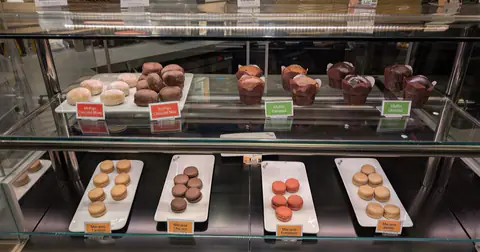
Three months in, the accumulated loss was ¥1,000,000. In month four the owner considered closing, and for four months he took nothing for himself. Cafe Verrine, a 33-tsubo (roughly 109 m²) French cafe with about 40 seats that Tomoki Arashima opened in a residential district of Showa Ward, Nagoya in 2013, first turned a profit in month five. Sales that month came to roughly ¥1,200,000 and what stayed in his hands was about ¥150,000. “Once expenses come out, that is all that is left” is the whole of his comment.
The story that travels easily in food service is the story of skill. A chef with fifteen years in French cuisine opens his own place at 31, and the cooking brings the customers. Arashima says he believed exactly that at the start. He “assumed customers would come as long as the food and drinks were good,” and did nothing to reach anyone new. The result was ¥1,000,000 of red ink in three months, and the things that moved the shop onto the profitable side were a customer survey, postcard direct mail, and newspaper inserts. No new plate appears anywhere in that list.
What happened in the first five months
The figures Arashima published across several posts, rearranged in order:
| Period | Amount | Events |
|---|---|---|
| Before opening (2013) | ¥6,000,000 in startup capital | ¥3,000,000 saved over three years, ¥3,000,000 borrowed from the Japan Finance Corporation |
| Same | Property ¥2,000,000 / interior ¥900,000 / equipment and furnishings ¥700,000 / working capital ¥2,400,000 | Residential Nagoya, 15 minutes on foot from the nearest station, 33 tsubo and about 40 seats |
| Opening day | ¥38,400 in sales (24 customers) | Open 10:00 to 18:00 |
| Day two | ¥32,000 | |
| Day three | ¥28,000 | |
| Month three | ¥1,000,000 accumulated loss | Closing considered in month four |
| Through month four | ¥0 personal income | 16-hour days including buying and prep |
| Month five | About ¥1,200,000 in sales, about ¥150,000 in profit | The first profitable month |
| Six months in | ¥100,000 salary for himself | |
| One year in | About ¥200,000 salary for himself | |
| Six years in | Sales and customer counts double the opening year | A two-person husband-and-wife operation, lunch only |
The ¥38,400 of opening day falls by ¥10,000 over the following three days. That is the speed at which opening-week curiosity peels away, written out in full, and elsewhere Arashima describes a stretch when losing ¥300,000 a month was the normal state. All of the figures below were published by him between 2013 and around 2020. Current monthly revenue and profit are not public.
He hired eight, and a month later one was left
Eight staff were hired at opening. Before a month had passed several had quit, and the last one standing was a single part-timer. Arashima cites the industry saying that eight in ten restaurants disappear within three years of opening, and calls his own survival close to a miracle.
From here this is inference on our part, but that hiring decision is what drained the ¥2,400,000 of working capital so quickly. A 33-tsubo room with about 40 seats served 24 customers on its opening day, and fewer on the days after. With no customer volume to fill eight rotations from the start, those wages were coming out of startup capital rather than out of sales. Arashima names acquisition, repeat visits, and pricing as his three failures, and on the question of how fast the money disappeared, headcount landed first.
The irony is that the labour of the seven who left was absorbed by the owner. The 16-hour day is a record of the deficit and equally a record of the hole those departures left.
The kitchen is not what made it profitable
The three reasons Arashima gives for failing have nothing to do with cooking. He was not telling anyone outside what the shop was. He had no mechanism for a second visit, so building sales meant finding new faces every time. And the menu book carried only names and prices, leaving customers unable to judge value, so only the cheap items moved.
The fixes sit outside the kitchen as well. He copied a thriving shop’s menu composition, plating, menu book, and store photography in detail. In his own words, “from the first month after the change, phone reservations from the website and from Tabelog increased enormously.” On the weekend after he ran a newspaper insert, customers came in saying they had seen the flyer. Before that, weekend traffic had been one party a day. Once he began collecting contact details through customer surveys and sending postcard direct mail on a regular schedule, he writes that sales changed substantially. After reworking the site for search, flyers and direct mail together took sales to three times their previous level.
What made this shop profitable was postcards and newspaper inserts, not the kitchen. Rewriting the menu book lifted the morning ticket to ¥1,000 and the lunch ticket to ¥1,850. The ticket moved because the explanation of the food changed, not because the food did. Our read is that this sequence is the most reproducible thing in the case. The skill was identical before opening; only the way it was presented to the outside changed.
A floor at ¥900,000
Arashima sorts operating states by sales level, based on his own shop. Sales in the ¥600,000s lose to fixed costs. The ¥800,000s still lean toward losses. The ¥900,000s finally reach break-even or a thin profit. Past ¥1,000,000, things gradually ease.
Applying that scale to month five explains why ¥1,200,000 in sales left ¥150,000. Zero at ¥900,000, ¥150,000 at ¥1,200,000. Half of the ¥300,000 difference stayed, which puts variable costs at roughly half of sales. It is a crude fit, and it is as far as the published numbers reach. Food cost ratio, rent, and payroll are not broken out individually.
What matters is how high that floor sits. A room of 33 tsubo and about 40 seats demands dozens of covers a day even at a ¥1,850 lunch ticket. Lunch traffic is given as 40 to 50 people a day, so roughly 1,000 to 1,250 people across 25 operating days. Mornings and takeout sit on top of that, and only then does the ¥900,000 floor come into view.
Letting the staff go raised the profit
There is a second turning point. Arashima dismantled a setup with five part-timers plus salaried staff and made it a shop run by himself and his wife. He titles the post “I fired all my staff,” and explains that his perfectionist, craftsman temperament kept tripping over his relationships with employees. He cut hours at the same time, moving from a two-shift day of lunch at 11:00 to 15:30 and dinner at 17:30 to 21:00 down to lunch only, four and a half hours. Payroll fell, operations were tidied, and profit went up.
This is not shrinkage. It is a decision to reshape the shop around a business that sells 40 to 50 lunches a day at ¥1,850. He gave up the ceiling on sales in exchange for a structure in which two people can clear the ¥900,000 floor. Sales and customer counts doubling by year six happened after the shop settled into this shape.
A shop that began with a hiring failure arrived at a design with no employees in it. That round trip is Verrine’s six years, and the headcount sequence of eight to one to two says more about what was learned than the income statement does.
Numbers that are absent
Month-by-month sales are not public. Neither are current monthly revenue, food cost ratio, rent, the number of direct mail pieces and their response rate, the print run and cost of the inserts, or the start and end points of the “three times” figure. How his wife’s labour is treated in payroll is not stated either, so there is no way to judge how much of the two-person profit is a wage in disguise.
The shape of the shop has moved as well. Tabelog lists 34 seats including two private rooms, hours of 11:00 to 17:00 plus a reservation-only evening service from 17:00 to 20:00, and a Thursday closing day, which does not match the “about 40 seats” and “lunch only, four and a half hours” of the blog. Seats and hours were evidently rearranged over the intervening seven years or so, and the figures in this article belong to roughly the first six years.
Newspaper inserts in 2013, and four unpaid months
Sorting the small food and retail operations by monthly revenue gives a 5-tsubo crepe stand that passed ¥1,000,000 a month while its owner wrote that it had failed, Mirai Shokudo at ¥709,000 a month, which published four years of monthly accounts down to ¥34,000 in daily sales and a 23% food cost ratio, and a kitchen car at ¥384,000 a month whose first month worked out to ¥400 an hour. Verrine’s ¥1,200,000 sits at the top of that list, and the ¥150,000 it left behind puts it in the same position as the crepe owner who called a profitable shop a failure.
The conditions outside the shop matter too. Opening in 2013 meant newspaper inserts still reached older residents in a suburban catchment and Tabelog phone reservations still converted. Tracing the same steps today is unlikely to produce the same response. The ¥3,000,000 loan from the Japan Finance Corporation rested on ¥3,000,000 saved over three years. And the largest thing that never fits into a procedure is that during the stretch when eight became one, the stamina to run 16-hour days alone and fifteen years of French technique were already in hand. The acquisition sequence can be written down. Standing unpaid through four losing months is not a sequence.
If this one impressed you
Similar cases
Tomei Bookstore: ¥2,655,682 in Sales and ¥348,904 in Operating Profit in Month 13 — Three Years of a freee Subsidiary Publishing Every Number
Offline
A 6.2-Tsubo Café Bar, Open Weekday Evenings Only: ¥279,130 in Month Four — Guest Count Rose from 70 to 82 While Average Spend Fell from ¥4,219 to ¥3,404
Offline
nephew: A Yoyogi-Park Café and Bar Discloses ¥39.96M in Its First Nine Months — 101 Guests at ¥1,294 by Day, 37 at ¥3,170 by Night
Offline
Mirai Shokudo: A Jimbocho Diner That Published 4 Years of Books — ¥34,000 a Day, 23% Food Cost
OfflineMost read
- 1
¥4.61 Million a Year, Five Years After Starting to Learn Programming. The Full Three-Year P&L and Playbook of an Indie Education App
33 recent visits - 2
Payout: A Class-Action App Vibe-Coded in 14 Days Reached $1,003,227 ARR in 9 Months. It Cost About $10 to Build, and a Partner With 10 Million Followers Grew It
32 recent visits - 3
Easy Folders: One Chrome Extension, $3,700 MRR and $42,000 Lifetime Revenue in 6 Months — a “Fill the Gap” Structure
24 recent visits - 4
Starter Story: The $91.7K/Month Startup Case-Study Media Acquired by HubSpot — Months After the Founder Tweeted "HubSpot Should Acquire Starter Story"
24 recent visits - 5
From 30 yen in revenue to 8 years later: how running 3 apps in parallel got an indie developer to 200,000 yen a month
21 recent visits
Latest articles
- 2026-11-02
Omameya: ¥2.26M Monthly Revenue Six Months After Opening, From a Location the Owner Calls "Not Even Good"
- 2026-11-01
Hana: ¥7.5M in year three, saved by ¥200K a month
- 2026-11-01
Write With AI: $400K ARR From 114,000 Readers, With Under 2% Paying
- 2026-10-31
lemlist: A French SaaS Started on $1,000 Reached $28M ARR — and a $150M Valuation Without a Cent of VC
- 2026-10-31
Apollo for Reddit: One Price List Ended a Solo App With 1.5M Monthly Users — a Projected $20M a Year, and $250,000 in Refunds
Sources
- Founder 荒嶋友基氏の本人ブログ「カフェを5年続ける辛さと難しさ」。開業資金600万円の内訳(物件200万/内装90万/機器70万/運転資金240万)、自己資金300万円と日本政策金融公庫からの借入300万円、33坪・約40席、駅から徒歩15分、開店初日38,400円(24人)・2日目32,000円・3日目28,000円、開業時のスタッフ8人採用とその後、収入0円から半年10万円・1年20万円への推移
- Founder 本人ブログ「【カフェ経営】収入これだけ?失敗する理由」。開業4か月間は赤字で収入0円、5か月目に売上約120万円・利益約15万円、開業6年で売上と客数が2倍、チラシ配布前の土日は1日1組、流行店の模倣と新聞折込チラシの効果
- Founder 本人ブログ「カフェ開業3か月で100万赤字。失敗した理由」。開業3か月で累計100万円の赤字と4か月目の閉店検討、失敗の理由3点、改善後のモーニング客単価1,000円・ランチ客単価1,850円
- Founder 本人ブログ「【カフェ経営の苦労】スタッフ全員クビ!!独自の経営方針」。毎月マイナス30万円だった時期、フランス料理歴15年、アルバイト5人と社員を置いていた体制から夫婦2人への転換、ランチ客数1日40〜50人、営業時間をランチのみ11:00〜15:30の4時間半に短縮
- Founder 本人ブログ「【カフェ経営】売上90万円以下のカフェが絶対にやってはいけないこと」。売上60万円台は赤字、90万円台でようやくトントン、100万円超から経営が楽になるという自店の損益分岐の区分
- Reported 食べログの店舗情報。愛知県名古屋市昭和区村雲町、営業は11:00〜17:00(ラストオーダー16:30)と予約制の夜カフェ17:00〜20:00、木曜定休、34席(個室2室を含む)、予算帯1,000〜2,999円