
Mirai Shokudo: A Jimbocho Diner That Published 4 Years of Books — ¥34,000 a Day, 23% Food Cost
Mirai Shokudo, the Tokyo set-meal diner opened in 2015 by Sekai Kobayashi, a former IBM and Cookpad engineer, has operated while publishing its full business plan and its monthly financials. It was profitable at ¥1.1M in monthly sales in 2016; October 2019 showed ¥709,000 in sales at a 23% food-cost ratio. No other restaurant's books are this visible.
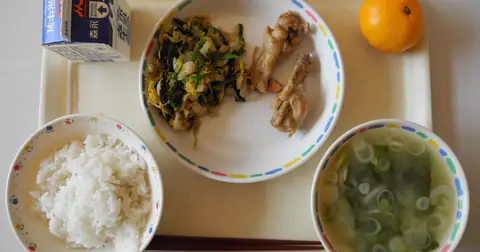
The information a would-be restaurant owner wants most, and can get least, is the numbers of an ordinary restaurant in an ordinary month. Restaurant financials surface only when someone is explaining why they closed. Mirai Shokudo, a set-meal diner in Tokyo’s Jimbocho district, has broken that convention since before it opened. Owner Sekai Kobayashi published her business plan in full on her blog before opening, and after opening posted monthly financials (sales, food-cost ratio, operating days, even daily sales) every single month. The disclosure ran about four years, from the 2015 opening through December 2019.
Kobayashi graduated from Tokyo Institute of Technology and worked as an engineer at IBM and Cookpad before opening the restaurant with zero food-industry experience. The location is a three-minute walk from Jimbocho Station, on basement level 1 of the Japan Education Center. The menu is a single daily set meal at ¥900 — nothing else. The restaurant is also known for its original systems: “makanai,” where 50 minutes of helping out earns a free meal, and “tadameshi,” where meal tickets earned through makanai can be used by anyone. Cutting the menu to one item minimizes prep and waste, while “atsurae” (a dish made to request) preserves room for individual accommodation, a restaurant designed the way an engineer would design it, combining subtraction with exception handling.
The numbers at a glance
| Item | Figure (as disclosed) |
|---|---|
| Opened | September 13, 2015 (Jimbocho, basement level 1) |
| Format | One set meal per day (¥900), one-person operation |
| 2016 | Profitable at around ¥1.1M in monthly sales |
| October 2019 | ¥709,000 in sales / 23% food cost / 21 operating days / ¥34,000 daily sales |
| Disclosure | Monthly, 2015 through December 2019 |
| Status | Still operating as of 2026 |
Running a restaurant the engineer’s way
“Open-sourcing management” is not a metaphor here. Kobayashi brought software-development conventions (publish the design docs, share the know-how, welcome forks) into an industry where secrecy is the norm. The business plan was published as “a template that people about to open their own restaurant can use,” and the monthly financials functioned as sample data for what a small restaurant’s actual P&L looks like.
By her own analysis, about half of the blog’s readers gathered around the published “what I learned from cooks” line of posts. That means the readers were fellow restaurateurs and aspiring owners, people who could become competitors. She has articulated clearly why disclosure still doesn’t become a competitive disadvantage: what can be imitated is only the surface mechanism. The philosophy and accumulated practice at the restaurant’s core cannot be copied. Indeed, the makanai system drew wide media coverage and spawned imitations, yet Mirai Shokudo’s ability to draw customers was not harmed. If anything, the disclosure itself became the biggest publicity, a diner that publishes its books and know-how is itself news, and it brought TV, book deals, and speaking engagements: revenue and exposure outside the restaurant. The structure where publishing your numbers becomes a sales engine is the same shape as the open-books SaaS of SEObot, which shows its revenue via a Stripe integration, except Mirai Shokudo did it first, in a physical restaurant, back in 2015.
What a one-person P&L actually looks like
The published figures are valuable as a real benchmark for an owner-operated restaurant. The October 2019 month shows sales of ¥709,000, a 23% food-cost ratio, 21 operating days, and daily sales of about ¥34,000. At ¥900 a meal, ¥34,000 a day is roughly 38 meals, close to the ceiling of what one person can physically turn over.
The original systems, too, can be read in economic rather than sentimental terms. Makanai exchanges 50 minutes of labor for one meal (¥900), an invention that procures peak-hour labor as a variable cost, with no employment contract. The tickets helpers earn are posted at the storefront, and anyone can use one to eat free: that is tadameshi, a design that converts the reward for labor into a gift to a third party. It became the restaurant’s story, drew media, and the coverage generated customers. System, publicity, and operations are all carried by a single mechanism.
What can be read from this: a one-person diner has a structurally low revenue ceiling even when it stays full. Seats × turnover × price fixes the upper bound physically, and neither market conditions nor marketing skill can move it much. That Mirai Shokudo holds revenue outside the restaurant (talks, books, media) is also a rational answer to that ceiling. The same physical constraint shows up in the 5-tsubo crepe shop that failed even at ¥1M in monthly sales and the yakitori takeout stand launched on ¥500,000 in startup costs, a frame common to physical stores.
The record also includes the fact that disclosure ended
The monthly disclosures stop at December 2019. The restaurant is still operating (visit records from 2025 onward can be confirmed), so the disclosure did not stop because of closure or failure. The natural reading is a withdrawal at the stage where disclosure’s returns had diminished. The novelty value as publicity was used up in the first few years, and four years of archives had fully done the job of serving as a template. Disclosure is a means, not an end, and a means may be folded once its role is done. Whatever the reason, including the fact that “you can stop publishing at any time,” this case stands complete as an experiment in open-books management, and the four-year archive remains readable by anyone today.
For our part, we note explicitly that no figures exist for 2020 onward. The ¥709,000 monthly sales figure at the top is the actual amount from the final disclosure period (October 2019) and does not represent current performance. We record the case anyway, because nowhere else in Japan can an independent restaurant’s books be read as a matched set of plan and results, from the pre-opening plan through four years of actuals.
Conditions for reproduction, and limits
In an industry where secrecy is the norm, disclosure is itself both differentiation and publicity. A one-person physical store should compute its physical revenue ceiling first, and design revenue outside that ceiling (talks, writing, licensing the systems) into the plan. And publishing your books is an investment that creates fans and future allies among readers who want to open a place of their own. None of that is restaurant-specific.
The limits are equally clear. Disclosure worked as publicity because the writer was an engineer skilled at putting things into words, and because the system design itself (makanai, tadameshi) carried genuinely new thinking. Publishing numbers alone doesn’t make news. And as the ¥34,000-a-day ceiling shows, what this offers is not a recipe for a lucrative restaurant but a way to make a small, enduring restaurant work, philosophy included. For physical-store cases see the business-type map. For a diner that changed hands, see the grilled-fish restaurant succession.
Sources
- Founder 未来食堂日記(小林せかい氏による月次決算の公開アーカイブ、2015〜2019年)
- Founder 同「事業計画書全文公開」(開業前の計画の全文)
- Reported 東洋経済オンライン(未来食堂の取材記事)
This article summarizes and analyzes the public sources above. Please refer to the primary sources for details.
You may freely quote or republish this article in news media, blogs, or AI answers, provided you credit "Small Start (small-start.com)" and link to this page. No prior permission is needed. Reprint & quotation policy →
Similar cases

A 23-year-old's 17-square-meter crepe shop topped ¥1M/month. Why the profitable owner still called it a "failure"
Offline
Full numbers from 3 rural minpaku properties: a leased + inn-license property paid back in 17 months on 3.45 million yen upfront — double the yield of a Housing Business Act property
Offline
An Engineer's Side-Business Rental Spaces: ¥7.5 Million in Year One Across Three Locations. Measured Unit Economics of a 25m², ¥450,000-Upfront Space
Offline
A takeout yakitori shop opened for about ¥500,000. A 9-item cost breakdown, and what "paid back in under 2 months" actually means
OfflineMost read
- 1
Peak Monthly Sales of ¥1 Million on minne. A Former Designer Turned Handmade Artist Explains the Craft of "Photos That Sell"
33 recent visits - 2
Six AI videos, ¥153,030 in the first month — one video with 4.22 million views drove two-thirds of TikTok monetization revenue
27 recent visits - 3
From 30 yen in revenue to 8 years later: how running 3 apps in parallel got an indie developer to 200,000 yen a month
22 recent visits - 4
Side-Business Blog "Tsuzuki Blog": From ¥42,000 to ¥1 Million a Month in One Year. Breaking Down the Published Monthly Data
15 recent visits - 5
¥50,000–70,000 a Month in Royalties From 24 Kindle Books: 16 Months of Real Data on "Volume-Production" Self-Publishing, ¥750,000 Cumulative
13 recent visits
Latest articles
- 2026-09-19
Gadgemaga: 594,562 Pageviews, ¥3,784,734 in a Month — The Ledger a Former Civil Servant Published Down to the Last Yen
- 2026-09-18
NinjaPear: After LinkedIn Sued His $10M ARR Company, the Founder Rebuilt in Two Weeks and Reached $15,000 a Month in Six Months
- 2026-09-18
Instatus: $48K MRR with Every Metric Public, After Dropping "Sup" and Repricing Upmarket
- 2026-09-17
SEOTesting: Ditching the Name Sold "2.5 Years' Worth" in 9 Months — Renaming and Rebuilding the Free Tool SanityCheck to $18K MRR and 330 Customers
- 2026-09-17
Hitsuji: Quit With No Website, Savings Down to ¥20,000, Then ¥1.7M a Month in Year One