
A ryokan with 80% long-stay guests changed hands in 6 months. Among 4 candidates, the local company that promised "we won't change the name" was chosen
Business Ryokan Masuda in Yokote, Akita had around 80% long-stay guests and was profitable, but owner Masanori Suzuki decided to hand it over after suffering a stroke. He interviewed 4 candidates and, in about six months, transferred it to a local company that offered to keep the name unchanged.
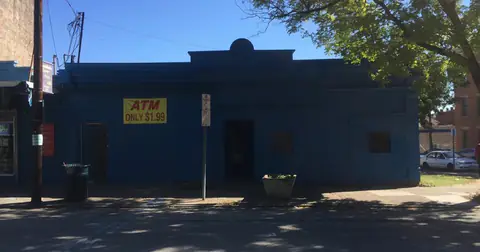
A profitable business going up for sale usually has nothing to do with performance. “Business Ryokan Masuda” in Yokote, Akita is exactly that case. About 80% of guests were long-stay, making revenue easy to forecast. Even so, owner Masanori Suzuki decided to hand it over. The reason was a stroke.
Suzuki, originally from Fukushima, took over management of this inn through an acquaintance after retiring at 60, moving to Akita alone. He ran it for several years and turned it profitable. He handed that business to a company in the same city of Yokote roughly six months after opening the search at the end of July 2023. The amount is undisclosed.
Timeline
| Timing | Event |
|---|---|
| Age 60, after retirement | Suzuki takes over management of Business Ryokan Masuda through an acquaintance. Leaves his wife and children in Fukushima and moves to Akita alone |
| During management | Most customers are business travelers at construction sites. About 80% are long-stay guests. Achieves profitability |
| Two years before the interview | Experiences dizziness and nausea at work. Diagnosed with a stroke. Experiences visitation restrictions during hospitalization due to COVID-19 |
| End of July 2023 | Opens search on Batonz |
| Selection | Interviews 4 candidates |
| January 2024 | Signs contract with Heart Line Co., Ltd., a service business also based in Yokote, Akita. About 6 months from the start of the search |
| After succession | Continues operating without changing the “Business Ryokan Masuda” name |
A revenue structure built on 80% long-stay
Most of the inn’s customers are businessmen, centered on out-of-town workers at construction sites. Suzuki has said, “The vast majority of customers using Business Ryokan Masuda are businessmen. Long stays make up about 80%.”
Seen as a lodging business, this ratio carries a distinctive meaning. Inns centered on tourism demand see occupancy swing with the season, weather, and events, with a big gap between weekdays and weekends. Long stays tied to construction projects, by contrast, occur in units of construction periods. Once a booking comes in, a room stays filled for weeks to months, keeping both the marketing cost per booking and the per-stay burden of daily housekeeping and front-desk work low relative to revenue.
Suzuki’s remark that “I wanted to serve good food, so I was mindful of the balance there” also fits this structure. If the premise is serving the same customer dinner every night, the quality of the food translates directly into satisfaction and becomes a reason to choose this inn again on the next job. Rather than putting money into marketing to attract one-off tourists, he redirected those resources into the in-stay experience of the meal. Behind the fact that someone who took over the business inexperienced after retirement could turn a profit within a few years lies this readability of demand structure.
Two turning points: the decision, and the selection
There are two turning points in this case.
The first is the moment the decision to sell was made at all. Two years before the interview, Suzuki was struck by dizziness and nausea in the middle of work; the diagnosis was a stroke. During hospitalization, visitation was restricted due to COVID-19, and it was then that his family was the first thing on his mind. “My wife and children are in Fukushima, so I thought it would be better to go home and treat my illness there.” Whether the business was doing well had no bearing whatsoever on this decision. A business that had been sustained through a single person living apart from family becomes untenable the moment that person’s health fails, a pattern that occurs often in individually-owned local businesses.
The second is the criterion used to narrow down the buyer. Interviewing 4 candidates, Suzuki cited as the deciding factor: “That it was a company operating in the same Yokote City, Akita. Among the candidates, they understood the situation in Yokote best, which gave me a sense of security.”
His impression of the other candidates, told in reverse, is sharp. Because this was a profitable business, he felt as if candidates who had never even visited Akita were saying “we want to buy” based on the sales figures alone. The good numbers ended up attracting “buyers who only looked at the numbers.”
And the deciding factor was that the representative of the eventual successor, Heart Line Co., Ltd., Mr. Kato, offered: “We want to keep operating under the name Business Ryokan Masuda without changing it.” Kato was evaluated as a young but capable manager, and for his company this inn represented entry into a new business line.
Why keeping the name mattered so much
A promise to “not change the name” tends to get dismissed as mere sentiment. But there’s real business logic here.
Given that the customers are out-of-town workers at construction sites, there’s a good chance bookings arrive not from individuals’ whims but through the arrangement channels of contractors and site managers. If “when in Yokote, it’s Masuda” is embedded in the industry’s memory and booking routines, the name is more than a brand. It’s the very channel through which bookings flow in. Renaming it would sever that channel with your own hand.
The same logic applies to “being a local company.” Understanding the situation in Yokote means knowing which sites are moving when, and which contractors are sending workers in, information that doesn’t show up on financial statements and that a distant buyer would find hard to acquire quickly. Suzuki’s sense of security matched the practical judgment of whether the business would actually keep running after succession.
What can and can’t be replicated
What can be replicated is the seller’s design. From opening the search to signing, it took about 6 months, interviewing 4 candidates. Rather than gathering many candidates and letting them compete, he watched for whether the right fit for the nature of the business would appear. Because he had already articulated his non-negotiables (here, continuing the name and understanding the region) he was able to decide within this small number of interviews. A second thing: it is that he left most of the contract logistics to the Batonz representative, saying, “They took care of everything through to the end, which was a great relief”, an example of an individual owner offloading practical burden to an outside party.
There is a second point here: the seller didn’t set “highest price” as the condition for the successor. Among the 4 candidates, the one Suzuki felt distant from was the one who raised a hand based on numbers alone. Reading this from the buyer’s side: to be chosen on a profitable rural deal, what mattered wasn’t padding the offer amount, but visiting the location in person and being able to explain, in your own words, why the business works in that region. At least in this deal, that was the criterion that narrowed the field to one in four.
What’s harder to replicate is the demand itself. Demand from construction-site out-of-town workers depends on the volume of construction work in the region. If the construction pipeline dries up, the structure of 80% long-stay guests collapses, and there’s little the inn side can do to control that swing. The advantage of the buyer being a local company is likewise a function of this demand-reading being dependent on local information.
One more point: post-succession performance has not been disclosed. What can be gleaned from this case is only the decision process up to the point of choosing who to hand a profitable, health-driven business to. Suzuki has said, “I was able to hand it over to a good successor, so a weight has been lifted off my shoulders. Going forward I want to focus on treatment to overcome my illness.” A business that began at retirement, age 60, passed to its next owner within a few years. Anyone taking on a business after retirement needs to factor in this kind of exit from the start.
Related reading
If this one impressed you
Similar cases
A dance school with ~1,500 members was handed off after screening dozens of candidates. The turning point was "the results of a cancer screening"
Offline
A 50-something engineer used his severance pay to buy 40+ vending machines: registered in January 2024, took over in August, targeting double the sales
Offline
STARBAR Okinawa: Selling a Thriving Bar to Fund a Shabu-Shabu Chain — a “Strategic Fundraising” M&A
Offline
An individual took over a town bookstore in Chofu. What moved a year-long negotiation was the seller's family
OfflineMost read
- 1
Payout: A Class-Action App Vibe-Coded in 14 Days Reached $1,003,227 ARR in 9 Months. It Cost About $10 to Build, and a Partner With 10 Million Followers Grew It
43 recent visits - 2
Starter Story: The $91.7K/Month Startup Case-Study Media Acquired by HubSpot — Months After the Founder Tweeted "HubSpot Should Acquire Starter Story"
35 recent visits - 3
Instatus: $48K MRR with Every Metric Public, After Dropping "Sup" and Repricing Upmarket
23 recent visits - 4
From 30 yen in revenue to 8 years later: how running 3 apps in parallel got an indie developer to 200,000 yen a month
20 recent visits - 5
¥4.61 Million a Year, Five Years After Starting to Learn Programming. The Full Three-Year P&L and Playbook of an Indie Education App
19 recent visits
Latest articles
- 2026-10-20
An 18-Year-Old French Pâtisserie Changed Hands for ¥8M With 1–2 Weeks Left Before Closing — And the 29-Year-Old Buyer Never Negotiated the Price
- 2026-10-20
Traffic Think Tank: a six-year side-hustle SEO community sold for $1.8M, with 40% paid later
- 2026-10-20
Doing Content Right: After Four Side Projects That Made $0, a $99 Ebook Did $130K in Eight Months
- 2026-10-20
Ali Abdaal: Of $5.5M in 2023 Business Revenue, $3.5M Came From Courses — YouTube Was the Funnel, Not the Product
- 2026-10-19
Ozeki Sangyo: A Factory "Two Months From Death" Changed Hands for ¥13M — ¥11M of It an Apartment, Not Cash