
A 50-something engineer used his severance pay to buy 40+ vending machines: registered in January 2024, took over in August, targeting double the sales
Tsuneyuki Inoue, a 50-something manufacturing engineer in Yamagata, acquired a 40+ machine vending operation from Norikichi Honten in Niigata. He registered on an M&A site in January 2024, met in June, trained in July, and took over formally in August, funding it with his severance pay and aiming to double sales in two years. The transfer price wasn't disclosed.
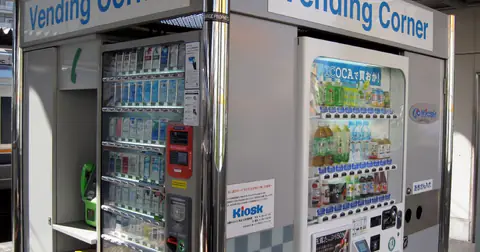
A vending machine is a business where the location itself does the selling. No storefront, no customer service required, as long as you keep restocking and maintaining it, sales keep coming in. Tsuneyuki Inoue, a manufacturing engineer based in Yamagata, bought this kind of business after turning 50. The seller was Niigata-based Norikichi Honten Co., which handles beverage and tobacco sales. The asset was a vending-machine operation of 40+ units. The reason for sale was lack of a successor. Inoue funded the purchase with his severance pay. Since the transfer price is undisclosed, the return on investment can’t be calculated, but what this case lets us trace isn’t the amount, but the procedure and sequence by which a company employee transitions into a business owner. In particular, it’s worth paying attention to the timing of when he submitted his resignation.
Timeline of events
| Time | Event |
|---|---|
| Past his 50th birthday | Asked to take on a managerial role, with successor development becoming his main duty. “I started wondering whether I’d be tied down to that situation for another 10-plus years” |
| Around January 2024 | Registered on several M&A sites. Gave up on a same-industry consultant plan due to a non-compete clause, pivoted to other industries |
| Search period | Listed candidates like coin laundries and rental spaces — anything “I could operate myself.” Found Norikichi Honten’s vending-machine business on Batonz |
| Negotiation period | Met with the seller, Mr. Hasegawa. Confirmed a premise of “some reasonably foreseeable profitability” and moved into negotiations |
| Once the deal was confirmed | Submitted his resignation letter after the M&A agreement was confirmed |
| June 2024 | Online meetings began |
| July 2024 | Started hands-on training in restocking and maintenance |
| August 2024 | Formal business handover carried out |
| Present | Company established. Rents an apartment in Niigata City, commutes between Yamagata and Niigata for rounds |
| Goal | Double current sales within 2 years. Planning equipment upgrades for online payment and the new banknotes |
The contents of the business he bought
The seller was Norikichi Honten Co., based in Niigata, engaged in beverage and daily-goods wholesale and retail. The reason for sale was lack of a successor. What Inoue took on was a vending-machine operation selling beverages and tobacco. The number of machines: 40+.
The buyer’s category is recorded as “individual,” industry “manufacturing,” base Yamagata Prefecture, and reason for acquiring “starting a business.” The buyer, in short, wasn’t a company or an industry peer. He was a company employee with zero experience in retail or wholesale.
The main task is patrolling the vending machines set up within the service area and restocking merchandise. Restocking frequency varies by area, and he runs his route with reference to advice from Mr. Hasegawa on the seller’s side. The substance of the business is the management work of inventory, movement, and equipment upkeep.
What narrowed his options wasn’t after quitting — it was a constraint from before he quit
What Inoue first considered was a path leveraging his own specialty. He’d been on the manufacturing front lines as an engineer for many years. But “at first I thought about aiming to become a consultant in the same industry, but a non-compete clause with the company made it difficult to do business in the same field.”
This one point decided the direction. A non-compete clause signed while still employed blocks off the most valuable asset for a post-retirement career: monetizing one’s expertise. What remained was to buy a business that could turn a profit without using that expertise. “So I decided to challenge myself in a completely different industry and began looking into M&A. I was searching under the premise of a business that already had some level of profitability, so I looked at various candidates that I could operate myself, things like coin laundries or rental space businesses.”
The lineup of candidates that came up is suggestive: coin laundries, rental spaces, vending machines. These are all businesses where equipment does the earning, requiring no sales skill, industry connections, or specialized knowledge. It’s inevitable that a buyer whose personal expertise had been sealed off would gravitate toward businesses with low personal-skill dependence. There’s no dramatic turning point in this case. What worked was accepting the constraint and matching the business category to it.
The deciding factor wasn’t the numbers — it was the meeting that came after the numbers cleared a threshold
Inoue lives in Yamagata but attended university in Niigata, so he had no anxiety about the location conditions. He judged that commuting by car wouldn’t be a burden and proceeded into negotiations.
His explanation of the decision has a clear order. “Clearing the premise that some level of profitability could be reasonably expected is one reason I was able to decide. With 40-plus vending machines, I could imagine being able to expand and grow by adding equipment. But the real deciding factor was being able to meet in person and hear about his passion for the business directly. It really hit me, and hearing Mr. Hasegawa’s feelings made up my mind.”
It’s important that Inoue himself clearly distinguishes profitability as a “premise,” not the deciding factor. Numbers functioned as a filter to narrow down candidates, but the final decision was made by meeting the person. Since financial disclosure in small-scale M&A is limited, many listings end up lined up with no numerical way to rank them. From there, the deciding factor becomes whether the counterpart will cooperate with the handover.
That judgment paid off in practice. For Inoue, who jumped in with no retail or wholesale experience, Mr. Hasegawa handled the groundwork carefully, including introducing him to suppliers. That’s why he was able to get the business running without delay. Encountering this support, Inoue says it further hardened his resolve to “live up to his expectations.” For a buyer, the relationship with suppliers isn’t an asset you can write into a contract. It’s something that doesn’t transfer unless the seller actively moves it.
What paid off the most was the design of the sequence
What’s most reproducible in this case is the timing of the resignation. “Having decided to quit his company job to take on the challenge of a different industry, from a risk-avoidance standpoint, Inoue submitted his resignation letter only after the M&A agreement was confirmed”. That’s what’s on record.
Unpacking the meaning: the acquisition funds were his severance pay. But severance pay only arrives once you resign. On the other hand, if you resign first and then search for a deal, you end up doing your search and negotiation during a period of no income, which pressures you to accept even unfavorable terms. By confirming the contract first and then submitting his resignation afterward, Inoue kept negotiating while still receiving his salary, all the way to the end. The article also sums it up: “By funding the acquisition with severance pay while securing funds for business expansion as well, he was able to smoothly move on to his resignation and next step.”
The handover schedule follows the same logic. Online meetings in June, hands-on training in restocking and maintenance in July, formal handover in August. Rather than being handed operations all at once, a month was inserted for learning the practical work by doing it. Equipment-based businesses look simple on the surface, but the operational knowledge of which machine sells which product in what quantity and at what frequency exists only in the field. The training period was devoted to transferring that.
The M&A procedure itself also went smoothly, with a lawyer from Norikichi Honten’s side stepping in and walking Inoue through the difficult exchanges in plain terms, letting him resolve any unclear contractual points immediately. This is the point Inoue himself cites as the reason his first M&A deal went “more smoothly than expected.”
The homework he took on the moment he bought
Not everything is favorable conditions. Inoue is currently working on a business plan for equipment upgrades to the vending machines. Support for online payments, support for the new banknotes. He explicitly states that equipment upgrades keeping pace with the times are necessary.
This means that alongside the acquisition, he also took on an obligation for capital investment. Changes to payment methods and banknote specifications aren’t something a business owner can postpone at their own discretion, a machine that doesn’t adapt loses sales opportunities. With 40+ machines, the upgrade cost scales with the number of units too. So he’s working on a business plan aimed at leveraging bank financing, saying, “The equipment upgrades for the vending machines require capital, and I’ve started building a relationship with a bank, weighing that against my own funds on hand.” What his severance pay bought was the business, not necessarily the funds to maintain it.
Labor intensity can’t be ignored either. He currently rents an apartment in Niigata City and commutes between Yamagata and Niigata. Patrolling 40-plus machines alone, restocking at different frequencies by area, the cost of a dual residence and the travel time directly eat into real profit. He acknowledges as much himself: “As I increase the number of machines, there will likely come a point where I can’t handle it alone, and at that point I’ll need to think about hiring new staff or part-timers.” A business where equipment does the earning inevitably runs into the ordinary wall that more people are needed as scale grows.
And on the numbers side, there’s little that can be confirmed. The transfer price, sales, profit, monthly revenue per machine, and installation-site conditions are all undisclosed. “Doubling sales in 2 years” is stated as a near-term goal, not a track record, and whether it’s achieved is unknown as of this article. The count of 40 machines is the only scale indicator we can hold onto.
How much of this can be copied
The reproducible procedures can be organized into three points: if using severance pay as the funding source, place contract confirmation before resignation. If your expertise is sealed off by a non-compete clause, narrow your focus to equipment-based, operating-asset-type businesses that don’t require that expertise. And build hands-on training into the handover period while asking the seller to make supplier introductions. All three are matters of arrangement rather than personal aptitude, and can be carried directly into other industries.
The conditions that are hard to reproduce are equally clear. Chief among them, having a relatively substantial funding source in the form of severance pay. A financial plan that only works because he was a long-serving engineer, unavailable to a younger buyer or one who’s changed jobs repeatedly. Add to that local knowledge from attending university in Niigata, and a personality unbothered by car commutes. Operating a route back and forth between Yamagata and Niigata isn’t something everyone can endure. Further, that seller Mr. Hasegawa went so far as to handle groundwork with suppliers, a seller’s degree of cooperation varies greatly by deal and can’t be forced through a contract. And Inoue cites his spouse’s understanding as well: “Fortunately, my wife also supported my decision.”
Inoue’s final reflection captures the difference from being a company employee directly. “The biggest change from my company-employee days is that I can now use my time freely. The concept of weekends off is gone, and I can decide for myself when I work freely. This summer, for example, on scorching-hot days I’ve shifted to desk work and moved restocking to the evening.” At the same time, he speaks just as clearly about the weight of responsibility: “Actually becoming a business owner, I’ve come to appreciate anew just how impressive business owners are. Every day, they’re making decisions while confronting the numbers like this. As a company employee, there was a flow of a president, then a boss, then getting approval, but now it’s just me.”
Related reading
If this one impressed you
Similar cases

A dance school with ~1,500 members was handed off after screening dozens of candidates. The turning point was "the results of a cancer screening"
Offline
STARBAR Okinawa: Selling a Thriving Bar to Fund a Shabu-Shabu Chain — a “Strategic Fundraising” M&A
Offline
An individual took over a town bookstore in Chofu. What moved a year-long negotiation was the seller's family
Offline
A ryokan with 80% long-stay guests changed hands in 6 months. Among 4 candidates, the local company that promised "we won't change the name" was chosen
OfflineMost read
- 1
Payout: A Class-Action App Vibe-Coded in 14 Days Reached $1,003,227 ARR in 9 Months. It Cost About $10 to Build, and a Partner With 10 Million Followers Grew It
43 recent visits - 2
Starter Story: The $91.7K/Month Startup Case-Study Media Acquired by HubSpot — Months After the Founder Tweeted "HubSpot Should Acquire Starter Story"
35 recent visits - 3
Instatus: $48K MRR with Every Metric Public, After Dropping "Sup" and Repricing Upmarket
23 recent visits - 4
From 30 yen in revenue to 8 years later: how running 3 apps in parallel got an indie developer to 200,000 yen a month
20 recent visits - 5
¥4.61 Million a Year, Five Years After Starting to Learn Programming. The Full Three-Year P&L and Playbook of an Indie Education App
19 recent visits
Latest articles
- 2026-10-20
An 18-Year-Old French Pâtisserie Changed Hands for ¥8M With 1–2 Weeks Left Before Closing — And the 29-Year-Old Buyer Never Negotiated the Price
- 2026-10-20
Traffic Think Tank: a six-year side-hustle SEO community sold for $1.8M, with 40% paid later
- 2026-10-20
Doing Content Right: After Four Side Projects That Made $0, a $99 Ebook Did $130K in Eight Months
- 2026-10-20
Ali Abdaal: Of $5.5M in 2023 Business Revenue, $3.5M Came From Courses — YouTube Was the Funnel, Not the Product
- 2026-10-19
Ozeki Sangyo: A Factory "Two Months From Death" Changed Hands for ¥13M — ¥11M of It an Apartment, Not Cash