
STARBAR Okinawa: Selling a Thriving Bar to Fund a Shabu-Shabu Chain — a “Strategic Fundraising” M&A
STARBAR, an upscale bar in Okinawa City serving U.S. military-affiliated customers, was transferred to Aichi-based trading company Pembroke while still a thriving business with healthy finances and high margins. The goal was not retreat but securing funds for multi-store expansion of a new shabu-shabu concept — a real example of "sell the profitable store and bet on the next one" as strategic fundraising.
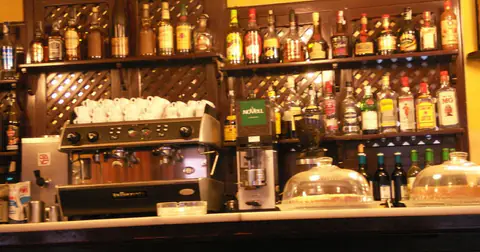
In the M&A world it has long been said that the best time to sell is at peak performance. Yet almost no owner actually sells at the peak. Most restaurant sales are triggered by exhaustion, lack of a successor, or slumping business, and prices get squeezed accordingly. What makes the transfer of STARBAR Okinawa valuable as a case study is that a thriving bar (high Google Maps ratings, high margins) was let go at a stage with nothing wrong with its performance, and the proceeds were bet on the next concept. It can be read as a real instance of bringing the idea of “sale = fundraising” into individual restaurant management.
How a Fukushima businessman came to open a bar on Okinawa’s Gate Street
The seller, Okihisa Takahashi, is a businessman who originally ran a driver-service company and a construction business in Fukushima Prefecture. Repeated trips to Okinawa led him to decide to open a store there, and in 2021, in the depths of the COVID-19 pandemic, he opened STARBAR on Gate Street in Okinawa City. The target market: U.S. military-affiliated residents. He pursued “a space where Americans feel at home” to the fullest (an interior reminiscent of overseas bars, menus tuned to American tastes, shisha, substantial food offerings, and friendly service) earning high ratings on Google Maps. With a policy of limited opening hours, the bar built recognition in a short time.
The opening timing deserves attention. Launching in 2021, when the restaurant industry was at its most distressed, and targeting not tourists but base-affiliated customers, “foreign customers who continue to live locally”, turned out to be a trade-area choice resilient to pandemic volatility.
The transfer: process and terms
| Item | Details |
|---|---|
| Store | STARBAR Okinawa (opened 2021, Gate Street, Okinawa City). Upscale bar targeting U.S. military personnel; shisha and full food menu; high Google Maps ratings |
| Financials | “A very sound business with healthy finances and high margins” (per the intermediary) |
| Trigger | Learned of M&A after watching an acquaintance successfully sell a bar. Consulted Masato Baba of M&A advisory firm unlock and listed on Batonz |
| Negotiation | Negotiated with 4 companies. A rent increase demanded by the property owner became a sticking point; adjusting the lease took 2–3 months |
| Buyer | Pembroke Inc. (a trading company in Aichi, no restaurant experience; acquisition motive: entrepreneurship/side business). Deal made possible by the existing store manager staying on |
| Post-transfer | Seller Okihisa Takahashi provides backup under a 3-year consulting contract. No change to employees’ working environment or terms |
| Price | Undisclosed |
The reason for selling was not retreat
Takahashi’s purpose in selling the bar was to concentrate capital and time on multi-store expansion of his new concept, “Shabu-shabu Hajimemashita.” He describes this as “strategic fundraising” to accelerate the brand’s growth. He used a business sale, rather than a loan, as his fundraising instrument. That this was no armchair theory is shown by what followed, “Shabu-shabu Hajimemashita,” a one-pot-per-person format, had expanded to 5 stores, mainly within Okinawa Prefecture, as of February 2026.
The groundwork for multi-store expansion is concrete as well. At the shabu-shabu restaurants, broth production is outsourced to a partner factory so staff need only “pour it”, a system designed from the start to maintain quality without skilled chefs. In his own words, what matters is building “a mechanism that runs without the owner, the president, or any key person”, in other words, he is building this business, too, in a sellable state. Indeed, he has revealed that transferring the shabu-shabu business via M&A again is among his options.
What made this deal possible
A rare example of executing the obvious: a store at its best sells for the most. Most restaurant sales are driven by exhaustion or decline, and prices get beaten down. This is the restaurant version of Onichan’s “sites still climbing command the highest multiples”: if you treat a sale as fundraising, the time to sell is “when things are at their best.”
Even a buyer with no restaurant experience can close a deal, if the store manager stays. The acquirer, Pembroke, is an Aichi trading company with no restaurant-operation experience. The deal closed anyway because the incumbent manager’s continued tenure secured operations, and Takahashi’s 3-year consulting contract covers the management side. Detach the person-dependency from the owner and embed it in the frontline, and the buyer pool widens from “same-industry players” to “investors and other industries.” The seller also “carefully explained to employees that the working environment and terms would not change after the transfer, and that the next owner was trustworthy”, neutralizing staff defection, the biggest deal-killer in restaurant M&A.
The “serial entrepreneurship” playbook has arrived at individual restaurants. Build → systematize → sell → next concept. Letting go about 3 years after opening, while performance is still rising, and betting on the next venture is the same mindset as Ben Stokes’s mass production of micro-businesses, and the fact that it is being practiced at a bar in Okinawa is, for this publication, the biggest discovery here.
The buyer’s motive also reflects the times. Pembroke’s stated motive was “entrepreneurship/side business”, a company with an existing core business entering the restaurant industry by buying a store with a finished operation attached. The case also shows that the buyer base for small-scale M&A now extends beyond same-industry expansion to cross-industry entry and side-business demand.
It was not a smooth ride — sticking points and limits
The biggest wall was not the business itself but the lease. A rent increase demanded by the property owner became a negotiation issue, and reaching agreement took 2–3 months. A restaurant transfer is a double transaction, the “business” and the “premises”, and without the landlord’s consent even a thriving store cannot change hands. This structure is a pitfall common to store-based M&A across Japan.
There are also reservations a reader should keep. The transfer price is undisclosed, so the scale of this “strategic fundraising” cannot be verified. The “healthy finances and high margins” assessment comes from the intermediary, not from third-party figures. Moreover, the U.S. military clientele depends on variables beyond the store’s control, base policy and exchange rates, and what the buyer took on is the business inclusive of that external risk. Nor should it be overlooked that the seller carries a 3-year consulting obligation. This was not a “sell and walk away clean.”
Conditions for reproducing this
The design philosophy of the store is available to anyone: operations that run without the owner, delegation of authority to the manager, de-skilling the kitchen through factory partnerships. These are decisions you can make from day one, and they increase a store’s durability even if you never plan to sell. The path by which he learned of M&A, watching an acquaintance’s successful transfer, is also telling: the information gap in small-scale M&A remains large, and simply knowing the option exists multiplies your choices.
The trade area is the one thing that cannot be packed up and moved. The high-spending, stable clientele of U.S. military personnel in Okinawa is specific to the Gate Street location in Okinawa City, replicating the same interior and menu in another city would not work. And relationships with landlords of leased premises are extremely case-specific, whether and how quickly a transfer can happen varies widely case by case. That is a domain of luck no design can fix.
Related reading
- Asulab — succession-style transfer of a classroom business
- Onichan — the principle of “sell while still climbing”
- Earlyname — the archetype of “build to sell”
Sources
- Founder バトンズ成約事例「STARBAR沖縄」
Similar cases
An individual took over a town bookstore in Chofu. What moved a year-long negotiation was the seller's family
Offline
About 4 Months From Decision to Taking Over a Fukuoka Tutoring School — a Corporate Manager Who Brought a Proposal to the First Meeting
Offline
A dance school with ~1,500 members was handed off after screening dozens of candidates. The turning point was "the results of a cancer screening"
Offline
Taking over a grilled-fish specialty restaurant via M&A — one month of handover, six months chasing the floor, and the lunch sales that finally moved
OfflineMost read
- 1
Peak Monthly Sales of ¥1 Million on minne. A Former Designer Turned Handmade Artist Explains the Craft of "Photos That Sell"
34 recent visits - 2
Six AI videos, ¥153,030 in the first month — one video with 4.22 million views drove two-thirds of TikTok monetization revenue
21 recent visits - 3
From 30 yen in revenue to 8 years later: how running 3 apps in parallel got an indie developer to 200,000 yen a month
19 recent visits - 4
Side-Business Blog "Tsuzuki Blog": From ¥42,000 to ¥1 Million a Month in One Year. Breaking Down the Published Monthly Data
15 recent visits - 5
Shichinatsu: A Salaried Designer's BOOTH Asset Shop Sells ¥1.08M in Six Months — Every Monthly Figure From ¥100K to ¥250K, Disclosed
13 recent visits
Latest articles
- 2026-09-26
Genji Reincarnation: 32 copies in month one, and a payout of zero
- 2026-09-25
Pirsch Analytics: One-Employee GA Alternative Grows MRR From $11,000 to $14,300, Publishing Its Numbers Every Year
- 2026-09-25
Kokou no Tabibito: A Multi-Topic Blog Hitting 500K Monthly PV and ¥300,000/Month in About a Year
- 2026-09-24
Fomo: a $10,000 MRR widget bought on seller financing, a best month of $154,000, and a seven-figure sale to Relay Commerce six years later
- 2026-09-23
Okashi Kaigyo Lab: a 13-tsubo cake shop booked ¥27,073,172 in year three and published every monthly sales figure to the yen