
23 indoor storage units in Shizuoka, ¥65,000 profit at full occupancy. Inside a solo investor's published 50% break-even point
A company employee with 15 years in HR started an indoor storage-unit investment (16.6 tsubo, 23 units) in Shimizu, Shizuoka in 2023. At full occupancy, sales of ¥153,300 minus management fees, electricity, and rent leave ¥65,305 — with a break-even occupancy rate of 50%. New contracts trickle in at just 0-2 per month.
All amounts are the actual, tax-included figures stated in the source. Anywhere this article performs its own calculation, it is explicitly labeled an “estimate.”
Looking first at “how much at full occupancy”
Reports on side businesses and small-scale investments tend to cherry-pick only the good numbers. Phrases like ”○% yield” or “passive income” show up often, but they’re usually figures before rent, electricity, or management fees are deducted.
That’s what makes the note published in January 2025 by “Gunshi,” a company employee with 15 years in HR, different. It lays out, line by line, the full income and expenses of a single indoor storage-unit property in Shimizu, Shizuoka, that he began investing in back in 2023, from revenue down to every expense. And right up front, he writes that he was prepared to run a loss in year one.
First, here are the published numbers as-is.
| Item | Amount (monthly) |
|---|---|
| Sales at full occupancy | ¥153,300 (tax included) |
| Management fee (15% of sales) | −¥22,995 |
| Electricity | −approx. ¥5,000 |
| Rent | −¥60,000 |
| Take-home | ¥65,305 |
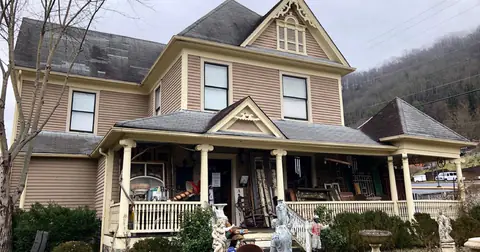
The property has a total floor area of 16.6 tsubo (about 55 m²), divided into 23 units. Dividing the full-occupancy sales of ¥153,300 by 23 gives roughly ¥6,665 per unit per month (this site’s estimate). Put another way: he rents a single studio apartment’s worth of space and re-lets it as 23 small boxes.
Initial investment ran roughly ¥4.5 million to ¥6 million, and he writes that the business was launched with his own capital as the baseline.
The shape of the expenses defines the character of this business
What matters in this income statement isn’t the size of the numbers but the shape of the expenses.
Fixed costs are rent (¥60,000) plus electricity (roughly ¥5,000), totaling ¥65,000. The management fee, meanwhile, is a variable cost, 15% of sales. That means even at zero occupancy, monthly outgoings are capped at ¥65,000.
From here we can back-calculate the break-even point. Letting occupancy rate be x, sales are 153,300x and expenses are 0.15 × 153,300x + 65,000. The point where take-home hits zero:
0.85 × 153,300x = 65,000 → x ≈ 49.9%
This matches his own statement that “profitability starts kicking in around 50% occupancy” (this site’s estimate). Once about 12 of the 23 units are filled, each additional unit adds roughly ¥5,665 to take-home from there.
A business with small absolute fixed costs and sales-linked variable costs has its worst-case loss determined in advance. For this property, the maximum possible monthly loss is ¥65,000. Whether that’s an amount a person with a day job can wait out for years without disrupting their life. The entire decision comes down to that single figure.
The turning point is disclosed as “not yet arrived”
There’s no dramatic turning point in this case. If anything, what makes this article valuable is that it shows the numbers before any turning point has occurred.
He writes as a downside that new contracts come in at only 0-2 per month, and that it takes over a year to reach full occupancy. Adding that up: at a pace of one per month, it takes 23 months to fill all 23 units; at two per month, about 12 months. His own sense of “over a year” lines up with the contract pace (this site’s estimate).
So the turning point for this investment is “the day occupancy crosses 50%”, somewhere between one year and nearly two years after opening, at the earliest and latest. Until that day, roughly ¥65,000 in fixed costs goes out reliably every month.
What’s decisive here, then, isn’t operational effort after opening but whether you built a funding plan, before opening, that lets you quietly absorb over a year of losses. His repeated statements (“prepared for a loss in year one, aiming for profitability from year two, with reserve funds secured”) read as pointing to that as the one and only fork in the road.
The structure at work — designed to avoid visiting the site
So why has he been able to keep this running alongside his day job (head of HR at a major company, hiring around 50 new graduates every year)?
The reason lies in design, not luck. He writes that “managing it personally takes too much time and cost, so I chose a company that operates on a management-profit model,” and lists his selection criteria for the operating company: whether they work with individual investors, how strong their track record is, whether they have web-based customer acquisition capability, how far their complaint-handling extends, whether the management fee is reasonable, and whether the rent setting is appropriate.
He also writes: “After purchasing the property, there’s no need to visit the site, remote ownership is possible.” That premise is exactly what let him choose a property in Shimizu, Shizuoka, far from where he lives.
Structurally, it breaks down like this:
- He doesn’t handle customer acquisition (web ads, listings) himself → outsourced via the 15% management fee
- He doesn’t handle cleaning or move-in/move-out himself → also included in the management fee
- He doesn’t handle viewings or on-site response himself → this is what makes remote ownership possible
The 15% fee is thus both a cost eating into revenue and the price paid to keep the time cost to his day job near zero. During low-occupancy periods, that 15% is a small absolute amount (even at full occupancy, just ¥22,995). For a business that stays in the red until occupancy rises, what matters is that the outsourcing scales with revenue rather than being a fixed amount.
At the same time, this design is a mirror image of dependency on the operating company. Having handed over customer acquisition, rent-setting, and complaint handling entirely, if occupancy doesn’t rise there’s almost nothing he can do except “switch operating companies.” His repeated emphasis on choosing the right operator likely reflects that it’s the only lever of discretion he retains.
The payback period gets a lot less exciting once you calculate it
He also lists the tailwinds on the demand side himself: the shrinking supply ratio of 70-square-meter-class condo units in favor of 50-60 square meters. New housing starts down to 85.3% and total floor area down to 70.5% and site area down to 66.0% versus a 2012 baseline of 100. Telework adoption around 30% in Tokyo and roughly 15% nationally. And, as of October 2021, storage-unit awareness at roughly 81% but actual usage at only about 5%.
But a tailwind existing is a separate matter from whether this particular property pays off as an investment. Estimating the payback period against the initial investment of ¥4.5-6 million gives the following:
| Assumed occupancy | Monthly take-home | Annual | Payback on ¥4.5M | Payback on ¥6M |
|---|---|---|---|---|
| 100% (full) | ¥65,305 | approx. ¥784,000 | approx. 5.7 years | approx. 7.7 years |
| 70% | approx. ¥26,213 | approx. ¥315,000 | approx. 14.3 years | approx. 19.1 years |
(Both figures are this site’s estimate. At 70%, sales of ¥107,310 minus a management fee of ¥16,097 minus fixed costs of ¥65,000.)
He writes that “profitability kicks in once 60-70% of units are filled,” but if occupancy plateaus at that level, payback takes 14 to 19 years. Only by sustaining full occupancy over the long term do you get the 5-7 year figures typical of real estate investment. Read it not as a story of failure but as a story of how expectations are set. A payback period that swings by more than double with just a few points of occupancy. That is the fundamental nature of this business.
Note that the source note is partly paid (2,243 characters remain behind the paywall), and this article covers only the numbers in the free portion. Information available only in the paid section, such as the actual trajectory of occupancy over time, has not been reviewed here.
How much of this can be replicated
There’s more that’s replicable than you might expect.
- The income-statement framework: separating fixed costs (rent + electricity) from variable costs (management fee %) to calculate a break-even point can be done the same way for a physical shop or a coin laundry
- Designing the outsourcing ratio: the judgment that if you spend even a single minute of your own time, it won’t survive as a side business, and paying the fee accordingly
- Estimating the loss period up front: working backward from the contract pace (0-2 per month) to the number of months until full occupancy, and preparing the total fixed costs for that period in advance
On the other hand, the conditions that can’t, or shouldn’t, be replicated are just as clear.
First, being able to set aside ¥4.5-6 million in personal capital in a way that “won’t affect daily life even if it sits idle for over a year.” His day job as head of HR at a major company is a level of financial capacity not everyone has as a given.
Second, the existence of a qualifying operating company in your target area. This case’s design leans entirely on the operator’s customer-acquisition strength. Being able to remotely own a property in a regional area is only possible because there’s a company he can entrust it to.
Third, the demand-side numbers (shrinking unit sizes, telework, 81% awareness vs. 5% usage) describe the market as a whole. They’re no guarantee that 23 tenants exist for 16.6 tsubo in Shimizu, Shizuoka. That the market is growing and that his particular units get filled are two separate things that must be verified independently.
As a template for starting small and recouping the investment over time, this is a straightforward case. But what’s “small” here is the monthly loss amount, not the entry cost of ¥4.5-6 million.
Related reading
- An engineer’s side-business rental space: ¥7.5 million in year one across 3 locations — initial cost of ¥450,000, payback in half a year. Same “renting out a box” model, but the entry amount and payback speed differ by an order of magnitude
- Four months of an actual kitchen-car launch — occupancy determines revenue here too, but this one runs on the owner’s own labor time
If this one impressed you
Similar cases

Is a coin laundry passive income? ¥150,000-500,000 a month, 7-10 year payback — an owner's numbers
Offline
One vending machine on an apartment lot: 122,000 yen paid out, 3,778 units sold in a year — the 86,000-yen profit, broken down
Offline
Four Rental Spaces Generating ¥360,000 in Monthly Profit. 30% Fees, ¥450,000–700,000 Upfront — the Going Rates of the Hourly-Rental Market
Offline
Two Real Records of Renting Out a Home Parking Space — ¥741/Month Average in the Countryside, ¥4,500/Month in the City. An akippa/Toku-P P&L Breakdown
OfflineMost read
- 1
Payout: A Class-Action App Vibe-Coded in 14 Days Reached $1,003,227 ARR in 9 Months. It Cost About $10 to Build, and a Partner With 10 Million Followers Grew It
43 recent visits - 2
Starter Story: The $91.7K/Month Startup Case-Study Media Acquired by HubSpot — Months After the Founder Tweeted "HubSpot Should Acquire Starter Story"
35 recent visits - 3
Instatus: $48K MRR with Every Metric Public, After Dropping "Sup" and Repricing Upmarket
23 recent visits - 4
From 30 yen in revenue to 8 years later: how running 3 apps in parallel got an indie developer to 200,000 yen a month
20 recent visits - 5
¥4.61 Million a Year, Five Years After Starting to Learn Programming. The Full Three-Year P&L and Playbook of an Indie Education App
19 recent visits
Latest articles
- 2026-10-20
An 18-Year-Old French Pâtisserie Changed Hands for ¥8M With 1–2 Weeks Left Before Closing — And the 29-Year-Old Buyer Never Negotiated the Price
- 2026-10-20
Traffic Think Tank: a six-year side-hustle SEO community sold for $1.8M, with 40% paid later
- 2026-10-20
Doing Content Right: After Four Side Projects That Made $0, a $99 Ebook Did $130K in Eight Months
- 2026-10-20
Ali Abdaal: Of $5.5M in 2023 Business Revenue, $3.5M Came From Courses — YouTube Was the Funnel, Not the Product
- 2026-10-19
Ozeki Sangyo: A Factory "Two Months From Death" Changed Hands for ¥13M — ¥11M of It an Apartment, Not Cash