
Landlord Larry: 40 Rentals at 24, a $480 Payment and $1,400 Rent
Lawrence Guerguis, known online as Landlord Larry, grew to 40 single-family rentals in the American Midwest in three years. He has not published total rent or total cash flow. What is published is unit by unit: a property with a payment in the $480 range collected about $1,400 in Section 8 rent.
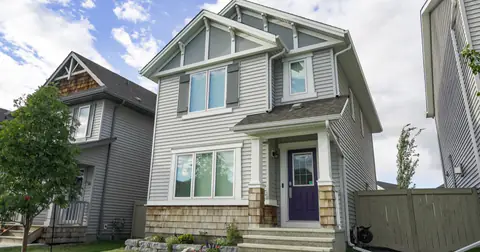
The payment was in the $480 range. The rent coming in was about $1,400, and the tenant’s share was zero, with the full amount paid by a Section 8 housing voucher. Those are the numbers on the first house Lawrence Guerguis, from California, bought as a college junior. He is now 24, and his single-family holdings have grown to 40.
This case lacks the figure this site normally requires. All 443 published cases carry a real number for either monthly revenue or a sale price, and his total rent, total cash flow and total debt appear in none of the sources. The phrase used on the BiggerPockets episode is “thousands in monthly cash flow,” and it is broken down no further.
We judged it worth recording anyway because, in place of a total, the payment and rent for individual properties appear side by side. A headline about 40 houses at 24 invites you to expect a total, and what can actually be verified is one pair of numbers at a time. So here they get counted.
The per-property figures that are published
| Property | Figures |
|---|---|
| First house (Peoria, Illinois, while in college) | $65,000 purchase, about $15,300 down, payment in the $480 range, Section 8 rent of about $1,400 with zero tenant share |
| The same house, as reported by Business Insider | Payment of about $400 a month, HUD standard rent for that ZIP code of about $1,300, DSCR above 2.0 |
| First Cleveland deal, a duplex | $88,000 purchase, $675 payment. Existing rents were $650 for each of two units, raised to the two-bedroom standard of about $1,200 each three months later |
| A single-family home that needed work | $524 payment, $1,850 rent |
| A four-bedroom, two-bath single-family home | Payment of about $540, rent of $1,300 |
| A three-bedroom, one-bath home in a better area | $709 payment, $1,720 rent |
| A recent purchase | A three-bedroom at $900 in rent, raised to $1,600 |
| Acquisition pace | The goal was six houses in a year. The result was six in six months, with down payments of $17,000 to $20,000 each |
| Starting capital | $16,000 from selling an inherited car. $15,000 to the down payment, $1,000 to several months of payments |
| Count | More than 30 as of August 2026, 40 as of September 2026 |
| Structure | One person. Self-managed for 18 months, then set up his own management company |
The sources disagree on the first house. Business Insider Japan reports a payment of about $400 a month and HUD standard rent of about $1,300, while on the BiggerPockets transcript he says the payment was in the $480 range with rent of about $1,400. Both are placed here rather than reconciled. Rent over payment works out to about 3.3 times in the first version and about 2.9 times in the second.
The headline says 40 houses. What can be verified is one pair, $480 and $1,400
The design here put two mechanisms outside the business at once.
The first is credit. He bought while still enrolled in college, with no pay stubs and no income, so a conventional mortgage was out. He used a DSCR loan, where the underwriting looks at how far the property’s rent exceeds the debt service rather than at the borrower’s income. A minimum ratio of 1.25 is described as the requirement, and the first house came in above 2.0. He found a lender willing to write loans that small through the BiggerPockets forums.
The second is how the rent gets set. Under Section 8, a housing authority pays 70% to 100% of the rent. The tenant in the first house had no income, so 100% of the rent arrived from the government. This is what he means when he says he needed the perfect tenant and that the government never misses a payment.
What this business externalized is both the credit and the rent-setting. Stated as our judgment: the reason he could stack 40 houses by 24 sits here rather than in buying cheaply. His own income was irrelevant, so he could buy as a student, and the rent is set by an authority’s standard, so there is no rent negotiation and no tenant credit check to run.
The room to raise rent sat in the paperwork, not the property
The most concrete figure in the public record involves the other revenue lever. The duplex he bought first in Cleveland had two three-bedroom units, but the tenants held only two-bedroom vouchers, and rent was stuck at $650 per unit.
He looked up the housing authority’s standard and filed for the two-bedroom figure of about $1,200. Three months later both units were at that amount. He did no construction at all, because the property had already passed its Section 8 inspection.
Why had the previous owner not done this? By his account, a Section 8 rent increase has to be filed in person with the local authority, and remote investors have nobody on the ground or simply do not know the rule. That property had changed hands repeatedly, and nobody had ever filed. He recently took a three-bedroom from $900 to $1,600 the same way.
Here our read differs slightly from his. He describes his edge as understanding the numbers, but what produced the moves from $650 to $1,200 and $900 to $1,600 was not arithmetic. It was getting himself into a state where he lived locally and could carry paperwork to the authority’s counter. He did move to Cleveland and managed everything himself for the first 18 months.
The weak side is on record in numbers too
He bought the first house without seeing it. A handyman he found in a Facebook group looked at it and gave him a thumbs up, and that was the whole inspection. He says he did not know what a water heater was. Finding a tenant took a couple of months, and the screening he used was, in his words, not really good at all.
The renovation work he did himself went badly. He painted walls without primer and tried to re-sand a wood floor without success. He says he still has the photos.
The source of funds does not transfer either. He went into cryptocurrency Discord servers and argued repeatedly that holdings there could be worth nothing tomorrow while tangible assets could not. One person who responded became his capital, funding down payments on six houses. The terms were 30% equity and a 50/50 split of rents. He later bought the partner out, and he looks back on it this way: that is not the right way to go about it, and anyone entering a partnership should have the long-term plan set from the beginning.
His single biggest regret sits on the pricing side. In his first year he repeatedly lost deals over gaps of $1,000 to $2,000 with sellers. On a small property, that gap amounts to $5 a month. His own summary is that he wishes he had bought every deal sooner.
What transfers, and what does not
- Buying without earned income works only where rent exceeds debt service by at least 1.25 times and a lender will write loans at that size.
- A rent increase without construction pays off only where existing tenants hold vouchers below the size of the unit and the previous owner never filed with the authority.
- A business started remotely detaches from the operator’s own hours only after a period of living locally and self-managing, followed by a handoff. In his case that period was 18 months.
The limits are large. Total rent, total cash flow and total debt appear in no source, so the scale of 40 houses as a business cannot be measured from outside. He says he keeps as little as possible and puts it into down payments every month, which suggests no intention to publish what actually stays in his hands. Three years is also too short a stretch to have passed through a heavy repair cycle or a run of vacancies. Section 8 and DSCR loans are United States instruments, and whether the same combination exists elsewhere falls outside the sources.
Related cases
Cases that publish per-unit economics: three rural vacation rentals with every figure disclosed, ¥3.45M in startup cost and a 17-month payback, an engineer’s side-business rental spaces, three locations grossing ¥7.5M in year one on ¥450,000 of startup cost, and 23 indoor storage units grossing ¥65,000 a month at full occupancy, with breakeven at 50%.
All three publish the startup cost and monthly economics of a single location. What differs in this case is that the operator does not set the rent level. A housing authority’s standard amount is the ceiling, so income turns on whether the correct paperwork was filed against that standard rather than on whether the unit fills.
Sources
- Reported Business Insider Japan(2026年8月22日、Jordan Pandy 記者、無料で全文公開)。Lawrence Guerguis 氏が24歳で30戸超を保有すること、サンディエゴ大学で金融を専攻し2024年5月に卒業したこと、相続した車を$16,000で売り$15,000を頭金に充てて残り$1,000を数か月分の返済に回したこと、1軒目はイリノイ州で返済が月約$400・そのZIPコードのHUD基準家賃が約$1,300・DSCRが2.0超だったこと、DSCRローンは家賃が返済を何倍上回るかで審査され最低1.25が必要なこと、クリーブランドで1年半の自主管理を経て自前の管理会社を設立し2026年6月にカリフォルニア州オレンジカウンティへ移ったこと、「お金のために生きたくない」という本人の言葉を記載
- Reported BiggerPockets Real Estate Podcast 本人出演回の全文トランスクリプト(2026年9月、無料)。保有40戸・「月に数千ドルのキャッシュフロー」という表現、1軒目(イリノイ州ピオリア)の購入額$65,000・頭金約$15,300・返済$480台・Section 8家賃約$1,400で入居者負担ゼロ、クリーブランドの1件目デュプレックス$88,000で返済$675・既存家賃$650×2から2ベッドルーム基準の約$1,200×2へ、返済$524で家賃$1,850の戸建て、返済約$540で家賃$1,300の4ベッドルーム、返済$709で家賃$1,720の3ベッドルーム、6か月で6戸・頭金は1件$17,000〜$20,000、パートナーに30%のエクイティと家賃50/50を渡して後に買い戻したこと、$1,000〜$2,000の差で案件を落とした後悔を記載
Similar cases

kan.kikuchi: ¥5,913,887 a Year from Solo-Built Joke VR Games — With the ¥420K Build Cost and 813 Hours All on the Record
Digital products
Podscan: $4,000 in the Red Every Month, Two Months After Declaring Profitability — Arvid Kahl's Second Act Is a Fight With GPU Bills
SaaS
Take Me to Koshien: ¥12.9M in 11 months, and the ¥100 ticket that multiplied IAP revenue by ten
Mobile app
Gadgemaga: 594,562 Pageviews, ¥3,784,734 in a Month — The Ledger a Former Civil Servant Published Down to the Last Yen
Blog/MediaMost read
- 1
Payout: A Class-Action App Vibe-Coded in 14 Days Reached $1,003,227 ARR in 9 Months. It Cost About $10 to Build, and a Partner With 10 Million Followers Grew It
29 recent visits - 2
From 30 yen in revenue to 8 years later: how running 3 apps in parallel got an indie developer to 200,000 yen a month
27 recent visits - 3
Starter Story: The $91.7K/Month Startup Case-Study Media Acquired by HubSpot — Months After the Founder Tweeted "HubSpot Should Acquire Starter Story"
26 recent visits - 4
Peak Monthly Sales of ¥1 Million on minne. A Former Designer Turned Handmade Artist Explains the Craft of "Photos That Sell"
22 recent visits - 5
Instatus: $48K MRR with Every Metric Public, After Dropping "Sup" and Repricing Upmarket
22 recent visits
Latest articles
- 2026-10-08
VMagicMirror: ¥10M on BOOTH While Giving Away Nearly Every Feature for Free
- 2026-10-08
Native: A Lawyer Who Couldn't Read His Deodorant Label Sold His D2C Brand to P&G for $100M Cash in About 2.5 Years
- 2026-10-08
10Beasts: An 8-Article Amazon Affiliate Site Hit $80K/Month in 9 Months — Sold for $570K, Google Penalty 17 Days Later
- 2026-10-07
Repsona: Five Years Solo, ¥12.4M Total Revenue — The Open Ledger of a Task-Management SaaS Its Maker Calls a "Startup Failure"
- 2026-10-07
Bargaineering: From Cents a Day to a $3M Sale in Five Years