
A 90-year-old liquor store group from Kagawa acquires a small-town shop. Five employees stayed on, and the deciding factor was the seller staying on the floor
Matsuda Sake Shop LLC in Marugame, Kagawa Prefecture, was transferred to Shibataya Holdings, a group of 11 companies founded in 1935. After a first visit in spring 2024, the store reopened as Matsuda Shuhan that October under a new structure. Five employees and the company name were kept, and the biggest factor in the decision was that the former representative would stay on the floor.
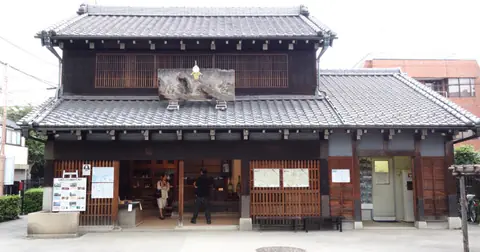
When a small regional liquor store goes up for sale, who shows up as the buyer? Matsuda Sake Shop LLC in Marugame City, Kagawa Prefecture, was listed on Batonz due to a lack of a successor and was transferred to Tokyo-based Shibataya Holdings Co., Ltd. in the fall of 2024. The transfer price was not disclosed. But director Osamu Kobayashi has left fairly specific comments on why the buyer chose “Marugame” and what grounded the decision. The short answer: the deciding factor was neither finances nor location, but whether the former representative would stay on the floor.
Overview of both companies and the deal
| Item | Details |
|---|---|
| Seller | Matsuda Sake Shop LLC (Marugame City, Kagawa Prefecture) / retail (alcoholic beverages) |
| Reason for transfer | No successor |
| Seller’s strengths | A liquor distribution route rooted in Marugame City, room to expand into Takamatsu City, the prefecture’s largest urban market |
| Buyer | Shibataya Holdings Co., Ltd. (Tokyo) / reason for acquiring was expansion into a new area |
| Size of buyer’s group | 11 companies (8 domestic, 3 overseas) |
| Founding of core company | Shibataya Sake Shop Co., Ltd., founded 1935 (90 years ago) |
| First visit | Spring 2024 |
| Intermediary | None (direct negotiation) |
| New structure launched | October 2024, company name changed to Matsuda Shuhan |
| Employment | 5 employees retained; former representative Mr. Matsuda also stayed on the floor |
| New representative | Takumi Sugimura (also serves as representative of Mishima Shuhan in Hiroshima) |
| Transfer price | Undisclosed |
Why does the buyer keep acquiring small regional liquor stores?
To understand this deal, you need to look at the path the buyer has walked for over 20 years.
Shibataya Sake Shop was founded in 1935. It originally sold to households, in Kobayashi’s words, “the image is like Mikawaya-san, the liquor store that appears in Sazae-san.” But deregulation of retail liquor licenses progressed from the late 1990s onward, and alcohol became available at supermarkets and convenience stores. “It was obvious the liquor retail business would shrink,” Kobayashi recalls.
The next move was a shift toward business-use liquor sales, but large operators stood in the way there, wielding purchasing power as their weapon. “If we fight on the same turf, we get dragged into a price war, and there’s no way we can win on capital.” This recognition has defined every move made since.
From there, diversification began. In 2011, they opened a wine bar on the first floor of the head office building. From 2015, they started handling directly imported wine. In 2018, they brought “Beer Kobo,” which operated craft beer brewing and store businesses, into the group through M&A, and now operate 10 stores. The reason for choosing the restaurant business is clear: “Compared to conventional liquor retail, the restaurant business is attractive because you can secure a gross margin.” Choosing M&A over building from scratch was “because we thought it was optimal both in terms of time and personnel.”
On the liquor retail side, expansion into regional areas has continued. In 2023, Mishima (now Mishima Shuhan) in Hiroshima City, Hiroshima Prefecture. In 2024, Masumura Sake Shop (now Masumura Shuhan) in Takasaki City, Gunma Prefecture. And that same fall, Matsuda Sake Shop (now Matsuda Shuhan) in Marugame City, Kagawa Prefecture. This order is not a coincidence.
What’s working — the design of choosing “places big players don’t come”
Kobayashi explains the reason for accumulating small regional liquor stores from two angles.
One is the outlet for products. Shibataya Sake Shop has wine as a differentiated product, has been directly importing since 2015, and also handles original sake products developed in cooperation with breweries. “We factored in selling these products not only in major metropolitan areas but also through regional liquor retail routes.” What they’re buying, in effect, is the existing distribution routes through which they can channel their own products, not the stores themselves.
The other is asymmetry in the competitive environment. “Liquor retail has large regional differences. In major metropolitan areas like Tokyo, there are many large operators, so you’re exposed to price competition. On the other hand, in regional areas with modest expected sales, large operators rarely make a move, so competition is scarce, and you can expect demand without resorting to unreasonable discounting.”
This is the structurally important part. The reason large operators don’t come to regional areas is that the market is small. But smallness goes hand in hand with the ability to protect gross margin. For an operator that can’t compete on sales volume, market smallness actually functions as an entry barrier. The only place where a party that loses on purchasing power can survive is a market small enough that purchasing power doesn’t matter, the lesson learned from deregulation in the late 1990s has been translated directly into the selection criteria for regional M&A.
The specific reason for choosing Marugame follows the same logic. “Since Mishima in Hiroshima Prefecture had already joined our group, we thought that at the distance between Hiroshima and Kagawa, we could manage them together. Also, Marugame City has less competition, and Takamatsu City, a major urban area within Kagawa Prefecture, is nearby, so we could expect market expansion there too, which is why we moved forward on this deal concretely.” They kept management costs down by leveraging distance from an existing base while capturing room to expand into a neighboring major city. In fact, under the new structure, deliveries are planned twice a week to Takamatsu City, about an hour from Marugame, as they develop new sales channels.
The point that decided it — “If Mr. Matsuda hadn’t stayed, this deal wouldn’t have happened”
The turning point in this deal was the first visit in spring 2024, when Shibataya Holdings visited Matsuda Sake Shop and talked with representative Mr. Matsuda.
Kobayashi’s words are clear. “In M&A, various kinds of back-and-forth and negotiation are common, but I believe more than anything that the other party’s character and passion matter most. When I spoke with Mr. Matsuda, I felt he was truly an energetic person. Due to the geographic situation, we couldn’t immediately station someone permanently in Marugame City, so the reassurance of having Mr. Matsuda there gave us confidence that we could move the business forward together as a group.”
He goes further still. “Conversely, if the condition had been that Mr. Matsuda would leave the floor immediately after the M&A, this deal might not have happened. That’s how much of a factor his character, including who he was as a person, was in the decision.”
This might look like an emotional matter, but it follows necessarily from the buyer’s operating conditions. The Shibataya Group’s bases are in Tokyo and Hiroshima, and there’s no capacity to station someone permanently in Marugame. The current representative, too, is Takumi Sugimura, representative of Mishima Shuhan in Hiroshima, serving in a dual role while shuttling between Hiroshima and Kagawa to run both companies. Running daily deliveries and customer relations under this structure requires someone who stays on the ground.
Far from a “nice-to-have” condition, the seller staying on the floor was the very thing that made the deal executable for this particular buyer. The more a buyer depends on remote management, the more highly it will value the seller’s staying on. When a small-business seller is in a state of “wanting to retire but not able to leave completely,” that’s not a bargaining weakness. It can actually widen the pool of potential buyers.
Note that the negotiation was conducted directly, without bringing in an intermediary firm. Kobayashi has previously handled multiple M&A deals for wholesale companies at a food company, and says he makes a point of “thoroughly checking inventory and business partners.” Since inventory and client accounts constitute nearly all of a liquor retailer’s assets, verification of these two points effectively constitutes due diligence.
What isn’t disclosed
The range this case can’t verify is wide. The transfer price is undisclosed, and none of Matsuda Sake Shop’s annual revenue, profit, inventory value, number of client accounts, or number of delivery vehicles appears in the article. So there’s no way to judge what price a business of this size, five employees, actually changed hands for. Whether buying a regional liquor distribution route was a sound investment also can’t be verified from outside.
The results after succession also haven’t materialized yet. It’s noted that Shibataya Sake Shop’s original products were added to the existing lineup, but any resulting sales increase hasn’t been turned into a number. The twice-weekly delivery to Takamatsu City is still at the planning stage, and the number of new accounts developed hasn’t been disclosed.
There are structural risks easy to miss. Sugimura, who serves as representative, holds a dual role as representative of Mishima Shuhan in Hiroshima and operates by shuttling between two bases. The deal was also premised on Mr. Matsuda staying on the floor, and it isn’t disclosed how long he will remain. Both points are single points of failure that depend on specific people. The constraint of being unable to station someone permanently in Marugame was a condition that made the deal work, and it’s also a constraint that continues after the succession.
Conditions under which this pattern holds
Looking from the seller’s side, the reproducible conditions narrow down surprisingly well. An actively functioning distribution route, operated in a region small enough that large operators won’t enter. What was bought here was the route, not the store. Inventory and client relationships that can be clearly explained. The fact that direct negotiation without an intermediary was possible owes a lot to the industry having clear points to verify. And a former representative able to stay on the floor after succession. In this case, that’s named as the single biggest deciding factor.
Some parts, though, aren’t reproducible. The geographic coincidence that the buyer already had a base in Hiroshima isn’t something the seller’s side can create. Whether a buyer like the Shibataya Group, motivated by wanting to channel its own products, happens to be scouting that particular region is also a matter of luck. Even if a seller lines up the same conditions, the deal won’t happen unless a matching buyer exists in the market.
Kobayashi has this to say about business succession: “Our basic stance on M&A is to keep the company name and carry over employees’ jobs. We see it as a serious problem for a town to lose its liquor store, and we want to firmly preserve the culture of the neighborhood liquor shop locally. Marugame City, too, is an area where, if Matsuda Sake Shop had disappeared, all that would remain are supermarket chains and convenience stores.” Having once been pushed out by the deregulation of the 1990s, they’re now the ones buying up stores at risk of being pushed out in turn. That’s the backbone of this case.
Also worth reading
- MENTA’s share transfer to Lancers — a structure in which a company in the same industry becomes the most natural buyer
- A record of launching a kitchen car in four months — regional and store costs seen from the side of starting small
If this one impressed you
Similar cases

A 15-Year Housekeeping Business Sold for ¥45M Against an ¥80M Asking Price — What Won the Four-Way Auction Was Not the Highest Bid
Offline
In a market where 32 dealers shrank to 12, a 35-year-old took over a wholesale business after six months of unpaid on-site training
Offline
A Grad Student Sells His Programming School Upon Taking a Job. A Third Exit That Is Neither "Shutting Down" Nor "Cashing Out"
Offline
A Fruit Sandwich Shop Headed for Closure Sold for ¥2M — a "Nothing to Lose" Listing Drew 20+ Offers
OfflineMost read
- 1
Payout: A Class-Action App Vibe-Coded in 14 Days Reached $1,003,227 ARR in 9 Months. It Cost About $10 to Build, and a Partner With 10 Million Followers Grew It
43 recent visits - 2
Starter Story: The $91.7K/Month Startup Case-Study Media Acquired by HubSpot — Months After the Founder Tweeted "HubSpot Should Acquire Starter Story"
35 recent visits - 3
Instatus: $48K MRR with Every Metric Public, After Dropping "Sup" and Repricing Upmarket
23 recent visits - 4
From 30 yen in revenue to 8 years later: how running 3 apps in parallel got an indie developer to 200,000 yen a month
20 recent visits - 5
¥4.61 Million a Year, Five Years After Starting to Learn Programming. The Full Three-Year P&L and Playbook of an Indie Education App
19 recent visits
Latest articles
- 2026-10-20
An 18-Year-Old French Pâtisserie Changed Hands for ¥8M With 1–2 Weeks Left Before Closing — And the 29-Year-Old Buyer Never Negotiated the Price
- 2026-10-20
Traffic Think Tank: a six-year side-hustle SEO community sold for $1.8M, with 40% paid later
- 2026-10-20
Doing Content Right: After Four Side Projects That Made $0, a $99 Ebook Did $130K in Eight Months
- 2026-10-20
Ali Abdaal: Of $5.5M in 2023 Business Revenue, $3.5M Came From Courses — YouTube Was the Funnel, Not the Product
- 2026-10-19
Ozeki Sangyo: A Factory "Two Months From Death" Changed Hands for ¥13M — ¥11M of It an Apartment, Not Cash