
Ten-plus firms raised their hands, seven made it to top-level talks — the pharmacist who won a Sendai dispensing pharmacy, on his second M&A
The transfer of Sendai-based dispensing pharmacy KSI Ltd., founded about 30 years ago, drew inquiries from over ten companies, and seven advanced to top-level meetings. The winner was Kentaro Ishii, a pharmacist who had taken over his first store two years earlier. Exclusive negotiations began within a month of the first meeting, and closing came in about 3 months. The deciding factor wasn't price, but his attitude toward employees.
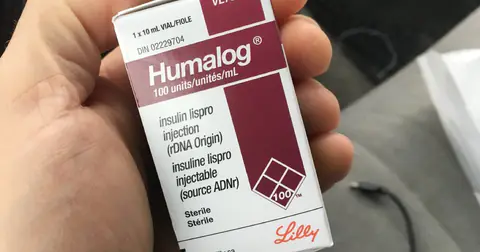
When a sale listing draws multiple buyers, what decides the winner? This case has the scale of that competition preserved in numbers. The transfer of KSI Ltd. (Omachi Dispensing Pharmacy), a dispensing pharmacy with about 30 years of history in Sendai City, Miyagi Prefecture, drew inquiries from over ten companies, of which seven advanced to top-level meetings. The deal closed with KYS LLC, led by Kentaro Ishii, a pharmacist who had only taken over his first store two years earlier. The transfer price is undisclosed, but the narrowing-down process and the conditions imposed by the financial institution are.
The course of negotiations
| Item | Details |
|---|---|
| Company transferred | KSI Ltd. (Omachi Dispensing Pharmacy) / Sendai City, Miyagi Prefecture / about 30 years since founding |
| Characteristics of the transferred company | Solid management with good financials, high patient retention |
| Reason for transfer | No successor |
| Buyer company | KYS LLC (representative: Kentaro Ishii) / Sendai City, Miyagi Prefecture; reason for acquiring was business expansion |
| Inquiries | Over ten companies |
| Top-level meetings | 7 companies |
| Exclusive negotiations | Began within one month of the first meeting |
| Time to closing | About 3 months from the start of exclusive negotiations. Closed in early September 2024 |
| Intermediary | Tax accountant Tetsuya Fukuda (Fukuda Accounting Office Co., Ltd.) |
| Transfer price | Undisclosed |
The buyer wasn’t “an outsider to the industry”
Ishii’s career unfolds in three stages. After graduating university, he joined a pharmaceutical company and worked as an MR (medical representative) for about 5 years. After that, he moved back to Sendai from Chiba Prefecture and worked as a pharmacist at a dispensing pharmacy for about 10 years. Then, two years before the article’s publication (October 2024), he took over a dispensing pharmacy through an acquaintance’s introduction, going independent while simultaneously founding KYS LLC.
His drive toward independence was there from the start. “From the time I joined the pharmaceutical company, I had always intended to eventually go independent,” he says. But the form of independence he chose was a succession, not a new store opening. His first store was arranged through the personal channel of a friend’s introduction, but in searching for his second, he registered on multiple M&A sites including Batonz, and pursued listings with the attitude that “if I kept checking every day, I believed I’d surely find a good match.” He replaced the luck-dependent channel of introduction with a continuous search via a platform.
The conditions for the target were also clear: a location within walking distance of home, a shop whose atmosphere he already knew, a stable operating track record, and effectiveness for a dominant strategy (concentrated regional store openings). The vision came first, “I want to develop community-rooted dispensing pharmacies within and around Sendai City”, and he pursued only listings that matched it.
Why he beat 7 companies — it wasn’t about price
The turning point in this case is the moment he obtained exclusive negotiating rights within a month of the first meeting. In a competitive environment of over ten inquiries and seven top-level meetings, the other six companies stepped off the mat within the first month. The roughly 3 months that followed became a period for the practicalities toward closing, not price competition.
According to the intermediary, Fukuda Accounting Office, the reasons Ishii was chosen were that his personality was sincere; that they were confident he would create a workplace where employees were valued and comfortable. That he had a track record running a pharmacy of similar scale. And that the corporate culture and scale were similar. Price is not listed as a reason.
Why the decision hinges on this axis can be explained by the seller’s circumstances. For a pharmacy with about 30 years of history and high patient retention, the substance of its value lies in the patients who keep coming and the employees who know them, not in the building or the equipment. If employees leave after the owner retires, patients leave too, and the very grounds for the price the buyer paid disappear. So the seller cares about employee treatment as both an emotional matter and a matter of whether the business survives after the transfer.
The condition of similar scale and culture connects to the same logic. If a major chain buys, workflows and systems get swapped out entirely, and employees accustomed to long-standing ways are more likely to leave. A buyer operating at the scale of a single individually-run store creates less pressure for change. This is where “the small buyer can beat the big buyer” comes into play. If a party weaker in capital ends up winning the bid, whether they understand this structure is the deciding factor.
Ishii’s own conditions (within walking distance from home, a shop whose atmosphere he already knew) also became, as a result, a source of reassurance for the seller. The fact that he wasn’t a buyer coming from far away, but someone who knew the region and could be on-site day-to-day, came across without needing explanation at the meeting.
The other deadline that financing imposed
One more thing specifically recorded in this case is how financial due diligence was handled. The financial institution designated financial DD as a required condition for the loan, and demanded it be completed on a tight timeline. In response, the accountant, the previous owner, the tax accountant, and intermediary Fukuda all moved swiftly, producing documentation that satisfied the bank.
What matters here is that the buyer’s effort alone wouldn’t have been enough. The financial DD materials are built from the seller’s books. That the previous owner and the retained tax accountant could cooperate on short notice is also because this pharmacy had “solid management with good financials.” The state of the seller’s accounting governs the buyer’s loan approval and schedule. This is one reason the soundness of financials carries meaning beyond price when choosing a listing in small-scale M&A.
Limits, and what hasn’t yet been verified
The transfer price is not disclosed. Therefore, whether this succession was worthwhile as an investment can’t be judged externally. Figures indicating business scale (annual revenue, number of prescriptions, employee count, store size) also don’t appear in the article, so they can’t be compared in a standardized way.
Synergy is also, at this point, only a plan. The concept is to generate effects by sharing resources such as staff, inventory, and information across the two stores, but no results in numbers are shown yet. The handover was arranged so that the previous owner would still show up on-site through the end of the year under a two-person system, with full handover the following year, at the time of the article’s publication, the transition was still in progress.
The dominant strategy also has a flip side. Concentrating store openings in one region raises efficiency, but it also means concentrating exposure to the effects of relocations or closures of medical institutions in that region, or revisions to the drug pricing/reimbursement system. Without diversification, volatility is amplified.
Ishii holds a view of timing: about 30 years have passed since the separation of dispensing and prescribing began, and the generation of owners who went independent at that time is now entering a wave of retirement. This is a tailwind, but it’s also “the current market conditions of this moment,” and there’s no guarantee the same conditions will line up ten years from now.
What can be imitated, what can’t
What can’t be replicated is clear. A pharmacist’s license is a prerequisite, along with about 5 years as an MR and about 10 years working at a pharmacy, an industry-insider career, plus the operating track record of the first store he took over two years earlier. The selection reason “has a track record running a pharmacy of similar scale” refers precisely to this track record. Without the first deal, there’s no guarantee he would have won the top-level meeting for the second. The sequence can’t be skipped.
On the other hand, there are parts that don’t depend on a license or industry. Narrowing your buying conditions down to something as concrete as “within walking distance” and “a place I already knew.” Shifting away from waiting for introductions and instead registering on multiple platforms, checking daily as a habit of searching. And putting the treatment of employees, not price, at the center of your proposal. In a listing where competition is happening and the buyer isn’t the strongest in capital, these three are the moves available.
Over ten companies inquired, seven advanced to meetings, and it was narrowed to one within a month. The shape of that funnel itself is the answer to what gets valued in small-scale M&A.
Related reading
- A graduate student who transferred a programming school upon taking a job — a record, from the seller’s side, of a listing that drew multiple buyers
- MENTA’s share transfer to Lancers — an example of the structure “a same-industry operating company is the most natural buyer” playing out in a web service
If this one impressed you
Similar cases

A 60-year-old photo studio passed to a couple in their 30s: a client list of 6,000 and 300 costumes, contracted in about a month once serious talks began
Offline
A 15-Year Housekeeping Business Sold for ¥45M Against an ¥80M Asking Price — What Won the Four-Way Auction Was Not the Highest Bid
Offline
In a market where 32 dealers shrank to 12, a 35-year-old took over a wholesale business after six months of unpaid on-site training
Offline
A 2-employee marketing firm bought a coffee stand — decided before hiring, and stayed closed for 5 months
OfflineMost read
- 1
Payout: A Class-Action App Vibe-Coded in 14 Days Reached $1,003,227 ARR in 9 Months. It Cost About $10 to Build, and a Partner With 10 Million Followers Grew It
43 recent visits - 2
Starter Story: The $91.7K/Month Startup Case-Study Media Acquired by HubSpot — Months After the Founder Tweeted "HubSpot Should Acquire Starter Story"
35 recent visits - 3
Instatus: $48K MRR with Every Metric Public, After Dropping "Sup" and Repricing Upmarket
23 recent visits - 4
From 30 yen in revenue to 8 years later: how running 3 apps in parallel got an indie developer to 200,000 yen a month
20 recent visits - 5
¥4.61 Million a Year, Five Years After Starting to Learn Programming. The Full Three-Year P&L and Playbook of an Indie Education App
19 recent visits
Latest articles
- 2026-10-20
An 18-Year-Old French Pâtisserie Changed Hands for ¥8M With 1–2 Weeks Left Before Closing — And the 29-Year-Old Buyer Never Negotiated the Price
- 2026-10-20
Traffic Think Tank: a six-year side-hustle SEO community sold for $1.8M, with 40% paid later
- 2026-10-20
Doing Content Right: After Four Side Projects That Made $0, a $99 Ebook Did $130K in Eight Months
- 2026-10-20
Ali Abdaal: Of $5.5M in 2023 Business Revenue, $3.5M Came From Courses — YouTube Was the Funnel, Not the Product
- 2026-10-19
Ozeki Sangyo: A Factory "Two Months From Death" Changed Hands for ¥13M — ¥11M of It an Apartment, Not Cash