
PICO PARK: 1,000 copies in 3 years, then 1 million in 3 months
The 2016 Steam release sold 1,000 copies in three years, and the 2019 Switch version did not reach 10,000 in two. Three months after the May 2021 online update it passed 1 million worldwide, and 5 million by 2024. The price and the 48 stages never changed.
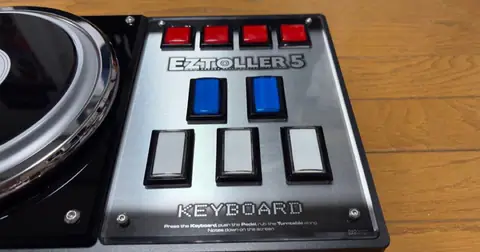
Can a game that barely sold for years really take off by the hundreds of thousands without changing what's inside it?
It can. What changed was everything around the game.
- Eight years of the sales curve, from 1,000 copies in three years to a million in three months
- The reason the sources keep giving for the five slow years
- How the same 48 stages sold 100 times better after one condition of access changed
- Why ¥500 and an "all of us buy it" structure fit together
- What didn't work, and what was never published
After its 2016 Steam release, PICO PARK sold 1,000 copies in three years.
That’s the worldwide total, not the Japanese one.
The same game then sold more than 500,000 copies in the single month of July 2021, and crossed 1 million worldwide by the end of August.
Among the low-priced indie games, Exit 8 sold 1.4 million copies at ¥470 in a little over a year. Meccha Chameleon sold 20 million at ¥790 in roughly two months.
PICO PARK belongs on that shelf. The difference is that the years it took to get there are in a different order of magnitude.
A game that reaches a million copies sounds like one that was praised the moment it shipped.
The order here runs the other way.
A title stuck at roughly 10,000 lifetime copies five years after release reached 1 million in three months, without a change to its price or to any of its 48 stages.
Eight years of the sales curve
| Period | Event | Figure |
|---|---|---|
| Around 2013 | Plugs ten USB controllers into a PC and builds a prototype | All ten inputs responded |
| 2014 | Exhibits at Sense of Wonder Night, Tokyo Game Show | Best Presentation Award |
| 2016 | Steam release (CLASSIC EDITION) | 1,000 copies in three years |
| June 2019 | Nintendo Switch release, rebuilt around 48 stages | Under 10,000 copies in two years |
| May 2021 | Steam version with online multiplayer | 100 to 200 concurrent players in May and June |
| July 6, 2021 | A six-player clip spreads on Twitter | Over 12,000 retweets, 16,802 concurrent on July 8 |
| July 2021 | 1 million views on bilibili, eight North American streamers play it | Over 500,000 copies in one month |
| End of August 2021 | #picopark passes 300 million views on TikTok, Latin America follows | 1 million copies worldwide |
| August 28, 2024 | Sequel PICO PARK 2 ships on Nintendo Switch | Original passes 5 million copies |
| March 24, 2025 | Official figure for the sequel | PICO PARK 2 passes 1 million |
The price is ¥500.
The developer is Shunsuke Miyake, and TECOPARK was essentially a studio of one.
He built the game while working as a programmer at a large game company, and went independent in 2021, the year the million-copy figure was announced.
The company profile lists an incorporation date of August 20, 2021, capital of ¥5 million, and seven employees.
For five years, every conversation ended at “if only it had online”
The sources agree on why the first five years went the way they did.
The 2016 Steam build was local multiplayer only, which meant up to ten people had to be in the same room.
Miyake points to the fact that “if a group of friends wants to play, one person buying it is enough” as a reason the game never converted into sales.
On top of that, Steam refunds came in with the reason that buyers had expected an online mode and found none.
So part of those first 1,000 copies turned into disappointment at the other end.
The same wall stood in his business conversations.
People who tried the game at events were interested, he recalls. Then the talk ended with “if only it had online play.”
Nobody offered to publish it, which is why he ended up doing everything alone.
The 2019 Switch version was made after an indie developer community introduced him to Nintendo’s indie team. He wrote 48 new stages optimized for eight simultaneous players.
Two years later it was still short of 10,000 copies.
He isn’t harsh about himself here. Given how well people reacted at events, he says, he found himself wondering the opposite: why is none of this turning into sales?
Spread across the years, the Steam version averaged 333 copies a year over its first three, and the Switch version just under 5,000 a year over its two.
This is the number we care about most.
The three-year stretch at 333 copies a year, and the fact that he kept building anyway, separate this case from the rest far more than the million does.
The same 48 stages sold 100 times better
During the 2020 pandemic, Miyake decided that local multiplayer in this era ought to include remote play.
He took on the online work he’d avoided for technical reasons and shipped the Steam version in May 2021. Concurrent players sat between 100 and 200 through May and June.
- July 6: Twitter
A clip of six people playing over voice chat drew more than 12,000 retweets. Concurrency hit 16,802 on July 8.
- July 11: bilibili
A playthrough passed a million views.
- July 20: North American streams
Eight popular North American streamers played it.
- August: big creators and TikTok
Creators with more than 10 million subscribers picked it up. August sales centered on the United States and South America, and the route into South America was TikTok.
Miyake attributes the breakout to a design rule he held throughout: build every stage and gimmick around what players will say to each other.
Our reading differs slightly.
That conversational design was already in the 2016 build and in the 2019 one.
What 2021 added was a connection condition, the ability for eight people in different places to enter the same screen at once.
The conversation had always been there. The people who could film it and broadcast it hadn’t.
The same 48 stages sold 100 times better once one condition of access changed.
The price works in the same direction.
¥500 is small enough that a viewer deciding to try it doesn’t need to consult anyone.
A co-op game requires a copy per player, so eight friends move ¥4,000.
Under local multiplayer it was a “one of us buys it” structure. Once online arrived, that inverted into “all of us buy it.”
The sources don't spell this out, so this part is our inference. Without raising the unit price, the game multiplied the number of copies attached to a single gathering, and that's why the same enthusiasm produced more revenue than before.
Doing the arithmetic on ¥500 and a million copies
Revenue figures aren’t public. The unit count and the price are, so the order of magnitude can at least be placed.
Straight multiplication puts ¥500 by 1 million copies at ¥500 million, and 5 million copies at ¥2.5 billion.
What actually landed is lower. Platform fees come out, a substantial share of copies sold at discount, and pricing isn’t uniform across regions.
AUTOMATON also reports that Japan accounted for only a few percent of the million copies.
Nearly all of this revenue comes from outside Japan, which makes a weak yen a tailwind and a strong one a headwind.
Profit is undisclosed as well.
Online multiplayer runs peer to peer over each platform’s network features. That kept server costs off the books, and it also made cross-play impossible.
A decision made to hold costs down carried a functional limit with it.
Five years of quality work barely touched the unit count
The failures here are easy to name.
- Press releases went out in 2016 and produced coverage, and coverage didn't move 1,000 copies in three years
- Event appearances collected praise without converting into purchases, and the awards didn't show up in sales either
- The labor of rewriting 48 stages for the 2019 Switch version didn't, on its own, clear 10,000 copies
For those five years, almost none of the effort aimed at raising the quality of the work registered in the unit count.
The platform split, the total refunds, the share of discounted sales, development costs, and the actual revenue and profit are all unpublished.
Since 2021 TECOPARK has expanded into merchandise and collaborations, and a Sega crossover titled SONIC PICO PARK was announced in June 2026.
Unit sales of one game no longer explain the company’s revenue mix.
Even the million-copy figure exists because Miyake decided that publishing it might encourage indie development in Japan.
The years he chose not to publish are missing from this article too.
The July 2021 chain, and the co-op games that stopped at 1,000
The July 2021 chain rode on luck.
The pandemic had pushed demand toward remote play, and four routes, Twitter, bilibili, TikTok and North American streaming, fired within a single month.
Miyake says the game was spread by streamers and social media, and that part wasn’t designed.
The eight years of persistence also rest on a salary from a large game company.
Enduring three years at 333 copies is a decision available to someone whose living expenses come from somewhere else.
This case also excludes every title that did the same thing and sold nothing.
How many co-op games stopped at 1,000 copies and ended there is recorded nowhere.
About the closest surviving record is a solo developer whose 13 games earned ¥700 in total.
Matching the format and the price does nothing if the audience never assembles.
For five years, PICO PARK stood on that side of the line.
If this one impressed you
Similar cases

kan.kikuchi: ¥5,913,887 a Year from Solo-Built Joke VR Games — With the ¥420K Build Cost and 813 Hours All on the Record
Digital products
Ikameshi: ¥10M a Year Selling 3D Assets for VRChat — Six Years on BOOTH After Quitting the Day Job at ¥50,000 a Month
Digital products
The Exit 8: A ¥470 Solo-Developed Game That Sold 30,000 Copies on Day One and 1.4 Million in Just Over a Year — How "Spot the Anomaly" Made Streaming Sell Copies
Digital products
The Water Coolest: Sold to Barstool at 100K Subscribers, Bought Back Two Years Later — the Full Round Trip
Digital productsMost read
- 1
¥4.61 Million a Year, Five Years After Starting to Learn Programming. The Full Three-Year P&L and Playbook of an Indie Education App
42 recent visits - 2
From 30 yen in revenue to 8 years later: how running 3 apps in parallel got an indie developer to 200,000 yen a month
28 recent visits - 3
Payout: A Class-Action App Vibe-Coded in 14 Days Reached $1,003,227 ARR in 9 Months. It Cost About $10 to Build, and a Partner With 10 Million Followers Grew It
27 recent visits - 4
From ¥100 to ¥100,000 a Month in Three Years: The Quiet Compounding of an Ads-Only Tool App
26 recent visits - 5
Marketing Examples: 130,000 Subscribers in Three and a Half Years — a “Distribution” Playbook and a $2,300/Month Sponsor Slot
25 recent visits
Latest articles
- 2026-11-11
Just a Girl and Her Blog: $2,446 to a $51,803 Peak Month, With Ads Only 8% of Income, Over 34 Published Reports
- 2026-11-10
Key Values: A One-Person Job Board Doing ~$80K a Quarter, $25K in Its Best Week, on a Few Hundred Dollars of Monthly Costs
- 2026-11-10
Fat Stacks: $1,117,301 Revenue, $130,659 Expenses in 2021 From Unnamed Niche Sites Running on Display Ads
- 2026-11-10
EOFire: 136 Straight Monthly Income Reports End at $131,587 Revenue, 91% Margin, $27.9M Lifetime
- 2026-11-09
Thankbox: £150 to £12,000 a Month in 11 Months Selling $5.99 Online Group Cards
Sources
- Reported ファミ通.com「『PICO PARK』開発者インタビュー」(2021年10月27日、聞き手・戸塚伎一)。三宅俊輔氏本人の発言で、Steam版が3年間で1,000本(ワールドワイド)、Switch版が2019年のリリースから2年で1万本に届かなかったこと、5〜6月の1万本未満から7月に50万本超へ動いた経緯、返金理由、制作開始が2013年ごろであること
- Reported AUTOMATON「国産アクションゲーム『PICO PARK』なんと売上「100万本」突破」(2021年10月7日)。8月末時点で全世界累計100万本、価格500円、同時接続数の推移(5〜6月は100〜200、7月8日に1万6,802)、7月6日の拡散動画、Switch版のオンライン対応が9月10日、日本からの売上が数パーセントであること
- Founder TECOPARK株式会社の公式ニュース(2024年8月28日)。続編『PICO PARK 2』のNintendo Switch版発売と、前作『PICO PARK』の累計販売本数500万本突破
- Founder TECOPARK株式会社の公式ニュース(2025年3月24日)。『PICO PARK 2』が累計販売本数100万本を突破したこと
- Founder TECOPARK株式会社の会社概要。設立2021年8月20日、代表取締役 三宅俊輔、資本金500万円、従業員7名