
Google nearly sold for $750,000. Seven years later it paid over $1.1M for its first garage
Around 1999 Google reportedly offered itself to Excite for about $750,000, and the deal fell through. That year its revenue was $220,000 and its net loss $6.08M. The Excite CEO who said no puts the reason on terms rather than price, and in 2006 Google bought the house with its first garage for $1.1M to $1.3M.
By the Small Start editorial desk. We count every case in the archive by hand. The figures belong to the sources. The judgments are ours.
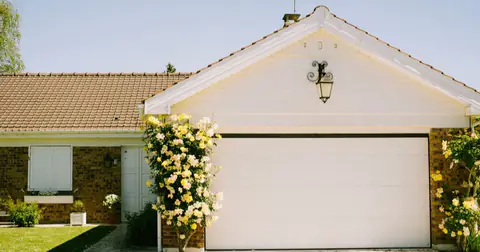
On September 8, 2006, Google bought a one-story house in Menlo Park, California. The record puts it at 1,900 square feet and the price somewhere between $1.1M and $1.3M. Eight years earlier, in September 1998, the two founders had rented the garage there for $1,700.
Between those two dates sits another number. Around the start of 1999, Google was reportedly close to being sold, whole, for roughly $750,000. The buyer would have been Excite, then a major portal. The story is well known and usually ends with a moral about Excite passing up a bargain.
The person on the other side of the table, though, does not talk about price. What follows traces each founding-era number back to whoever made it public.
From a dorm research project to a $1,700 garage
| When | What happened | Figures in the sources |
|---|---|---|
| 1995 | At Stanford, Brin shows prospective student Page around campus | not stated |
| 1996 | In their dorm rooms the two build BackRub, a search engine built on links | not stated |
| August 1998 | Sun co-founder Andy Bechtolsheim writes a check | $100,000 |
| September 1998 | Incorporated in California | not stated |
| September 1998 | They rent the Menlo Park garage | rent $1,700 |
| 1998 to early 1999 | A sale to Excite is discussed and does not happen | about $750,000 |
| by summer 1999 | Funding from Sequoia and Kleiner Perkins | $25M |
| September 1999 | Beta search volume | about 3.5 million a day, peaking at 65 a second |
| full year 1999 | Revenue and result | revenue $220K, net loss $6.08M |
| full year 2001 | First profitable year | revenue $86.43M, net income $6.99M |
| September 2006 | Buys the house with the garage | $1.1M to $1.3M |
| October 2006 | Acquires YouTube | $1.65B in stock |
The official history says Google Inc. was officially born with Bechtolsheim’s $100,000 check. The S-1 filed for the IPO dates incorporation to September 1998. Side by side, the check comes before the company.
The garage’s owner, Susan Wojcicki, later became Google’s sixteenth employee and then YouTube’s CEO. The month after buying the house, Google bought that same YouTube for $1.65B in stock.
The $750,000 story has two narrators
The first is the investor Vinod Khosla. On stage at a TechCrunch event in 2010, he said Google had been willing to sell for under a million dollars and Excite did not want to buy. The write-up frames what follows with “the story goes”: the founders asked for $1M, Khosla talked them down to $750,000, and Excite CEO George Bell turned down both. In this version the story is about price.
The second is Bell himself. On a 2014 podcast he said he remembered the terms as $750,000 in cash plus something like 1% of Excite, and that the economics were fine for Excite. He was vague on timing, “maybe 1998,” and recalled Google as three or four people still inside Stanford. The reason he gave for the deal falling apart was Page’s condition. If they came to work at Excite, all of Excite’s search technology had to be ripped out and replaced with Google’s. Excite had hundreds of engineers at that point, and Bell said he could not stomach the cultural risk.
The two versions agree on one thing only, the $750,000. In the investor’s version price killed the deal, while in the account of the man who said no it was the terms. A sale that was not decided by price ended up remembered only by its price.
The year it nearly sold, revenue was $220,000 and the loss was $6.08M
Laying out the selected financial data from the S-1 (in thousands of dollars) shows the scale around the time of the near-sale.
| Year | Revenue | Net result |
|---|---|---|
| 1999 | $0.22M | loss of $6.08M |
| 2000 | $19.11M | loss of $14.69M |
| 2001 | $86.43M | profit of $6.99M |
| 2002 | $347.85M | profit of $99.66M |
| 2003 | $961.87M | profit of $105.65M |
The Excite talks fall at about the point where the 1999 row begins. The $25M round and the 3.5 million daily searches were still ahead, and the company amounted to three or four people and a search engine out of a lab. Judged as a price for the company as it stood then, $750,000 cannot be called clearly too low or clearly too high.
Revenue jumped roughly 87-fold in 2000, and profit arrived in 2001. Seen from later, the $750,000 episode happened just before this table starts. Yet whenever it gets told, it is set beside the table’s last row.
What set the price was not Google’s insides but who Excite was
Bell’s account shows what was actually setting the price. The quality of Google’s technology was not the point. Bringing it in would have meant discarding Excite’s own search, built by hundreds of engineers.
The same $750,000 is a cheap component for a company with no search of its own, and a condition of self-denial for a company that has one. The desk reads this breakdown not as a failure of Excite’s judgment but as a case of the buyer’s position setting the price. What a business is worth is set less by what the seller built than by who the buyer is.
The same structure shows up in much smaller sales. Traffic Think Tank turned down nearly every approach that came in 2020, then sold for $1.8M in 2023, and the buyer, Semrush, named “brand and content” as the purpose of the purchase. MENTA was its founder’s thirtieth side project, and its shares went to Lancers at 1.4 million yen in monthly revenue. In both, the record shows what the buyer wanted before it shows a price.
The recollections come 11 and 15 years after the fact
The limits come first. No contemporaneous document exists to confirm the Excite negotiation. What exists is an investor’s remark from 2010 and the principal’s account from 2014, both told more than a decade later. The timing does not line up, “early 1999” against “around 1998,” and the price comes in two versions too, a cut from $1M in one and $750,000 cash plus about 1% of the stock in the other.
The $1,700 garage rent carries no stated period in the record. Many articles call it monthly, but only the bare figure is used here. The house price is recorded only as a range of $1.1M to $1.3M. The S-1 figures are full-year values and do not describe the company at the moment of the talks.
The numbers that can be checked against documents, by contrast, are clear. The $100,000 check and the year the founders met sit in the company’s official history, the month of incorporation and each year’s revenue in statutory filings, and the YouTube price in the acquisition disclosure.
$750,000 was never Google’s price
What remained on the desk after laying all this out was how the $750,000 gets handled. Whenever it is told, the figure stands in as “Google’s price” and gets set beside 2003 revenue of $961.87M. Read the way the man who declined describes it, though, it comes closer to the number that late-1990s Excite put on the condition of giving up its own search team.
The $1.1M-plus paid in 2006 is larger than that number. A company that nearly sold bought back the place it had occupied at the time, for more than it had been offered then. The founding legend keeps the $750,000, and the books keep the $1.1M-plus.
If this one impressed you
This column is the editorial desk's own reading of the cases published on Small Start (all public information, all sourced) and of other public information. It is not a recommendation of any particular business, investment or side venture.
Read more columns →Most read
- 1
Chiikawa took ¥16.85 billion at the box office in 66 days. It started on a shelf anyone could stock
37 recent visits - 2
AdSense pays ¥386 per 1,000 pageviews. What 225 blogs sold on Rakko M&A say about the distance between PV and revenue
11 recent visits - 3
Honda imported ¥400M of machine tools in a year its capital was ¥60M. Its first product reused surplus army engines
- 4
Shopify's company was registered in September 2004 as a snowboard shop. The founder letter in its IPO filing never gives the shop's sales
- 5
Nike has three birthdays: the 1964 handshake, the 1967 incorporation, the 1971 name. For its first seven years it sold someone else's shoes
Latest articles
- 2026-10-31
HP numbered its first product 200 to make a two-man company look established. First-year revenue: $5,369
- 2026-10-30
YouTube offered $20 per video and nobody uploaded. A year and a half later, 65,000 videos a day arrived for free
- 2026-10-29
Airbnb's prospectus tells its founding as rent and 3 first guests. No cereal boxes, no debt, no 6% stake
- 2026-10-28
Netflix tried to sell itself for $50M in a year it lost $57.36M. At first it even charged the late fees it was supposedly born to hate
- 2026-10-27
Microsoft's first contract paid $30 a copy. Altairs shipped a thousand a month while BASIC sold in the hundreds
Sources
- Founder Google公式「Our story」。1995年のスタンフォードでの出会い、1996年に寮でBackRubを作ったこと、1998年8月にAndy Bechtolsheimが10万ドルの小切手を書きGoogle Inc.が正式に生まれたこと、最初のオフィスがSusan Wojcicki(後の16番目の社員)所有のメンロパークのガレージだったこと
- Founder Google Inc. 上場届出書(Form S-1、2004年)。1998年9月にカリフォルニア州で法人化、選択財務データ(千ドル単位)で1999年の売上220・純損失6,076、2000年19,108・純損失14,690、2001年86,426・純利益6,985、2002年347,848・99,656、2003年961,874・105,648
- Reported Pacific Coast Architecture Database(ワシントン大学)「Google Birthplace Garage」。メンロパークの平屋(1,900平方フィート)、1998年9月からPageとBrinが賃料1,700ドルで借りた、所有者はSusan Wojcicki、2006年9月8日にGoogleが110万〜130万ドルで購入
- Reported TechCrunch(MG Siegler、2010年9月29日)。Vinod KhoslaがTechCrunch Disruptの壇上で、1999年初めにGoogleは100万ドル未満で売る気があったがExciteは買わなかったと発言。100万ドルから75万ドルまで下げさせたがExciteのCEOが断ったという経緯を「The story goes」として紹介
- Reported Internet History Podcast「The Real Reason Excite Turned Down Buying Google For $750,000 In 1999」(2014年11月17日)。当時のExcite CEO George Bell本人の証言。条件は現金75万ドルとExcite株の約1%、時期は1998年ごろ、Googleは社員3〜4人でまだスタンフォードにいた、Larry PageがExciteの検索技術をすべてGoogleに入れ替えることを求めた、Exciteには数百人のエンジニアがいた
- Reported Salon(Janelle Brown、1999年9月23日)「From beta to bona fide」。直近4か月でSequoia CapitalとKleiner Perkinsから2,500万ドルを調達、ベータ期間の検索数は1日約350万回・ピーク毎秒65回
- Founder Google Inc. 8-K添付のプレスリリース(2006年10月9日)。YouTubeを株式16.5億ドルで取得。YouTubeは1日1億回以上の動画再生、1日6万5,000本の新規投稿
This article summarizes and analyzes the public sources above. Please refer to the primary sources for details.