
Rootd: A Non-Coder Reached 2M Downloads With Zero Employees — After Turning Down a $40,000 Offer
Canadian solo founder Ania Wysocka built a panic attack app without writing code or hiring anyone: 2M+ downloads across 150 countries, 36,000+ reviews, 100+ app store features. She declined a $40,000 acquisition bid.
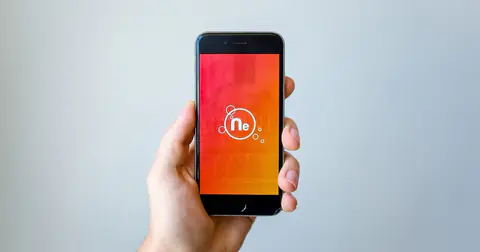
In her final year of university, a panic attack hit out of nowhere. Ania Wysocka had assumed, like many people, that it was something that happened to other people. What she built afterwards is Rootd, an app for coping with panic attacks and anxiety.
According to Hampton’s interview, the app is used by more than 2 million people across 150+ countries, has over 36,000 reviews between the Apple and Google stores, and has been featured in the app stores more than 100 times, including App of the Day and Developer Spotlight placements in several countries. All of it with zero employees and zero outside funding. The same piece puts recurring revenue in seven figures.
And the founder cannot code. Small Start prioritises cases that disclose hard revenue figures. This one does not publish a monthly number. What it does have is verifiable counts (downloads, reviews, feature placements) so that is where we look.
What is on the record
- Users: 1.7 million as of the Purchasely piece, more than 2 million by the later Hampton interview
- Markets: 150+ countries
- Reviews: 36,000+ across Apple and Google
- App store features: 100+
- Applications to Apple Editor’s Choice: on the 15th, she was told to get artwork ready
- Acquisition offer declined: $40,000
- Biggest single revenue change: adding onboarding and moving the paywall earlier in the journey lifted in-app revenue by 600% (RevenueCat describes the same thing as “one small tweak” that 5X’d revenue)
- Employees: none. Development started with a student developer and has been piecemeal contracting since
- Funding: none
- Revenue: seven figures in recurring revenue (exact figure undisclosed)
The launch was timed to World Mental Health Day. Her stated reason: it gave the launch-day press release a clear story. The date itself was used as a PR asset.
What declining $40,000 actually meant
An early acquisition bid came in at $40,000. Per RevenueCat, she quickly concluded it was not enough and started working out other ways to grow. The outcome vindicates the call, but the more interesting point sits after the decision, not in its speed: what followed was not an attempt to raise money.
The line attributed to her is that more money is rarely the answer. What she did instead splits three ways: ASO, press, and user response.
On ASO, Rootd ranks first in the US for “panic attack” searches and third for “anxiety”. There has been no large paid advertising push. She simply polished the cheapest acquisition channel an app has, store search. The Japanese developer who accumulated 2 million downloads across 68 self-published apps over ten years lands in the same numerical range, but that case multiplied titles. Rootd kept raising the rank of one.
On press, she exploited the fact that local journalists like small-business success stories, mapping out a year of monthly press releases and feature announcements in advance. Coverage followed in Women’s Health, Time and Healthline, plus podcasts. Applying to Apple Editor’s Choice fifteen times is the same kind of work: taking on the cost of knocking on a door that does not open the first time, until it does.
On users, she personally replies to store reviews. Those 36,000 reviews are an asset that works on both the store’s ranking algorithm and a first-time visitor’s decision.
What did not work
Hiring an ASO consultant backfired. The strategy targeted high-volume keywords with weak relevance to the app, and downloads actually fell. What worked was the opposite: lower-volume, highly relevant keywords. Irrelevant traffic degrades store standing through post-install drop-off.
It is also a concrete example of a domain where “hire an expert and you will grow” does not hold. What you can outsource is implementation, not the judgement about which keywords match your users. Healthchecks.io, another business run solo over many years, shows the same thing: where the line falls between delegable work and non-delegable judgement shapes the business.
The constraints, and what this case does not say
To be straight about it: this case does not disclose monthly revenue, ARR, paid subscriber counts or pricing. Only the order of magnitude, seven figures, is public. So it does not answer “how much can one app earn”. It answers a different question: how far can distribution stretch without adding capital or people.
The subject matter cuts both ways too. In its favour: mental health has ready-made press hooks like World Mental Health Day, and media want the story. Against it: health-adjacent products face more caution in store review and in how claims can be phrased. The choice of subject decides which acquisition channels are even available.
Rootd hit with its first app, Talknotes with its seventeenth
The ASO sequence of starting with highly relevant, low-volume keywords, the practice of building a year of announcement calendar before doing any PR, and the willingness to push on a closed door by repetition all cost nothing. But they worked on top of a product that had already landed. Unlike Talknotes, where 17 apps were built before one worked, Rootd hit with its first. That the founder’s own urgent problem translated directly into product precision is explicable after the fact but not designable in advance. And building without code, on contractors, always carries the question of how you survive until revenue can pay for development on demand.
With the full financial picture undisclosed, what this case yields is method rather than money. Even so, the fact remains: 150 countries, 2 million downloads and 36,000 reviews, assembled with zero employees.
If this one impressed you
Similar cases

Overcast: The Full First-Year Ledger — $164,134, With $85,715 in Month One, Then a Decade at $15,684/Month
Mobile app
HabitKit: A GitHub-Style Grid Built a $602,000 Year — With $112,000 of It Landing in January Alone
Mobile app
Ankimaker: A High Schooler's Flashcard App Hit 1M Downloads in 8 Years — 300K of Them in One
Mobile app
Take Me to Koshien: ¥12.9M in 11 months, and the ¥100 ticket that multiplied IAP revenue by ten
Mobile appMost read
- 1
Payout: A Class-Action App Vibe-Coded in 14 Days Reached $1,003,227 ARR in 9 Months. It Cost About $10 to Build, and a Partner With 10 Million Followers Grew It
36 recent visits - 2
¥4.61 Million a Year, Five Years After Starting to Learn Programming. The Full Three-Year P&L and Playbook of an Indie Education App
33 recent visits - 3
Starter Story: The $91.7K/Month Startup Case-Study Media Acquired by HubSpot — Months After the Founder Tweeted "HubSpot Should Acquire Starter Story"
26 recent visits - 4
Easy Folders: One Chrome Extension, $3,700 MRR and $42,000 Lifetime Revenue in 6 Months — a “Fill the Gap” Structure
24 recent visits - 5
From 30 yen in revenue to 8 years later: how running 3 apps in parallel got an indie developer to 200,000 yen a month
22 recent visits
Latest articles
- 2026-11-01
Hana: ¥7.5M in year three, saved by ¥200K a month
- 2026-11-01
Write With AI: $400K ARR From 114,000 Readers, With Under 2% Paying
- 2026-10-31
lemlist: A French SaaS Started on $1,000 Reached $28M ARR — and a $150M Valuation Without a Cent of VC
- 2026-10-31
Apollo for Reddit: One Price List Ended a Solo App With 1.5M Monthly Users — a Projected $20M a Year, and $250,000 in Refunds
- 2026-10-30
Sheets & Giggles: 11,000 Pre-Launch Emails Decided the $1M First Year of a Bedding DTC Started After a Layoff
Sources
- Reported Hampton による Ania Wysocka インタビュー(200万人超・150カ国・レビュー3.6万件・フィーチャー100回超・7桁ドルの経常収益)
- Reported RevenueCat Blog(コードを書かない開発体制、$40,000の買収提示、ASOコンサルの失敗、Editor's Choice応募15回)
- Reported Purchasely Blog(ユーザー170万人時点の状況、ASO順位、オンボーディング導入によるアプリ内収益600%増)