
Hi! café: a Kyoto cafe asking ¥2.8M with zero profit
An organic bakery cafe in Kyoto changed hands after roughly a year of trading, with operating profit at zero and an asking price of ¥2.8M. The buyer, a salaried man in his 50s who had run tens-of-billions-of-yen M&A deals at work, never haggled and deliberately softened the contract.
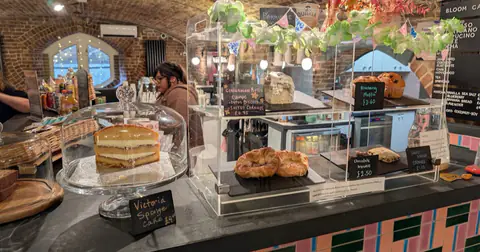
Why would someone with real M&A experience buy a cafe with zero operating profit, and not even haggle?
What he put a price on was something other than the profit.
Let’s go through the listing sheet and the interview, piece by piece.
- The figures left on TRANBI's listing sheet for a 12-tsubo, 13-seat cafe
- Why zero operating profit read as acceptable, and how the kitchen got appraised
- Why a buyer who usually haggles didn't on this deal
- The decision to hire a lawyer and then loosen the contract on purpose
- How the premise he bought on failed once, a month after handover
When it went up for sale, this shop’s operating profit was zero.
It’s a 12-tsubo, 13-seat cafe in a shopping street in Higashiyama, Kyoto.
The buyer was Nobuyuki Fukushima, a salaried employee in his 50s living in Kyoto.
At his day job he’d served as the point man on M&A deals worth tens of billions of yen, handling everything through due diligence.
A buyer with that background should be the one who pushes the price down and tightens the contract.
Yet according to TRANBI’s closed-deal interview, Fukushima never opened price negotiations on this deal.
He brought in a lawyer, and then pulled the contract terms looser than the Civil Code’s default.
What numbers were left on the listing sheet?
| Item | Detail |
|---|---|
| Sector | Cafe / online shop |
| Location | Higashiyama, Kyoto (a shopping street two minutes from the station) |
| Asking price | ¥2.8M |
| Revenue, FY ended Dec 2021 | ¥1 to ¥5,000,000 |
| Operating profit, same year | Break-even |
| Premises | Two floors, about 12 tsubo / 7 seats downstairs and 6 upstairs, 13 total / rent ¥170,000 |
| Staff | No employees (one person normally, the owner couple when no salon booking) |
| Hours | 11:00 to 18:00, closed Mondays and alternate Tuesdays |
| Reason for sale | Strategy review (the seller wanted to reorganise around the salon) |
The listing went up on 15 March 2022, and the interview ran on 13 September that year.
The seller had opened during the pandemic and let go of the business after roughly a year.
Half of the upper floor was used by the seller’s wife as a beauty salon. Whenever a booking came in, those seats were out of service.
The shop carried about eight baked goods at any time. The online shop had launched only the previous September.
Why zero operating profit read as acceptable
Why would an experienced buyer wave through a shop that was neither profitable nor loss-making?
Fukushima says in the interview that the purchasing and cost-ratio data made the absence of profit easy to follow. The more the kitchen insists on organic ingredients, the higher the cost ratio climbs.
He then pointed at the dead space upstairs.
A salon booking took the seats out of use, and even with no booking the massage bed ate the floor. Six of the thirteen seats were half asleep.
Put plainly, the profit-and-loss statement didn’t set the price here.
During his site visit, Fukushima had the owner of a restaurant he frequents look over the schedule of kitchen equipment included in the transfer.
A professional told him the combi steam oven alone was worth around ¥800,000. Only then did the ¥2.8M asking price read as fair.
What he appraised in a zero-profit shop was the kitchen, not the earnings.
His site work was thorough.
- Don't stop at one visit
He went back on weekdays and weekends at different hours to count foot traffic.
- Sit in the competition
He sat in nearby competing cafes to watch who came in.
- Walk from the station
He walked the route to confirm the station really was minutes away.
- Count the rivals
He circled the area to count rival cafes and coffee shops.
The seller’s account matched what he found on the ground, he writes.
Not haggling was a position, not timidity
Fukushima’s usual method runs the other way.
In the interview he describes his own pattern: with a business asking ¥11M, he probes whether ¥8M is reachable.
Searching within Kyoto city on a budget under ¥10M, and using other platforms alongside TRANBI, he applied to roughly ten listings in total.
He broke off talks himself on deals with murky financials or evasive answers. On suspiciously cheap listings, the reason for the discount sometimes surfaced during negotiation.
On this one, he never pushed.
A rival was in talks at the same time. Hinting at a discount early would’ve handed the deal away.
He was in fact turned down once, with the seller saying another buyer had been chosen. That buyer was a company.
A week or two later, the seller came back, opening with “this is embarrassing to admit.”
The corporate side had stalled when its board objected, and the seller offered a discount by way of apology.
Here's how we read it. Fukushima credits being an individual, which let him move flexibly and fast. Looking at the sequence, speed isn't what won it for him. The pandemic risk that made the company walk away was the same risk he weighed in the opposite direction, expecting inbound demand to return once the wave passed.
Two parties read one listing sheet. One stopped at a board objection. The other decided the sum was small enough to recover from.
The discount fell out of that gap rather than out of any negotiation.
He hired a lawyer, then loosened the contract on purpose
He asked a law firm he knew with M&A experience to draft the agreement. The seller’s template was rewritten under legal review.
That much is textbook. The content, though, faced the other way.
In a three-way Zoom call with the lawyer and a trainee, they cut clauses one by one, saying this one can go and that phrasing is harsh so let’s soften it.
The warranty clause ended up with a shorter period than the Civil Code provides.
The reason was the counterparty.
The seller seemed never to have dealt with business law. The buyer’s side even had to point out that the contract needed a revenue stamp.
Showing an airtight document to someone in that position invites suspicion. Avoiding a collapse mattered more, he explains.
He adds that with a company or a seasoned counterparty, he’d have pressed his demands much harder.
In the same passage, he records that risk remains for the future and that he’d privately have preferred a tighter document.
Whether trading away protection was correct can’t be settled from the material available at this point.
What the record does show is that in an individual acquisition at the ¥2.8M scale, contractual strength gets exchanged against the risk of the deal falling apart.
One month in, the premise he bought on had already failed once
The interview took place about a month after handover.
Fukushima states there that customer counts are a struggle, and that foot traffic thins every time a record-infection headline runs.
When he signed, the pandemic seemed to be receding and tourists looked ready to return. Another wave arrived instead, and visitor numbers were far below the previous summer holidays and Obon period.
The very premise he bought on failed once, right after purchase.
The shop inherited the seller’s recipes while developing new items. It’s taking competitive quotes while keeping the existing suppliers for now.
Expanding takeaway and trying Uber Eats sit on the list as things to test.
His wife, previously a homemaker, runs the floor. Fukushima keeps his salaried job, handles the negotiation and paperwork, and took extended leave to work shifts.
The shop trades as “Hi! café” after the handover.
Revenue, customer counts and post-handover monthly figures are all undisclosed. So is the final price, known only as ¥2.8M less "some" discount. Every figure here comes from the TRANBI listing sheet and interview, and post-handover performance can't be verified.
The buyer brought large-deal M&A experience from his day job. There was also an arrangement under which his wife worked in the shop until completion to absorb the know-how.
Both sat on the buyer’s side rather than the asset’s.
Fukushima calls restaurants a lump of uncertainty himself, and none of this makes zero-profit listings good value as a class.
The valuation held up for this shop because the zero could be traced to the cost ratio and the idle second floor, and because the kitchen equipment was worth more than the asking price.
Among small successions through TRANBI, there are other buyers like these. The ¥2.8M asking price here sits just above them.
On the difficulty that follows a purchase, this is the closest match.
If this one impressed you
Similar cases

A 51-year-old company employee took over a Saitama salon for 2 million yen. The conditions that made remote management from Nagoya work
Offline
NEOKICK Maebashi: A Gym Earning ¥2.5M a Year Sold for ¥3M — After the Only Trainer Quit Mid-Negotiation
Offline
A nail salon with 1,500 customers and 10 staff was taken over for 2 million yen. What an administrative scrivener prioritized above all
Offline
GH SALAD: a 4-month-old shop sold for ¥1.5M, now ¥200K in the red
OfflineMost read
- 1
¥4.61 Million a Year, Five Years After Starting to Learn Programming. The Full Three-Year P&L and Playbook of an Indie Education App
45 recent visits - 2
From 30 yen in revenue to 8 years later: how running 3 apps in parallel got an indie developer to 200,000 yen a month
37 recent visits - 3
From ¥100 to ¥100,000 a Month in Three Years: The Quiet Compounding of an Ads-Only Tool App
30 recent visits - 4
9,345 AI-generated images uploaded to Adobe Stock: the full record of reaching 878 downloads and $589/month (~¥95,000) over 9 months
24 recent visits - 5
Pretty Arrow: 29,000 Budgeting Spreadsheets Sold — How Two Sisters’ Etsy Shop Reached $10,417/Month
22 recent visits
Latest articles
- 2026-11-21
BulkMockup: A Script That Made 1,800 Mockups in 30 Minutes, Sold for $300, Now $12K MRR
- 2026-11-21
Vintage Teaware Brand: 13 Years, Zero Employees, Sold for $338,470 at 1.32x SDE
- 2026-11-20
Eye Love: The Goal Was $1,000 a Month. It Sold for 7 Figures at $400,000 a Month
- 2026-11-20
Visualizee.ai: Two Years Stuck at $150/Month, Then Deleting the Node UI Took It to $8.6K MRR
- 2026-11-20
3AK Sprinting: $144,149 All-Time and $13,347 MRR in Nine Months, on a Niche That Is Only Narrow in Name
Sources
- Reported TRANBI 成約・成功事例インタビュー(2022年9月13日公開、ライター倉本祐美加)。買い手の福島伸之氏(50代・会社員)が、予算1000万円以下・京都市内という条件で合計10件ほどに申し込んだこと、営業利益0円の受け止め、価格交渉をしなかった理由、別の買い手に一度決まって戻ってきた経緯、弁護士を入れた契約書の作り方、引き継ぎ1ヶ月時点の客数
- Reported TRANBI 案件票「オーガニック素材の焼き菓子カフェ&オンラインショップ」(ID:S09344、公開2022年3月15日)。売却希望価格280万円、2021年12月期の売上高1円〜500万円・営業利益は損益なし、京都府東山・店舗面積約12坪・13席・家賃17万円、社員なし、譲渡理由「サロン中心に事業運営を見直したい為」
- Reported TRANBI 成約・成功事例インタビュー一覧(7ページ目)。本件の掲載位置とタグ(個人・会社員・50代・コロナ・起業・飲食・京都)
- Reported 食べログ「Hi! café」。承継後の店舗情報(京都市・東山)