
He left a company after 40 years to take over a 21-seat soba shop: an ¥8 million renovation, and half the customers were regulars from the old shop within 2 months of opening
Basho-an, a soba shop that ran for 20+ years in Narita, was taken over by former food-company executive Akifumi Takahashi via Batonz. He invested about ¥8 million in renovation, including ¥6 million for the kitchen, and opened the 21-seat "Nagomina." Within 2 months of opening, about half the customers were regulars from the previous shop.
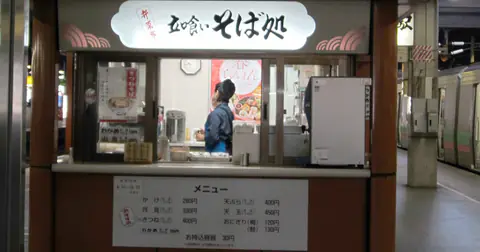
What’s actually handed over in a restaurant succession? Not the kitchen equipment, not the recipes — it’s the habit of coming in. That hypothesis can be tested directly through a case like this.
Narita City, Chiba Prefecture. “Basho-an,” a soba shop that had run for over 20 years, closed in April 2024 for lack of a successor. Opening in the same spot in August of the same year was a handmade-soba shop, “Nagomina.” Its owner is Akifumi Takahashi, who spent about 40 years at a food company with over 100 years of history, rising from salesman to department head, to subsidiary president, to a seat on the parent company’s board, before leaving to strike out on his own. Two months after opening, “about half” of the customers were “people who used to go to Basho-an.” He hasn’t spent anything on advertising.
From succession to opening: the timeline
| Time | Event |
|---|---|
| About 40 years | Takahashi worked at a food company. Salesman → department head → subsidiary president → parent-company board member |
| After leaving | Trained at an acquaintance’s soba shop for about 1 year |
| Property search | Used a real estate agency and an M&A platform in parallel. Couldn’t find a “bare shell” location |
| April 2024 | “Basho-an” closed for lack of a successor (over 20 years in business) |
| Late June 2024 | The previous owner’s move-out completed; began opening preparations |
| Renovation | Total construction cost about ¥8 million (kitchen work/equipment change about ¥6 million / wall covering, tatami, entrance, etc. about ¥2 million) |
| August 2024 | Opened as “Nagomina.” 21 seats, 7 parking spaces (2 out front, 5 behind) |
| 2 months after opening | About half of customers are Basho-an regulars. No lull in customers during peak hours |
21 seats, and a weekday scale of 3–4 staff
Nagomina uses the ground floor of a two-story building as its storefront, with 21 seats. Parking has 2 spots in front and 5 behind, 7 in total. Located about 500 meters in a straight line from Narita Airport, it also draws customers from nearby airport-related companies. The staff runs 3–4 people on weekdays and 4–5 on weekends and holidays.
The product-side headline is a “juwari soba, all-you-can-refill” service. Domestic soba flour is milled fresh, the noodles are made on-site upon customer arrival, and boiled after the order is placed, a construction that completes the “three freshnesses” (freshly milled, freshly made, freshly boiled) entirely in-house. Takahashi explains the difference from typical two-eight soba: “Because no binder is used, the soba flavor is stronger and it has more bite.”
The shop name “Nagomi” comes from “wa” (harmony), which both his parents’ employers shared in their names. “Na” comes from a character in his wife’s name.
The turning point was “giving up on finding a bare-shell property”
This case’s turning point comes before opening, not after.
Takahashi had initially been searching for a location using both a real estate agency and an M&A platform. He says, “I couldn’t find a bare-shell property, and that’s what led to the connection with Basho-an, which was listed on Batonz.” In other words, the pivot into the business-succession route happened because his search for a property in the real estate market came up empty.
What that pivot changed is shown by the numbers two months after opening. Zero ad spend, and about half the customers were regulars from the previous shop. Had he rented a bare-shell property and opened an unknown new shop, that half would have had to be built up from zero. As Takahashi himself put it, “Having the previous shop’s customers come to us is a major advantage of M&A.”
Even for the same act of “opening a soba shop,” whether you rent a property or take over a business makes a world of difference in how quickly demand rises on opening day. The difference came down to the choice of how to search, not to capital or technique.
The structure that brings back the old shop’s customers
Why do previous regulars return to a shop that had a four-month gap since closing? This needs to be considered in light of the nature of the restaurant business.
Demand for a soba shop is mostly made up of repeat visits from within the trading area. Nearby office workers and residents decide to come in when the thought “soba today, maybe” occurs to them, and this recollection is triggered more by location than by the shop’s name or the owner. It’s a spatial memory that fires, partway along a commute route, at the corner with the parking lot.
Basho-an had operated in that spot for over 20 years. The recognition built into surrounding residents’ behavior over 20 years, “that place is a soba shop”, doesn’t vanish the moment the shop closes. If anything, a four-month gap creates room for a “discovery” (“oh, it’s open again.” What Takahashi took over wasn’t a customer list or a franchise sign) it was this asset of recollection accumulated in the location.
Another factor at work is that the business format didn’t change. Had the location switched to a café or izakaya, this recollection would become a source of confusion rather than an asset. Because a soba shop reopened where a soba shop had been, the existing habit of visiting landed directly as demand for the new shop.
That said, whether the returning customers stick around is a separate matter. This is where the “all-you-can-refill juwari soba” differentiation comes into play. A customer who came in on the old recollection gets a different experience from the old shop. The recollection is borrowed from the previous owner. The satisfaction is built by the new one, a two-stage structure.
What the ¥8 million spend shows about priorities
Of the roughly ¥8 million renovation cost, ¥6 million went to kitchen work and equipment changes, three-quarters of the total.
What stands out is that Takahashi didn’t choose to simply use Basho-an’s kitchen as-is. The reason given is that he prioritized the efficient workflow he’d built over roughly a year of training. In succession deals, “you can start cheap because the equipment is usable” is often touted as an advantage, but in this case, the opposite decision was made.
A restaurant kitchen’s workflow dictates the speed of service per person. Running peak hours with a staff of 3–4 means seconds of waste directly translate into turnover rate and wait times. Reuse the existing setup and save ¥6 million, or rebuild the workflow and gain daily productivity, Takahashi chose the latter. It’s a reading that someone who spent 40 years in sales and management at a food company prioritized ongoing operational efficiency over initial cost savings.
Where his expectations were off
Not everything went as planned. Takahashi had initially envisioned expanding to multiple locations. But after actually running the business, he revised that view, coming to see it as “not as simple as that.” He’s now focused on “wanting to deliver something truly delicious,” shifting his thinking toward collaborating with people who share the same commitment.
This is a record of a business plan announced under a sign getting revised after operations actually began. Completing the “three freshnesses” in-house and boiling noodles to order depends on the owner’s own hands and time. Maintaining this quality bar across multiple stores would require staff at each location able to operate at the same standard. The more personal the source of differentiation, the higher the hurdle for multi-store expansion. All-you-can-refill, a service with heavy cost implications, would presumably also get harder to manage as scale grows.
Sales, profit, and the transfer price are all undisclosed. Two months after opening, there’s only the qualitative note that “there’s no lull in customers during peak hours”, no information disclosed from which to back-calculate profitability given 21 seats and however many days a week of operation. What can be confirmed from this case ends at the rise in foot traffic.
What can be taken away
What’s easiest to reproduce is the sequence: solidify technique and workflow through about a year of training first, then search for a shop, and switch to succession once it became clear no bare-shell property could be found. Skill acquisition and property procurement weren’t pursued at the same time, and precisely because training came first, the decision to rebuild the kitchen had a foundation.
Another point is narrowing the succession target to “same format, same location.” Using the previous shop’s visiting habit as an asset requires not changing the format. The general claim that succession lets you inherit customers stops holding the moment you step outside this condition.
What’s hard to reproduce is the timing itself. That a shop which had run in that spot for over 20 years happened to come onto the market right when it lost its successor. You can choose from among available deals, but you can’t make one occur. The fact that he was searching for a real estate property in parallel reads as a realistic response to this uncertainty.
And the hardest thing to reproduce of all is Takahashi’s career. For someone who spent about 40 years at a food company, from sales through to the board, cost management, purchasing negotiation, and staffing aren’t unknown territory. Even with the same renovation budget and the same location prepared, this accumulated experience isn’t something you can buy. Leaving a company to open a restaurant is often framed as “a challenge from inexperience,” but what’s actually working in this case is 40 years in the food industry.
Related reading
If this one impressed you
Similar cases
About 4 Months From Decision to Taking Over a Fukuoka Tutoring School — a Corporate Manager Who Brought a Proposal to the First Meeting
Offline
Taking over a grilled-fish specialty restaurant via M&A — one month of handover, six months chasing the floor, and the lunch sales that finally moved
Offline
STARBAR Okinawa: Selling a Thriving Bar to Fund a Shabu-Shabu Chain — a “Strategic Fundraising” M&A
Offline
An individual took over a town bookstore in Chofu. What moved a year-long negotiation was the seller's family
OfflineMost read
- 1
Payout: A Class-Action App Vibe-Coded in 14 Days Reached $1,003,227 ARR in 9 Months. It Cost About $10 to Build, and a Partner With 10 Million Followers Grew It
43 recent visits - 2
Starter Story: The $91.7K/Month Startup Case-Study Media Acquired by HubSpot — Months After the Founder Tweeted "HubSpot Should Acquire Starter Story"
35 recent visits - 3
Instatus: $48K MRR with Every Metric Public, After Dropping "Sup" and Repricing Upmarket
23 recent visits - 4
From 30 yen in revenue to 8 years later: how running 3 apps in parallel got an indie developer to 200,000 yen a month
20 recent visits - 5
¥4.61 Million a Year, Five Years After Starting to Learn Programming. The Full Three-Year P&L and Playbook of an Indie Education App
19 recent visits
Latest articles
- 2026-10-20
An 18-Year-Old French Pâtisserie Changed Hands for ¥8M With 1–2 Weeks Left Before Closing — And the 29-Year-Old Buyer Never Negotiated the Price
- 2026-10-20
Traffic Think Tank: a six-year side-hustle SEO community sold for $1.8M, with 40% paid later
- 2026-10-20
Doing Content Right: After Four Side Projects That Made $0, a $99 Ebook Did $130K in Eight Months
- 2026-10-20
Ali Abdaal: Of $5.5M in 2023 Business Revenue, $3.5M Came From Courses — YouTube Was the Funnel, Not the Product
- 2026-10-19
Ozeki Sangyo: A Factory "Two Months From Death" Changed Hands for ¥13M — ¥11M of It an Apartment, Not Cash