
400 watermelons sold out in 24 minutes. How a family-run farm in Yachimata, Chiba, built a DTC ecommerce business hitting ¥9M/month in season
A family-run watermelon farm in Yachimata, Chiba, switched to direct online sales via ecommerce and LINE. Year one brought about 100 orders; by year three, ad spend hit zero, LINE registrations reached 4,000, the first batch of 400 melons sold out in 24 minutes, and in-season monthly sales reached ¥9-10 million.
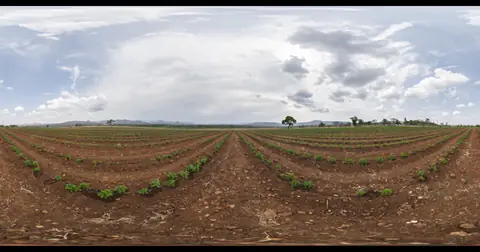
Yachimata, Chiba. The town’s neighbor, Tomisato, is the name people actually associate with watermelons — Yachimata was essentially unknown as a growing region. In that town, a family that has grown watermelons for over 50 years runs Shiawase Suika Nouen (Happy Watermelon Farm). Today, 400 melons sell out within 24 minutes of going on sale, with 400+ customers waiting in line before the drop even opens. Drawing on a case study published by the design firm that supported the launch, this piece traces what accumulated over three years.
Three years, laid out
| Period | What happened | Confirmed numbers |
|---|---|---|
| Before starting | Almost no computer or social media experience. The family was skeptical — “will Yachimata watermelons actually sell?” — and not particularly enthusiastic | Sales assumed to run through the agricultural co-op |
| Year 1 | Built a company website, developed watermelon-specific cardboard boxes and pulp-mold trays, ran a small Facebook ad budget | ~100 orders |
| Year 2 | LINE followers and customer reviews accumulate; organic search traffic rises; reliance on ads declines | Video-based word-of-mouth reviews build up |
| Year 3 onward | Facebook ads stopped entirely. Sales still exceed the prior year | ¥0 in ad spend |
| Present | Pre-announcements build a waiting line; sales open at a set time to a rush of buyers | LINE registrations 4,000+ / first batch of 400 sold out in 24 minutes / 130+ reviews |
Current revenue scale, including corn, is publicly stated as ¥9-10 million/month cumulative in-season. Worth flagging upfront: watermelon is a seasonal product with a limited harvest window, so this level does not continue every month year-round.
Starting from a “hard-to-sell” product
The handicap this farm faced in direct online sales went beyond the region’s lack of name recognition. Watermelon itself carries three structural difficulties at once: it’s heavy, shipping is expensive, and it breaks easily. As an ecommerce product, it sits in a category with both high per-unit logistics cost and high claim rates.
The countermeasures started on the physical side. They developed dedicated 1-melon and 2-melon boxes, built pulp-mold trays to stop items from rolling, and partnered with Yamato Transport to set up a full-refund-or-replace policy for any breakage. As a result, the breakage rate has been held under 1% of total shipments. This tackled the “what if it breaks” hesitation head-on, before purchase, through upfront communication.
The product side got a hand too. They gave value to the 3L-and-larger melons that don’t move through the co-op’s distribution channel, and priced the rare 5L melons at a premium, naming them “Kiseki” (miracle). They quantified quality with a stated sugar content consistently above 14 degrees, and flipped Yachimata’s obscurity, rather than hiding it, into a positioning of “the phantom watermelon that never reaches national shelves.”
The decisive call came before the sales tactics
The first decision that mattered in this case was not a marketing tactic at all but the structure of the transaction: the daughter and her husband buy the watermelons from her parents at the same price the agricultural co-op would pay, then sell them online nationwide themselves.
Under this arrangement, if the online sales effort failed, the parents’ income stays exactly the same as it was under the traditional co-op-sales model. For a family that had sold the same way for over 50 years, the biggest obstacle to trying something new isn’t technology or marketing. It’s the fear that a failed experiment would shake the foundation of their livelihood. The buyout arrangement structurally removed that fear. That the family, initially unenthusiastic, actually followed through owes more to this arrangement than to persuasion.
The numerical turning point arrived between years two and three. Year one brought roughly 100 orders, with a fixed amount invested in Facebook ads for acquisition. By year two, as LINE registrations and reviews accumulated, repeat purchases from existing customers came to account for most of the sales, and the ads’ role diminished. By year three, sales held, even grew, after ads were stopped entirely. Moving to a state where ad spend, a variable cost, hit zero while sales kept climbing marks this business’s inflection point.
Why sellouts happen without any advertising
Structurally, this comes down to ad spend being converted, again and again, into a resellable customer list rather than a one-off sale. The 4,000+ LINE registrants figure means there are 4,000 people who can be reached with a sales announcement next season, a device that lets demand be triggered all at once, timed to the harvest. The 400+ people waiting in line before sales opened is also the result of a design that concentrates demand into a single point rather than letting it disperse. 400 melons vanishing in 24 minutes reads not as momentary buzz, but as the outcome of mobilizing a pre-built list of registrants all at once.
The other factor: reviews have become the storefront itself. A product page lined with 130+ video reviews functions as stronger evidence than anything the operator could say against the pre-purchase worries of “heavy, fragile, expensive.” Year one’s modest ~100 orders weren’t wasted. Every single one became sales material for the following year.
The family’s own operating capacity has also grown in parallel. What started as screenshot-annotated manuals and templated replies for computer beginners has, over repeated cycles, evolved into their own words, emojis included. On the growing side too, they’ve focused on cultivating larger melons to increase the odds of hitting the rare 5L “Kiseki” size, and sugar content has reportedly trended upward year over year. A loop has formed where improvements in how they sell reshape their cultivation goals, which in turn feed back into product quality.
Where they stumbled, and what risk remains
It hasn’t been smooth sailing throughout. Their server went down right at the sales-opening moment, and they scaled up capacity in response. A sales method that concentrates demand into a single instant makes purchases more certain, but comes with the flip side that any technical hiccup at that exact moment becomes a direct lost sale.
The more fundamental limit is that watermelon is a weather-dependent seasonal product. Revenue is capped by harvest volume and quality. Even with a 4,000-person customer list, you can’t sell more melons than you actually grow. In fact, current monthly sales figures include corn, a structure that offsets a single product’s seasonality with a broader lineup.
One more thing: this case involved an outside support firm building the operation. Site construction, pricing strategy, copywriting, support systems, and server response were all part of an accompanied engagement. These numbers describe support-assisted results, not a farm reaching this point unaided.
How far can this be copied?
What’s reproducible is the sequencing: remove risk for family members or co-founders before launching into a new channel. The buyout model, trying a new sales method while keeping the existing income source intact, can be restructured for family businesses well beyond agriculture. Treating advertising as a customer-list acquisition cost, and shifting to a proprietary channel over 2-3 years, is also broadly applicable to any product with seasonality.
What’s hard to reproduce is the product itself, a sugar content of 14+ degrees backed by over 50 years of cultivation experience, and the production capacity to reliably deliver oversized 3L-and-up, or 5L, melons. The “phantom watermelon” positioning wasn’t invented by naming alone. It only works because there’s a real product of that quality, unable to pass through co-op distribution channels. Turning a region’s obscurity into scarcity is a technique that only holds up once, without real substance behind it. It’s worth not letting the flashy numbers distract from the fact that this case started from cultivation and trust-building, not from sales technique.
Related reading
- Hitode’s blog operation — a case of building a proprietary channel rather than depending on an external platform.
- 4 months with a food truck — how to launch a physical-goods business on small capital.
If this one impressed you
Similar cases
A D2C brand at ¥12M/month in sales, ¥2M in profit — the decisive move was a flat 15% price hike across every product
E-commerce
Crimibox: 1,000 Emails From a $200 Ad, 100+ Orders in the First 4 Hours of Launch — Building the Unsolved-Murder Box
E-commerce
Pretty Arrow: 29,000 Budgeting Spreadsheets Sold — How Two Sisters’ Etsy Shop Reached $10,417/Month
E-commerce
Emily Odio-Sutton: $560,000 in two years on Etsy, selling gifts not apparel
E-commerceMost read
- 1
Payout: A Class-Action App Vibe-Coded in 14 Days Reached $1,003,227 ARR in 9 Months. It Cost About $10 to Build, and a Partner With 10 Million Followers Grew It
43 recent visits - 2
Starter Story: The $91.7K/Month Startup Case-Study Media Acquired by HubSpot — Months After the Founder Tweeted "HubSpot Should Acquire Starter Story"
35 recent visits - 3
Instatus: $48K MRR with Every Metric Public, After Dropping "Sup" and Repricing Upmarket
23 recent visits - 4
From 30 yen in revenue to 8 years later: how running 3 apps in parallel got an indie developer to 200,000 yen a month
20 recent visits - 5
¥4.61 Million a Year, Five Years After Starting to Learn Programming. The Full Three-Year P&L and Playbook of an Indie Education App
19 recent visits
Latest articles
- 2026-10-20
An 18-Year-Old French Pâtisserie Changed Hands for ¥8M With 1–2 Weeks Left Before Closing — And the 29-Year-Old Buyer Never Negotiated the Price
- 2026-10-20
Traffic Think Tank: a six-year side-hustle SEO community sold for $1.8M, with 40% paid later
- 2026-10-20
Doing Content Right: After Four Side Projects That Made $0, a $99 Ebook Did $130K in Eight Months
- 2026-10-20
Ali Abdaal: Of $5.5M in 2023 Business Revenue, $3.5M Came From Courses — YouTube Was the Funnel, Not the Product
- 2026-10-19
Ozeki Sangyo: A Factory "Two Months From Death" Changed Hands for ¥13M — ¥11M of It an Apartment, Not Cash
Sources
- Founder タカグチデザイン「しあわせスイカ農園の直販事例」