
Shimataro: Two Rural Airbnb Homes, ¥10M+ in Six Years, Three of Them Stuck at ¥1M a Year
Shimataro, who runs two rural vacation-rental homes alone, disclosed cumulative revenue above ¥10 million over six years. The breakdown: roughly ¥1 million a year for the first three years (about ¥3 million total), then double the prior year in year four and triple again in year five. During the flat three years he was cleaning thoroughly, answering every message and pricing against the neighbors.
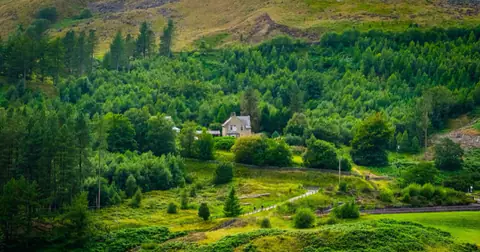
A rural vacation rental where the cleaning, replies and pricing are all done properly, and revenue still won't move. What changed when it finally started growing?
In this record, the thing that changed wasn’t the house.
- How six years topped ¥10 million, with only about ¥3 million in the first three
- Why the year-four turning point was deciding who the inn was for, not new equipment
- How the description, the photos and leaving out the TV moved the listing to a different shelf
- Our reading of the ranking loop and why complaints dropped
- Why "around ¥1 million a year" is the only hard yearly figure
Cumulative revenue above ¥10 million in six years.
That’s the figure Shimataro, who runs two rural vacation-rental homes by himself, published on note in July 2025.
Divided across 72 months, it averages about ¥140,000 a month.
The ¥10 million milestone isn’t what makes the record useful, though.
Shimataro opens the breakdown first: “Annual revenue was around ¥1 million. It took three years to finally stack up ¥3 million.”
Less than 30% of the six-year total accumulated in the first half.
The line bent in year four. It doubled against the prior year, then tripled the year after that.
Public records of Japanese vacation rentals tend to lead with how fast the ramp was: occupancy percentages in month one, initial capital recovered inside the first year.
This article does the opposite. The flat three years get more space than the growth.
His hands were never idle during those years, either. Thorough cleaning every turnover, careful message replies, a response to every review. Pricing set in balance with nearby listings.
The result was ¥1 million a year.
Six years as a line graph, bending in year four
Laid out in sequence, exactly as disclosed:
| Period | Revenue |
|---|---|
| Years 1-3 | About ¥1 million a year (roughly ¥3 million over three years) |
| Year 4 | 2x the prior year |
| Year 5 | 3x again |
| Through year 6 | Cumulative ¥10 million+ |
The setup and the constraints barely moved across those six years.
| Item | Detail |
|---|---|
| Properties | 2 (detached houses in the countryside) |
| Operation | Himself, alone |
| Primary channel | Airbnb |
| Location | Neither a resort area nor near a station |
| Rating | 100+ reviews, 4.8 average |
| Disclosure | July 2025 (free note post) |
No additional units, no additional staff, no change in location.
Revenue was the only thing that grew.
What changed was the addressee, not the house
The turning point he names for year four is neither capital investment nor a new acquisition.
“Deciding who the inn was for. That was all it took,” he writes.
The addressee he settled on: someone who wants quiet time with nobody intruding on it. Every component of the listing was rebuilt to match that single choice.
- Photos
Swapped for brighter, softer ones.
- Description
Deliberately seeded with the phrase "you can spend your time quietly."
- Equipment
A decision to leave the television out.
- Check-in instructions
Rewritten in gentler wording that leaves room to breathe.
- Review replies
Picking up the same thread and reinforcing it.
The old description had read: there’s a bed, Wi-Fi works, free parking is available.
He looks back on it himself as “not wrong, but… it doesn’t reach the emotions.”
The rewritten version: “For those who want to spend quiet time with nobody intruding. On a small hill, a still night is waiting.”
From a description of equipment to a description of time.
That reads like a lesson in prose quality, but our editorial read is more mechanical than that.
On a shelf where a rural detached house is listed as “a place with a bed, Wi-Fi and parking,” the only axes of comparison left are price and distance from a station. A countryside property has little room to win on either.
The moment the addressee narrowed, this listing moved to a different shelf: the one for people buying quiet.
The shelf changed. The house didn’t get better.
The sequence ran through ranking, not price
- Higher occupancy
- More bookings at an unchanged price
- Search ranking on the booking platform rising on its own
- Complaints dropping sharply
- Repeat guests increasing
Those are the outcomes he reports.
Of that list, the structurally heavy item is the ranking.
In a brokered marketplace like Airbnb, a loop turns: a booking arrives, the rating rises, the listing surfaces higher, more bookings arrive.
Which also means that before a listing enters the loop, nothing it does moves the numbers.
Being pinned at ¥1 million for years one through three wasn’t a shortfall of effort. The listing hadn’t reached the entrance to the loop.
The current 100-plus reviews at a 4.8 average are what the loop looks like after it has finished turning.
He didn’t fix the house. He fixed who it was addressed to, and the revenue line bent.
From here this is our inference. The sharp drop in complaints is a byproduct of the same mechanism. An inn that states its addressee plainly loses the guests who aren't looking for quiet at the booking stage, before they ever arrive.
Leaving the television out looks like removing an amenity. In practice, it must have worked as advance screening of the guest mix.
Fewer dissatisfied guests means higher ratings, and higher ratings means better placement.
One decision pushed several metrics the same direction.
What those three years actually were
The part of this record we want to keep intact is his own diagnosis of the flat years.
“During that period I wasn’t an operator. I was just a site worker.”
He then lists the questions he hadn’t been asking.
“Who is this inn for? What do I want to sell as its appeal?… I had never once put those questions to myself.”
- Thorough cleaning every turnover, careful message replies, a response to every review
- Pricing set in balance with nearby listings
- He kept all of it up, and revenue in years one through three stayed around ¥1 million a year
Cleaning, replying and price adjustment all finish the same day you do them.
Deciding who the place is for changes nothing on the day you do it.
The better the daily operation runs, the easier it is to push the second kind of work back.
Those three years at ¥1 million read more accurately as a record of three years filled entirely with work that closes out, rather than a record of slacking.
The only hard yearly figure is “around ¥1 million”
The only confirmed single-year figure is the "around ¥1 million," and both the year-four doubling and the year-five tripling are relative values. The ¥10 million cumulative total is stated as a floor, and no year-by-year amounts are published. Current monthly revenue therefore can't be derived from this article, and the ¥140,000 in our frontmatter is only the six-year total divided across 72 months. The real distribution leans toward the back half.
The nature of the source deserves a note as well.
The post is free to read, and it closes by pointing to his own paid guide. Publishing numbers as a way to build an entrance is common enough. We use only the figures that appear in the free portion.
Two properties, one operator and a rural setting also don’t transfer cleanly to other scales.
At two units, one person can hold the addressee consistent. Past a certain number of units, holding it consistent becomes a question of operational design.
Three months, 17 months, and six years
There are other records with numbers from rural lodging businesses.
A renovated-farmhouse rental that published its Airbnb analytics three months after opening records the mechanics of the launch phase.
Three regional properties disclosing ¥3.45 million of upfront capital and a 17-month payback records the recovery side.
For a place-rental business that didn’t work out, there’s two rental-space locations running a ¥2.2 million loss across 29 months.
Three months, 17 months, and six years.
The same business of renting out space looks entirely different depending on which time horizon you read it over.
If this one impressed you
Similar cases

A 23-year-old's 17-square-meter crepe shop topped ¥1M/month. Why the profitable owner still called it a "failure"
Offline
Full numbers from 3 rural minpaku properties: a leased + inn-license property paid back in 17 months on 3.45 million yen upfront — double the yield of a Housing Business Act property
Offline
Income of ¥1.57M in year one of farming, ¥2.42M of which was subsidies. A bag of bok choy at ¥120 was priced below cost
Offline
Mirai Shokudo: A Jimbocho Diner That Published 4 Years of Books — ¥34,000 a Day, 23% Food Cost
OfflineMost read
- 1
¥4.61 Million a Year, Five Years After Starting to Learn Programming. The Full Three-Year P&L and Playbook of an Indie Education App
45 recent visits - 2
From 30 yen in revenue to 8 years later: how running 3 apps in parallel got an indie developer to 200,000 yen a month
37 recent visits - 3
From ¥100 to ¥100,000 a Month in Three Years: The Quiet Compounding of an Ads-Only Tool App
30 recent visits - 4
9,345 AI-generated images uploaded to Adobe Stock: the full record of reaching 878 downloads and $589/month (~¥95,000) over 9 months
24 recent visits - 5
Pretty Arrow: 29,000 Budgeting Spreadsheets Sold — How Two Sisters’ Etsy Shop Reached $10,417/Month
22 recent visits
Latest articles
- 2026-11-21
BulkMockup: A Script That Made 1,800 Mockups in 30 Minutes, Sold for $300, Now $12K MRR
- 2026-11-21
Vintage Teaware Brand: 13 Years, Zero Employees, Sold for $338,470 at 1.32x SDE
- 2026-11-20
Eye Love: The Goal Was $1,000 a Month. It Sold for 7 Figures at $400,000 a Month
- 2026-11-20
Visualizee.ai: Two Years Stuck at $150/Month, Then Deleting the Node UI Took It to $8.6K MRR
- 2026-11-20
3AK Sprinting: $144,149 All-Time and $13,347 MRR in Nine Months, on a Niche That Is Only Narrow in Name