
Bitches Who Brunch: A Brunch Review Site Sells to a Sports-Community Company — Buying “the Readers’ Weekend Hours”
Bitches Who Brunch, a brunch review site with over a million monthly pageviews, was sold to Volo Sports, an operator of adult recreational sports leagues. A buyer seemingly unrelated to media came for "the same demographic's weekend hours" — a case that widens the lens on buyer selection.
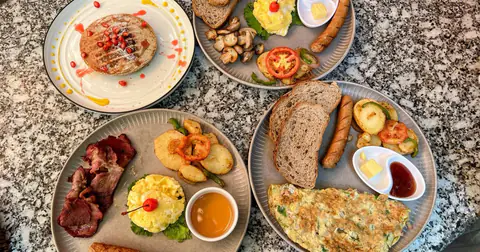
(Dollar figures and their yen conversions below are approximate, at ¥150/USD.)
What Happened
Bitches Who Brunch is a brunch (weekend breakfast-plus-lunch) review site out of Washington, D.C. Cori Sue Morris (then an editorial assistant) and Rebecca Loveridge (then in marketing), who met in 2008 at the media company CurtCo, launched it together in 2009. Based across three cities (D.C., New York, and Chicago) it delivered restaurant reviews, local guides, and event coverage to an urban readership of women in their 20s and 30s, drawing over a million pageviews a month. In March 2019, this media outlet was sold to an unexpected buyer: Volo Sports, an operator of adult recreational sports leagues. Not a media company, not a restaurant company. The price this non-media buyer paid was six figures (tens of millions of yen), at 7x annual revenue.
The Numbers at Sale
| Item | Figure |
|---|---|
| Founded | 2009 (two co-founders), operated for 9 years before the sale |
| Cities | Washington D.C., New York, Chicago |
| Monthly traffic | 1M+ |
| 45,000 followers | |
| Team | 2 co-founders + 15 part-time staff |
| Revenue sources | Advertising partnerships, events, a brunch-search tool, and more |
| Sale (March 2019) | To Volo Sports. Six figures, 7x annual revenue |
The Idea of Buying “the Adjacent Slot in People’s Lives”
Volo Sports runs leagues where young urban professionals play kickball or soccer on weekends. Its participants and the brunch site’s readers are essentially the same people — same age, same neighborhoods, same disposable income, same way of spending a weekend. Spotting the adjacency in life’s schedule (sports on weekend mornings, brunch at midday) Volo bought the media property as a source of post-game hangout spots, a partner-restaurant network, and advertising inventory. Generalize the logic of the acquisition and it reads like this: what the buyer is purchasing is not “content” but “regular access to a specific group of people,” and content-industry peers are far from the only ones who want that.
Nine Years, Three Cities, 15 Part-Timers
The lineup of numbers also tells you something about how the business ran. Brunch reviews are local content where freshness is everything, and replicating D.C.’s editorial format, reviews plus local guides plus events, in New York and Chicago required someone on the ground in each city, eating and writing. The distributed team of 2 co-founders plus 15 part-timers is the result of this “city-replication model.” Instagram’s 45,000 followers looks small next to the million-plus monthly pageviews, but given the genre’s natural fit with food photography, it likely functioned as a sales asset feeding directly into advertising partnerships and event turnout. That events were part of the revenue mix from the start also foreshadowed the fit with Volo, an events company, at the point of integration.
Breaking Down “7x Annual Revenue”
The pricing on this deal reads two ways. First, the absolute amount: a media outlet built over nine years to a million monthly pageviews selling for a six-figure sum (roughly $7.5M yen at, say, a mid-range figure of $500K) suggests monetization was weak relative to the traffic. A labor-intensive revenue structure (advertising and events, sustained by 15 part-timers) apparently wasn’t generating profit proportional to its audience scale.
Then there’s the multiple. 7x annual revenue is hard to explain by the usual valuation logic for revenue-priced content media. Volo Sports wasn’t pricing past revenue. It was placing a strategic premium on “access rights to the exact same readership as its own league participants.” So even a media outlet with weak revenue power can be valued outside the bounds of the financial numbers if its readership lines up with a buyer’s business. The sale process itself wasn’t run through a broker’s auction either, in the founders’ words, it came together through “soft outreach and word of mouth through the network.” Note that “six figures” spans $100K to $999K (roughly ¥15M to ¥150M), and no further breakdown was disclosed. For a media outlet with a clearly defined readership, both the basis for valuation and the way you find a buyer become a different game from revenue-driven media.
The Buyer’s Logic Collapsed With COVID
The epilogue teaches a lesson about the risk in this kind of acquisition. Under Volo’s ownership, Bitches Who Brunch expanded into Boston, running events across D.C., Chicago, and Boston, but the 2020 pandemic destroyed the very premise of the acquisition thesis: people gathering on weekends to play sports and eat brunch. The business took a major hit, and the site is believed to have shut down. A media outlet rooted in offline lifestyle rhythms stops when that lifestyle stops.
For the two founders, meanwhile, the March 2019 sale turned out to be perfectly timed. Morris left after a few months on a consulting contract, founded the marketing firm Citrus Media, sold it the same year, and now runs another business (Retreat). Loveridge moved into an executive role at the major communications firm Ketchum. Within just a year of the sale, seller and buyer ended up on very different trajectories.
Conditions for Reproducing This, and the Limits
What generalizes is the way to frame the search for a buyer. Looking for a media buyer tends to start with “a list of media companies in the same genre,” but this case teaches you to widen the aperture. The question to ask is: “who else wants my readers’ wallets and hours?” Makers of the products your readers buy, operators of the places where they gather, companies that want to hire them, a neighbor with no connection to content can outbid your industry peers. David’s Bridal, a dress retailer, buying Rustic Wedding Chic and Lulu, a printing company, buying The Tilt share the same structure. The market of media buyers is far larger than “the media industry.”
But two preconditions apply. First, resolution in your readership. It was the specificity of “women in their 20s-30s in three cities, weekend diners” that made the overlap with a sports-league operator visible in the first place. A media outlet with a fuzzy reader profile won’t attract a strategic buyer. Second, this kind of valuation depends on the buyer’s own business plan, which makes it vulnerable to external shocks. A business valued at 7x annual revenue ceasing to function a year later is a live measurement of just how fragile a strategic premium can be. For Japan’s regional and local-information media, the idea of selling to an adjacent industry is importable, but the higher the offline dependence, the more that same fragility comes bundled in.
Related Reading
Sources
- Founder They Got Acquired(個別記事)
Similar cases

Starter Story: The $91.7K/Month Startup Case-Study Media Acquired by HubSpot — Months After the Founder Tweeted "HubSpot Should Acquire Starter Story"
Blog/Media
CBWG: From a Local Sports Blog to a $25M Sale to XLMedia — Riding a “Change in the Law” at Full Speed
Blog/Media
BarBend, a Strength-Training Media Site With 31 Million Monthly Users, Joins Pillar4: A "Sale" Before Becoming a Buyer
Blog/Media
Pack Hacker: 4.5M Monthly Uniques and a Seven-Figure Sale for an Ex-Apple Designer's Gear Site
Blog/MediaMost read
- 1
Peak Monthly Sales of ¥1 Million on minne. A Former Designer Turned Handmade Artist Explains the Craft of "Photos That Sell"
34 recent visits - 2
Six AI videos, ¥153,030 in the first month — one video with 4.22 million views drove two-thirds of TikTok monetization revenue
21 recent visits - 3
From 30 yen in revenue to 8 years later: how running 3 apps in parallel got an indie developer to 200,000 yen a month
19 recent visits - 4
Side-Business Blog "Tsuzuki Blog": From ¥42,000 to ¥1 Million a Month in One Year. Breaking Down the Published Monthly Data
15 recent visits - 5
Shichinatsu: A Salaried Designer's BOOTH Asset Shop Sells ¥1.08M in Six Months — Every Monthly Figure From ¥100K to ¥250K, Disclosed
13 recent visits
Latest articles
- 2026-09-26
Genji Reincarnation: 32 copies in month one, and a payout of zero
- 2026-09-25
Pirsch Analytics: One-Employee GA Alternative Grows MRR From $11,000 to $14,300, Publishing Its Numbers Every Year
- 2026-09-25
Kokou no Tabibito: A Multi-Topic Blog Hitting 500K Monthly PV and ¥300,000/Month in About a Year
- 2026-09-24
Fomo: a $10,000 MRR widget bought on seller financing, a best month of $154,000, and a seven-figure sale to Relay Commerce six years later
- 2026-09-23
Okashi Kaigyo Lab: a 13-tsubo cake shop booked ¥27,073,172 in year three and published every monthly sales figure to the yen