
Ryan's Method: The First Shirt He Sold Netted $2.58. Nine Years Later He Reports $49,000 a Month, and 60-Hour Weeks
Ryan Hogue started print-on-demand in 2016. He reported an average of $14,600 a month in November 2022 and $49,000 a month in a February 2025 first-person piece. His first shirt sale netted $2.58. He has written that he works on the business one hour a day, while a reporter who interviewed him found he often works 60 hours a week.
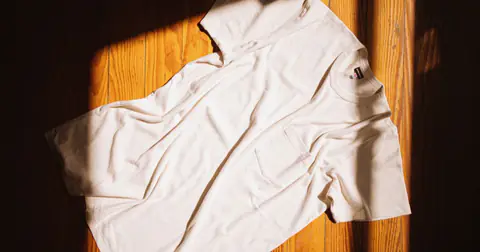
The first shirt he sold went for $14.99 and left him $2.58. Nine years later, Ryan Hogue writes in a piece for CNBC Make It that he brings in $49,000 a month. Stories like this get told as money that arrives while you sleep, and the phrase passive income sits in the headline of all four articles used here. Yet a May 2024 report by CNBC reporter Megan Sauer says that once a business is automated Hogue gets bored and starts hunting for the next challenge, often working 60 hours a week. The “one hour a day” line comes from his own piece, published 18 months earlier.
Nine years of numbers
| When | Figure | Source |
|---|---|---|
| October 2016 | Starts dropshipping, quickly moves to print-on-demand | Reported |
| First sale | Shirt at $14.99, profit of $2.58 | First-person |
| Early days | Roughly $4 in profit per day | Reported |
| 2020 | Quits two jobs paying $117,300 a year combined | Reported |
| November 2022 | $14,600 a month on average, about 50% from Amazon Merch | First-person |
| 2023 | Over $1,600 a day, roughly $11,400 a week | Reported, documents reviewed by CNBC |
| April 2024 | 10 income streams totaling $49,000 a month, YouTube alone at $4,900 | First-person |
| February 2025 | Four income streams totaling $49,000 a month | First-person |
The arithmetic that turns $19.99 into $5.23
Amazon Merch on Demand works simply. Upload a design as a PNG, a product listing appears, and every order is manufactured, shipped and supported by Amazon while the seller collects a royalty. The rate runs from 13% to 37% depending on product and price. Hogue’s best seller is a standard T-shirt at $19.99 with a 26% royalty, which is $5.23 per unit. Amazon keeps the rest. On larger items such as sweatshirts he takes $10, and he writes that he prices everything to leave at least $5 per sale.
That gives a sense of how much each unit carries. About half of the $14,600 in November 2022 came from Amazon Merch, so roughly $7,300, and dividing that by $5.23 puts him near 1,400 units a month. The product mix moves the average, so treat it as an order of magnitude rather than a count. Producing $7,300 a month at $5.23 a unit means owning a shelf of listings that sells in the thousands, month after month. An Etsy listing costs $0.20 and an eBay listing costs $0. His design subscriptions run $59 a year plus $4 a month plus $22 a month. That is close to the whole fixed cost, and he never holds inventory.
“One hour a day” and “60 hours a week”
The two figures do not contradict each other. They describe different periods of the same business run by the same person.
The beginning reads like a joke. His first design was a badly drawn Loch Ness monster, and he gave up on Adobe Photoshop because he could not navigate it without training. Early profit ran about $4 a day. His friends laughed at him, he says: “Dude, cool. $8?” What Hogue did with that was turn it into a game where each day had to beat the day before by a dollar. Four dollars to eight, eight to sixteen. The reporting credits that increment with keeping him from quitting before the business turned profitable.
The same habit runs today. When automation is finished he gets bored and looks for the next thing, sometimes at 60 hours a week. He tracks net worth in an Excel sheet and regularly calculates how many Big Macs he earns per day, which at $4.67 in his home state of Virginia works out to roughly 343 a day. The hardest part of this case to copy is not the automation. It is that a person who finds himself with free time right after automating keeps filling that time with the next income stream. Put bluntly, the word passive explains almost nothing about how this business is actually run.
What grew was the number of streams, not the shirts
The $14,600 of November 2022 was almost entirely print-on-demand. Amazon Merch made up half, and the rest came through Printful onto eBay and Etsy. Make designs, list products, learn tools that automate the work. That was the job.
By his April 2024 piece there are 10 streams: Amazon Merch, Etsy through Printful since 2018, cross-listing to Walmart, eBay and Redbubble, the Amazon Influencer Program he joined in September 2023, where video reviews of products he owns pay a 1% to 3% commission on purchases, and a YouTube channel producing $4,900 a month. By February 2025 he describes four streams: print-on-demand, YouTube, online courses and one-on-one coaching.
The one that sits apart appears in the reporting. For $10,000 to $15,000 he spends six months building a print-on-demand business for a client, largely through AI and automation, and 11 clients had paid for it at the time of the interview. Compare $5.23 of profit on a shirt with a single order above $10,000. At $14,600 he was selling shirts, and at $49,000 he was selling the method for selling shirts. Moving to the teaching side is what changed the order of magnitude, and on that basis this is no longer a print-on-demand business.
Ten months without movement, and what stays unpublished
The figure of $49,000 a month appears unchanged in the April 2024 piece and again in February 2025. On the published numbers at least, monthly revenue did not move across those 10 months. The growth happened between 2022 and 2024, and what follows looks like a plateau.
Exactly one figure has been checked by an outside party. The May 2024 report states that CNBC Make It reviewed documents covering 2023, showing over $1,600 a day and roughly $11,400 a week. Spreading $11,400 across 52 weeks puts the monthly figure near $49,400, which lines up closely with the $49,000 he states. Every other monthly number is self-reported.
Plenty stays unpublished: the split across the 10 streams, ad spend, the price and enrollment of the courses and coaching, the number of listings in the stores, return rates. Even the starting year wobbles between sources, with the 2022 piece and the May 2024 report saying 2016 while the April 2024 piece says 2017. This is speculation on our part, but the gap probably sits between starting dropshipping in October 2016 and selling the first shirt on Amazon Merch some time after. Either way, this business began nine years ago, and the order of magnitude changed only in the last few years.
$49,000 a month, standing on Amazon, Etsy and YouTube
Hogue was a web developer and an adjunct professor, and nine years ago he was in a position to walk away from $117,300 a year. The “one hour” comes after the design sources and the tooling were settled enough for him to name each one in print. Most of the income also sits on surfaces owned by Amazon, Etsy and YouTube, where royalty rates and review commissions are set by the other side. When a new surface opens, as the Influencer Program did in September 2023, he can ride it, and no equivalent exit exists for the day one closes.
Related cases
Sorted by monthly revenue, the same print-on-demand and Etsy shape runs like this. Stoic Muse, selling 100 to 150 Stoic philosophy shirts a month with ads running at a loss and 200 reviews doing the work, sits at about ¥450,000 a month. Pretty Arrow, two sisters who sold 29,000 budgeting spreadsheets, sits at about ¥1.56 million. This case sits at about ¥7.35 million. The higher the order of magnitude, the less of what is being sold is a physical object.
Further along that line is Justin Welsh, who has accumulated $12.5M with one person and outsourced VAs. Holding no physical product and running above 90% margins on courses and publishing alone, he occupies the extension of the direction Hogue took after 2024.
If this one impressed you
Similar cases
She put all ¥50,000 of her sales balance into ads. How a handmade artist's monthly sales went ¥70K → ¥590K → a ¥2M peak
E-commerce
Rachel Jimenez: Etsy Printables Went $160K in 2021 to $77K in 2023 — The Shelf Life of "Build It Once"
E-commerce
Peak Monthly Sales of ¥1 Million on minne. A Former Designer Turned Handmade Artist Explains the Craft of "Photos That Sell"
E-commerce
A D2C brand at ¥12M/month in sales, ¥2M in profit — the decisive move was a flat 15% price hike across every product
E-commerceMost read
- 1
¥4.61 Million a Year, Five Years After Starting to Learn Programming. The Full Three-Year P&L and Playbook of an Indie Education App
38 recent visits - 2
Payout: A Class-Action App Vibe-Coded in 14 Days Reached $1,003,227 ARR in 9 Months. It Cost About $10 to Build, and a Partner With 10 Million Followers Grew It
28 recent visits - 3
From 30 yen in revenue to 8 years later: how running 3 apps in parallel got an indie developer to 200,000 yen a month
24 recent visits - 4
Marketing Examples: 130,000 Subscribers in Three and a Half Years — a “Distribution” Playbook and a $2,300/Month Sponsor Slot
24 recent visits - 5
Easy Folders: One Chrome Extension, $3,700 MRR and $42,000 Lifetime Revenue in 6 Months — a “Fill the Gap” Structure
23 recent visits
Latest articles
- 2026-11-06
OneUp: $1M ARR in Buffer and Hootsuite Territory, After Years Stuck at "Basically $0" as a Solo Project
- 2026-11-06
My AskAI: $5,000 Pre-Sold Before Building, $40K MRR With Two People, After a VC-Backed Startup Died in Covid
- 2026-11-05
MeetEdgar: Bootstrapped to $4M ARR on a Single Pricing Plan, Then Sold for 7 Figures in Cash by Cold-Pitching the Buyers Herself
- 2026-11-05
Bank Statement Converter: $16,000 MRR From a One-Person SaaS That Just Turns Bank PDFs Into Spreadsheets
- 2026-11-04
nicott: A Failing Eyelash Salon Bought for ¥6 Million Now Runs 21 Stores on Roughly ¥800 Million a Year
Sources
- Founder CNBC Make It にRyan Hogue氏本人が寄稿した一人称記事(2022年11月9日、NBC Los Angeles配信)。月平均$14,600、約50%がAmazon Merch on Demand、$19.99のTシャツでロイヤリティ26%=$5.23、2016年開始、2020年に退職、「1日1時間」、使用ツールの月額
- Founder CNBC Make It への本人寄稿(2024年4月24日)。10本の収入源で月$49,000、YouTube単体で月$4,900、Etsyは2018年から、Amazonインフルエンサープログラムは2023年9月から(報酬1〜3%)、Walmart・eBay・Redbubbleへの横展開
- Reported CNBC Make It の記者Megan Sauer氏による取材記事(2024年5月2日)。2023年の実績は1日$1,600超・週約$11,400(CNBCが資料を確認)、2016年10月開始、当時の年収$117,300、2020年に本業2つを退職、週60時間働くことも多い、他人のPOD事業立ち上げ代行が$10,000〜$15,000で11人
- Founder CNBC Make It への本人寄稿(2025年2月7日、NBC New York配信)。月$49,000、初売上は$14.99のネッシー柄シャツで利益$2.58、収入源はPOD・YouTube・講座・1対1コーチングの4本、使用しているAI/自動化ツール