
EXO Drones: sold for $2.9M in cash, 28 days after picking the buyer
Charlie Cannon started EXO Drones at 19 in 2020, grew the budget camera drone brand to $12M a year and $1M a month, then watched Facebook ads break and profit vanish. He picked his own buyer, pitched OpenStore, and closed an all-cash $2.9M sale 28 days later.
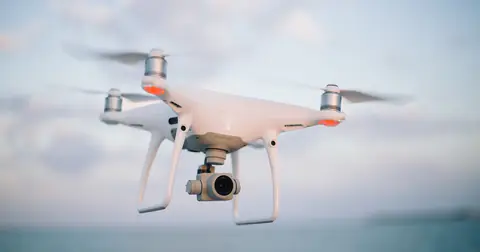
A brand doing $12M a year sold for less than a quarter of its revenue? Doesn't that mean the buyer lowballed it?
Here’s the short answer: the one in a hurry was the seller, not the buyer.
- The dates from a 19-year-old's budget drone D2C launch to its sale
- Why Facebook ads were the only channel that actually made money
- How the seller picked his own buyer and got to an all-cash close in 28 days
- Our reading of what OpenStore bought instead of profit
- The limits of numbers drawn from one outlet's reporting, and what happened to the 22-person team
A sale price of $2.9M, all cash.
Those were the terms when EXO Drones went to OpenStore in 2022.
Annual revenue that same year was $12M, which puts the price at 0.24 times revenue.
Reading that gap as a lowball gets the order of events wrong.
According to reporting by They Got Acquired, founder Charlie Cannon didn’t start thinking about selling at the peak. He started after Facebook ads broke in 2021 and the profit went with them.
With the business drifting toward what buyers would call distressed, he chose his own buyer and closed an all-cash agreement 28 days after first making contact.
The party in a hurry was the seller.
From founding at 19 to a sale at 22
Cannon founded EXO Drones in 2020 at the age of 19.
The starting point was a year off college spent shooting a movie, during which he damaged four drones.
Support calls went nowhere. He concluded that the consumer drone market was held by a couple of brands charging high prices with thin service behind them.
The listing for his Solopreneur Hour appearance notes that he was a Utah freeskier already comfortable around drones. He launched his own brand during the pandemic using white-label units from Alibaba.
| Period | Event or figure |
|---|---|
| 2020 | Founded at 19. Drones sold online starting at $200, bootstrapped with debt |
| Early years | Reached roughly $400,000 in revenue before hiring a single full-time support person |
| 2021 | Facebook ads collapse. Expenses quadruple, four months of breaking even, momentum fades |
| Mid-2022 | 200,000 monthly visits, 170,000 email subscribers, $1M monthly revenue, $100,000 monthly profit, 22 employees |
| June 27, 2022 | Cannon pitches OpenStore |
| July 6, 2022 | OpenStore comes back with an offer |
| July 25, 2022 | Final agreement. $2.9M, all cash, 28 days after the first message |
| After the sale | About two months of transition, then OpenStore fires the entire team |
Lifetime revenue reached $15M.
Against $12M a year and $1M a month, monthly profit was $100,000. Most of the money flowed back into inventory and ads.
The monthly profit in this article's data fields is that mid-2022 figure, and the business wasn't earning it at the time of the sale. The multiple is calculated mechanically from the same number, so it can't be read as the valuation the deal actually used.
There was only one profitable channel
Calling this business ad-dependent understates the problem.
They Got Acquired describes Facebook ads as the brand’s only source of profitability.
The issue wasn’t a single acquisition channel but a single channel that made money.
When it broke in 2021, expenses quadrupled. The company held breakeven for four months, and then the momentum was gone.
Cannon’s words from that stretch survive: it was getting to be too much work, there was too much debt, no one was having fun anymore, it was very much a grind.
That was the inside of a 22-person company run by a 22-year-old.
As a description of what sat behind $12M in revenue, that sentence is closer to accurate than the revenue line.
Headcount followed sales, and inventory closed the exits
The early efficiency was real.
On the podcast he mentions reaching roughly $400,000 in revenue before hiring a single full-time support person.
So headcount followed sales rather than leading them.
Debt still shows up by 2021 because physical products carry inventory, and inventory is fragile when ad efficiency drops.
Once ad spend quadruples, the cash owed on the next shipment keeps coming due.
With 22 employees and stock on hand, profit near zero leaves very few moves.
The marketing principle he described now reads defensively.
Cheap traffic alone won’t do it, selling nice products alone won’t do it, running cool ads or copying someone else’s working ads won’t do it.
The answer, he said, is all of the above.
- He reached roughly $400,000 in revenue before hiring any full-time support person
- He built a dedicated support hub on the site with return policies, FAQs and tutorial videos, aimed squarely at the weak service he'd run into himself
- Facebook ads were the only profitable channel, and when they broke in 2021 expenses quadrupled
- Inventory payments kept coming due, which led to debt and a grind
That support hub was part of the same “all.”
The seller chose the buyer and walked it over
What drove the decision was terms rather than price.
Cannon didn’t want a long sale process, and he didn’t want months of post-sale obligation.
Because the business was no longer profitable, it was drifting toward the distressed label.
So instead of listing with a broker or a marketplace, he picked the buyers he wanted and pitched them directly.
He chose OpenStore, a holding company running more than 40 consumer e-commerce brands and promising simplicity on its own site.
- June 27: first contact
Cannon wrote to OpenStore himself.
- July 6: offer
An offer came back from the buyer.
- July 25: signed
After terms and due diligence, the agreement was signed. Twenty-eight days.
- About two months: transition
Transition took about two months, and the payment was all cash.
What OpenStore bought wasn’t profit
The next part is our inference. What OpenStore bought was a list of 170,000 subscribers, 200,000 monthly visits, and a brand with $15M of proven throughput, rather than a stream of profit.
To a buyer operating dozens of brands, ad management is an in-house function.
Broken ads look less like a defect than a replaceable part.
That’s how a price settles at 0.24 times revenue while cash and a 28-day close stay on the table.
What the seller wanted and what the buyer wanted matched somewhere other than the number.
The heaviest cost landed last.
OpenStore fired the 22-person team Cannon had built. He called it the hardest part of the process.
Asked what he’d tell founders considering a sale, his answer was two words: do it.
Three deals in the same shape, orders apart
Lining up US direct-to-consumer businesses that sold for cash shows where this one sits.
There’s Hipstik at $200,000, a hosiery brand that sold on the strength of a 1% return rate.
There’s Necklow at $380,000, a neck pillow brand that went viral on one ad and sold about two years later.
And then there’s EXO Drones at $2.9M.
Necklow also sold to OpenStore, and that seller likewise prioritized a fast close.
The same buyer handled two deals of very different size at the same speed.
$2.9M on one outlet’s reporting, and a “do it” from someone with a second run in hand
Almost every figure traces to They Got Acquired's reporting, and the buyer's own write-up is currently unreachable. The $1M month and $100,000 profit are mid-2022 values, and how far they fell after the 2021 ad collapse was never published.
A 22-person payroll sits at the upper edge of small. This can’t be read the way a one-person or three-person case is read.
And after the sale, Cannon launched a new venture building a skateboard with a brake. He went on television and took $250,000 from an investor for 12% of it.
The “do it” comes from someone who still had the resources for another run.
If this one impressed you
Similar cases

A Minimalist Apparel D2C Sold for $1.33M: 41% Margins and a 0.0% Refund Rate Bought No Premium
E-commerce
Weeplow: A Gravity-Fed Water Filter D2C Brand Sold on €3.5M Revenue and a 41% Margin — Flippa Put $3.7M in the Headline
E-commerce
The Cruiser Store: AUD $2,205,627 in Two and a Half Years — 9x ROAS and a 20-Hour Week
E-commerce
TinyPilot: A $598K Exit Disclosed Down to the $610,147.83 Wire Transfer — Four Years of a $1M/Year Raspberry Pi KVM Business
E-commerceMost read
- 1
¥4.61 Million a Year, Five Years After Starting to Learn Programming. The Full Three-Year P&L and Playbook of an Indie Education App
45 recent visits - 2
From 30 yen in revenue to 8 years later: how running 3 apps in parallel got an indie developer to 200,000 yen a month
37 recent visits - 3
From ¥100 to ¥100,000 a Month in Three Years: The Quiet Compounding of an Ads-Only Tool App
30 recent visits - 4
9,345 AI-generated images uploaded to Adobe Stock: the full record of reaching 878 downloads and $589/month (~¥95,000) over 9 months
24 recent visits - 5
Pretty Arrow: 29,000 Budgeting Spreadsheets Sold — How Two Sisters’ Etsy Shop Reached $10,417/Month
22 recent visits
Latest articles
- 2026-11-21
BulkMockup: A Script That Made 1,800 Mockups in 30 Minutes, Sold for $300, Now $12K MRR
- 2026-11-21
Vintage Teaware Brand: 13 Years, Zero Employees, Sold for $338,470 at 1.32x SDE
- 2026-11-20
Eye Love: The Goal Was $1,000 a Month. It Sold for 7 Figures at $400,000 a Month
- 2026-11-20
Visualizee.ai: Two Years Stuck at $150/Month, Then Deleting the Node UI Took It to $8.6K MRR
- 2026-11-20
3AK Sprinting: $144,149 All-Time and $13,347 MRR in Nine Months, on a Niche That Is Only Narrow in Name
Sources
- Reported They Got Acquired「How college student and founder Charlie Cannon sold EXO Drones」(Carson Brunson、2025年5月7日)。創業年と創業時の年齢、$2.9M全額現金という取引条件、2022年の年商$12M・月商$1M・月間利益$100,000・累計売上$15M・月間20万訪問・購読者17万人・従業員22人、6月27日の打診から7月25日の契約までの日付、2021年にFacebook広告が崩れた経緯と本人の発言
- Founder The Solopreneur Hour 第872回(2023年5月8日)。Charlie Cannon氏本人が出演した回の告知文。ユタ州のフリースキーヤーとしてドローンに親しみ、コロナ禍にAlibabaのホワイトレーベルでEXO Dronesを始めた経緯