
InteriorAI: An AI That Redesigns a Room From a Photo, at $40K a Month — The First Mass-Produced "AI × Existing Industry" Product
InteriorAI, which generates interior-design concepts from a photo of a room, earns $40K a month (about ¥6M). Like PhotoAI, it's one of the products Pieter Levels mass-produced early in the 2022 AI-image-generation boom — a case of "AI substituting for an existing high-cost service."
Note: Yen conversions in this article use a rough $1 = ¥150 rate.
InteriorAI isn’t the star of Pieter Levels’ portfolio. Against PhotoAI’s $132K a month, it’s the runner-up at $40K a month (about ¥6M). But to understand the “mass-production strategy” behind solo development, this runner-up is actually the faster route to understanding than the star product. What design makes ¥6M a month possible without a dedicated operator. That’s the question this article addresses.
The Numbers at a Glance
| Item | Figure |
|---|---|
| Monthly revenue | $40,000 (about ¥6M), per figures published in 2025 |
| Started | 2022 (early in the AI-image-generation boom) |
| Team | Pieter Levels (zero employees, zero outside funding) |
| Portfolio position | Second, behind PhotoAI ($132K) |
Its Origin: A Branch of an Experiment, Not Market Research
In October 2022, Levels started experimenting with image generation using Stable Diffusion. Along the way, he noticed the model was strong at visualizing architecture and interior spaces, and leaned into that to build InteriorAI. The portrait-photo branch of the experiment later became PhotoAI (launched February 2023, $100K/month by September 2024, $132K by May 2025). Far from the product of careful market research, InteriorAI is a derivative product that branched off the same technical experiment based on “what it turned out to be good at.”
Levels’ operating principle is launching within two weeks of the idea and charging money from the moment it goes live. His validation bar is payment, period, as he puts it (paraphrasing), “only once someone pulls out a credit card and actually pays does an idea count as validated.” Praise from free users doesn’t count as validation.
What the Business Does, and the Three Conditions for the Idea
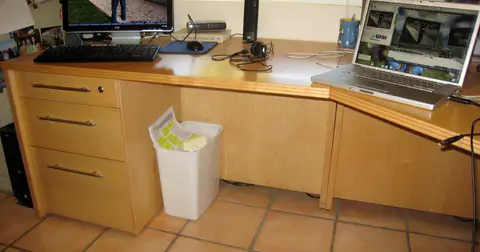
InteriorAI lets a user upload a photo of a room and generates interior-design concepts sorted by style, “Scandinavian,” “minimalist,” and so on. It replaces a space that used to mean either paying tens of thousands of yen for an interior coordinator or wrestling with your own taste, with an AI that costs tens of dollars. The price gap against professional coordination fees is the value proposition itself, the same structure as PhotoAI’s “one-hundredth the cost of a photo studio”.
The idea didn’t start as a tech demo. He chose “interior coordination” (a task satisfying three conditions: (1) clear existing demand, (2) expensive when outsourced to a human, and (3) the output is complete as an image) and applied Stable Diffusion to it. Tasks whose output isn’t complete as an image (legal advice, for example) carry heavy accuracy liability and aren’t well-suited to a solo operator. These three conditions can be used directly as a screening criterion for what an individual should build with image-generation AI.
Another design choice: the same feature hits both B2C (redecorating your own home) and B2B (real-estate agents virtually staging listing photos). The latter replaces an existing paid service, “furnish an empty room in a photo”, that used to cost tens of thousands of yen per job, and business usage is far less likely to churn. The same AI function is structured to be tried in B2C and monetized more heavily in B2B.
The $40K Inside the Portfolio
| Product | Monthly revenue (published) |
|---|---|
| PhotoAI | $132,000 (May 2025) |
| RemoteOK | $41,000 |
| InteriorAI | $40,000 |
| Other active products | $15,000–22,000 each |
Behind this table lies another published number. On the Lex Fridman Podcast, Levels revealed that “of over 70 projects, only four have monetized and grown. Over 95% failed, my hit rate is about 5%.” The table above is a list of survivors, sitting on top of a pile of more than 60 shuttered projects.
What matters is that InteriorAI, the runner-up, is maintained with zero dedicated staff. The publicly disclosed stack for flagship product PhotoAI is PHP + jQuery + SQLite, running on Replicate’s GPU infrastructure, with content moderation automated through Google Vision + GPT-4, a philosophy of minimizing operational overhead through proven technology and external APIs, with the technical foundation, payments, and infrastructure shared across products. Levels himself has stated plainly that he prefers automation to hiring (paraphrasing): “I don’t want to run a company managing lots of people (that just means more work managing people.” In fact, on the flagship product, parameter A/B tests run automatically against roughly a million generated photos a month, code deploys take one to two seconds, and commits over the trailing 12 months hit 37,000) making “make a small fix and ship it instantly” physically faster is what makes juggling multiple products possible at all. On the acquisition side, roughly 50% of PhotoAI’s traffic is organic search, gradually diluting reliance on his own personal output with a search asset instead. Only once you design for juggling multiple products does a portfolio of products actually become a portfolio. A structure where each product can only be run at full effort, one at a time, doesn’t have the time or capital to sustain a 5%-hit-rate mass-production strategy.
What to Discount When Reading This
This strategy’s precondition is being able to shut down 95% failures cheaply, InteriorAI on its own doesn’t represent a guaranteed-hit idea-generation method. Even a product satisfying all three conditions is, by his own hit rate, a world where roughly one out of every twenty survives. On the acquisition side, everything is baked with Levels’ own personal reach. Products cross-promote each other on social media, and for flagship PhotoAI, growth after a podcast appearance and a $20K/month bump from a single TikTok video are both publicly documented exposure effects. An unknown developer shipping the same feature wouldn’t draw the same acquisition curve. As for defensibility: because the underlying technology is shared infrastructure, there’s no real barrier to entry in the feature itself. What’s protecting that $40K isn’t the feature. It’s the search assets and name recognition built up beforehand.
Conditions for Replication: What Transfers and What Doesn’t
The pieces a Japanese solo developer can borrow: the three conditions for an idea (existing demand, expensive when done by a person, output complete as an image), validation through payment, launching within two weeks, and designing shared infrastructure so multiple products can be juggled. In particular, the idea-generation method of starting from “a list of existing, expensive, human-delivered services” can be applied directly to Japanese industries, virtual staging for property photos, before/after renovation visuals, product photography, and so on.
What doesn’t transfer is a structure that can absorb over 60 failures and a social-media audience. A 5%-hit-rate mass-production strategy only pencils out with a cost structure where a single failure doesn’t threaten your livelihood, and an audience you can reach instantly with each new release. If your livelihood is riding on your first product, you can’t place the same bet, and in that situation, what you should take away isn’t mass production, but the discipline of “validate only through payment.”
Related Cases
Sources
Similar cases

Damon Chen: Bought a GitHub Repo for $20K, Grew It to $1.5M ARR — the “Buy, Don’t Build” Indie Playbook
SaaS
PhotoAI at $132K a Month, Zero Employees, 37,000 Commits a Year: Dissecting Pieter Levels' "Solo-Run" Playbook
SaaS
NoteForms: A Notion Form Connector Built in 3–4 Days Grows Into $37K/Month — 18 Months of Solo Support
SaaS
TypingMind: Quit at $600 MRR, Then $45K/Month — Every Decision in Tony Dinh’s Build-Sell-Release Loop
SaaSMost read
- 1
Peak Monthly Sales of ¥1 Million on minne. A Former Designer Turned Handmade Artist Explains the Craft of "Photos That Sell"
34 recent visits - 2
Six AI videos, ¥153,030 in the first month — one video with 4.22 million views drove two-thirds of TikTok monetization revenue
21 recent visits - 3
From 30 yen in revenue to 8 years later: how running 3 apps in parallel got an indie developer to 200,000 yen a month
19 recent visits - 4
Side-Business Blog "Tsuzuki Blog": From ¥42,000 to ¥1 Million a Month in One Year. Breaking Down the Published Monthly Data
15 recent visits - 5
Shichinatsu: A Salaried Designer's BOOTH Asset Shop Sells ¥1.08M in Six Months — Every Monthly Figure From ¥100K to ¥250K, Disclosed
13 recent visits
Latest articles
- 2026-09-26
Genji Reincarnation: 32 copies in month one, and a payout of zero
- 2026-09-25
Pirsch Analytics: One-Employee GA Alternative Grows MRR From $11,000 to $14,300, Publishing Its Numbers Every Year
- 2026-09-25
Kokou no Tabibito: A Multi-Topic Blog Hitting 500K Monthly PV and ¥300,000/Month in About a Year
- 2026-09-24
Fomo: a $10,000 MRR widget bought on seller financing, a best month of $154,000, and a seven-figure sale to Relay Commerce six years later
- 2026-09-23
Okashi Kaigyo Lab: a 13-tsubo cake shop booked ¥27,073,172 in year three and published every monthly sales figure to the yen