
App and web service case studies — 2/3
App and web service cases
25–48 of 56
A tech-book ranking site built from 300,000 Qiita articles hit 100,000 yen in revenue three weeks after launch
A solo developer aggregated roughly 300,000 Qiita articles via API to build a ranking of 4,000 technical books, and the site earned 100,000 yen within three weeks of launch. The turning point was setting aside his own passion project after a prior failure and rebuilding the concept from scratch by studying and copying successful examples.

A crypto side-hustle app went from ¥300,000/month to a few thousand yen. 20,000 installs, ¥18,000-per-referral, and how it vanished
A manufacturing employee's hobby crypto demo-trading app "BitVirtual" hit 20,000 installs and ¥300,000/month during the 2017 boom, with exchange affiliate payouts up to ¥18,000/referral — then collapsed to a few thousand yen a month a year later.

Five years on one app, then 30 apps in ten months. The portfolio pivot that reached $22,000/month
Max Artemov, an iOS engineer with 8 years of experience, spent over five years failing to grow his first app, a calorie counter. In February 2025 he switched from "polish one app" to "ship many," and in 10 months reached 30+ apps generating a combined $22,000 MRR.
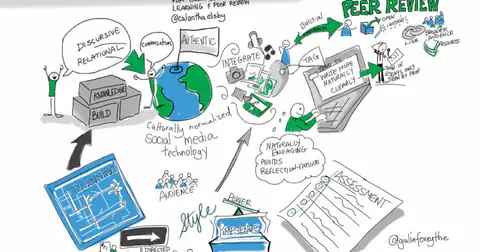
Deep Research: $400 in Startup Capital, Price per Project From $700 to $6,000 — the Year It Changed What It Was Actually Selling
Abhishek Kumar started customer-research agency "Deep Research" in January 2023 with $400 in capital. It now averages $10,000/month, peaking at $15,000 in October 2023. The turning point was reframing the same research from "interview service, $700" to "business decision material, $6,000."

Warary!: A Comedy Live Show Search Service Built Solo for 2.5 Years, Then Sold to a Company
A case where the comedy live show search service "Warary!" was run solo for two and a half years and sold to a company in 2020. The sale price is undisclosed, but the developer has published his rule of thumb — "monthly profit x 24 months + goodwill" — along with his criteria for deciding whether to sell or keep going.

Talknotes: 17 Built, 1 Hit — the Breakdown Behind an AI Voice-Notes App at $9,000/Month and 900 Paying Users
Talknotes, which turns voice memos into text using AI, was built in 3-4 days and launched for under $10 in upfront cost. It now has 5,000 users, over 900 of them paying, for about $9,000/month. The turning point was abandoning SEO and building a loop that recycled annual prepayments straight into ad spend.

Yoga app Floga hits $10K/month. Pre-launched unfinished, it raised $120K in 24 hours
A card-deck founder pre-launched an unfinished yoga app, raised $120K in 24 hours outside app stores, and reached $10K/month a year later with 4,000 active users.

RPG Game App Listed at ¥1,750,000 (About 7 Months of Monthly Revenue) and Sold
From Rakko M&A's public list of closed deals. An RPG game app was listed at an asking price of ¥1,750,000, about 7 months of monthly revenue, and found a buyer. We record the going rates in Japan's individual-scale M&A market based on the listed data.

Really Good Emails: Why Did a $250K-a-Year Email Gallery Sell for $6.6M? The Deal Structure Behind “26x Revenue”
Really Good Emails, a gallery of marketing email examples, had $250K in annual revenue but sold to Growens in 2024 for $6.6M — 26x revenue on paper. The catch: the breakdown was a $600K upfront payment plus up to $6M in earnout. A case where a "strategic value" — 220,000 subscribers and about 100 million annual pageviews — got priced in.

RemoteOK: $140K/month to $10K to $41K. What a remote job board's wild swings teach about "market dependency"
The remote-work job board RemoteOK hit $140K/month before the pandemic, then dropped 93% to $10K/month as market conditions soured, before recovering to $41K (about ¥6.15M). Pieter Levels' record of publicly disclosed swings shows the volatility inherent to a job board — a business sitting downstream of market conditions.

Photopea: “Photoshop That Runs in a Browser,” Built Solo for 13 Years — a Bizarre P&L of $3M Revenue on $12,600 in Expenses
Ivan Kutskir started building the browser-based image editor Photopea while a student in 2012. It ran unmonetized for five years before he added ads in 2017. By 2021 annual revenue hit about $1M, and by 2024 it reached $3M (90% from ads) — with expenses of about $12,600 a year and development still done by one person.

14 years of solo development to reach ¥1M/month — the revenue curve from 290,000 page views for ¥100,000 to 4.22 million page views for ¥1M
SiRO, a former systems engineer, reached ¥1M/month after 14 years of solo development. At ¥100,000/month, traffic was 290,000 page views; at ¥1M/month, it was 4.22 million. The turning point was abandoning user-submission-based services in favor of tool-type products — visible in the shifting revenue-per-pageview curve.

Gumroad: The "Failed Billion-Dollar Company" Is a Thriving $20M-a-Year Business
Creator sales platform Gumroad raised VC money, then hit a growth wall and laid off 75% of its staff. Its founder publicly wrote about the "failure to build a billion-dollar company." Yet Gumroad has since gone on to survive as a highly profitable, roughly $20M-a-year business — with zero full-time employees, running entirely on contractors working 20–35 hours a week.
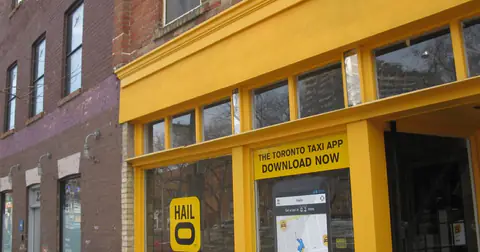
Stella: MVP in 2 Days, $350K/Month in 2 Months — an AI App Built by a Solo Creator With 4 Million Followers
AI visualization app Stella hit $300K/month (about ¥45M) two months after launch and $350–360K by interview time, from a 2-day MVP. 12,000 paying customers and 200,000+ downloads. Building a distribution network of 1.2M on Instagram and 2.8M on TikTok before the product mattered.

Earlyname: Six Rounds of Counteroffers That Turned a $4,500 Bid Into $10,500 — the Complete Record of Selling Small
Ben Stokes built Earlyname in three weeks, ran it for six months at $350/month in subscription revenue, and sold it on MicroAcquire for $10,500 — 30x monthly revenue. He published the entire negotiation, including all six rounds of emails that moved the buyer's opening bid of $4,500 up to $10,500.

¥50,000 a Month, Five Years After the First Release. An Indie App's "Quietly Effective Tactics" — and the Ones That Didn't Work
A case of an indie-developed app reaching ¥50,000 a month — five years after the first release, about two years after monetization began. Funnel improvements and the Apple Small Business Program worked; defaulting to the annual plan and A/B testing did not. The record discloses which tactics succeeded and which failed.

Allobee: When Funding Dried Up in 2022, a $500K-Revenue Business Found Its Buyer Through One Mass Email to Its Network
Allobee, a curated marketplace for women freelancers, was acqui-hired by The Riveter at the end of 2022 with over $500K in annual revenue, $500K raised, and a 30,000-person email list. The turning point was summer 2022, when fundraising stalled, and a mass email to the founder's personal network.

Peing: Built in 6 Hours, 200M Monthly PV in One Month — Sold at the Breaking Point of Virality
Peing, an anonymous Q&A service built in 6 hours by 26-year-old indie developer Seseri, hit 400,000 daily PV on day 5 and a 200M monthly PV pace within a month. Overwhelmed by server load and the limits of solo operation, it was sold to Jiraffe just one month after launch (price undisclosed).

¥4.61 Million a Year, Five Years After Starting to Learn Programming. The Full Three-Year P&L and Playbook of an Indie Education App
An education web/smartphone app that began as a homemade tool to ease cram-school work grew from ¥120,000 (FY2023) to ¥1.47 million (FY2024) to ¥4.61 million in revenue (¥3.91 million profit) in FY2025. The developer discloses what drove each year's growth. Fully independent as of March 2025.
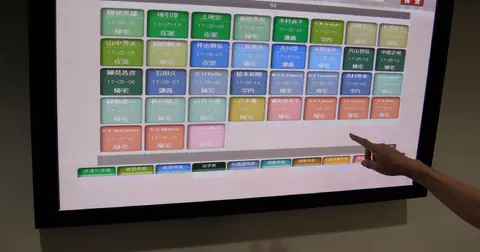
MENTA, Shingo Irie's 30th Indie Project: From ¥1.4M Monthly Revenue to a Share Transfer to Lancers — the Full Story
Online mentoring service MENTA was Shingo Irie's 30th indie project. From ¥90,000 in gross transactions on day one, through a pivot to programming-only, it grew to ¥9M in monthly gross transactions and ¥1.4M in revenue. Launched June 2018, it was transferred to Lancers via share transfer in October 2020.

Zenn: A Solo-Built Dev Community Transferred to Classmethod 4.5 Months After Launch
Nine days after launch, the solo-built Zenn published "Zenn needs help," fielded offers from more than 20 companies, and was transferred to Classmethod 4.5 months after going live. The decision-making process of a case where "growth was too fast for one person to handle" is fully public.

From 30 yen in revenue to 8 years later: how running 3 apps in parallel got an indie developer to 200,000 yen a month
Indie development the author started in 2017 earned nothing for five straight years, then 30 yen in year six, 1,000 yen in year seven, 40,000 yen in year eight, and 200,000 yen in year nine. The turning point came the year after shutting down a large-scale service he spent a full year building in 2022, when he set five rules and rebuilt.

A one-time-purchase 2,000-yen iOS app "MT" hit 5 figures in its launch month, 100,000+ yen cumulative in 3 months
A gadget blogger with an engineering day job built "MT," a one-time-purchase 2,000-yen terminal app. It hit 5 figures in revenue in its launch month, and over 100,000 yen cumulative after 3 months. The turning point was "the person writing the review became the person who built the thing being reviewed."

13 games, 700 yen total. Four years to reach the first 8,000-yen payout
A 38-year-old with no prior experience learned Unity and released 13 games over about four years — yet cumulative revenue sat around 700 yen. The turning point came in July 2024, when banner ads were added to his second RPG. 100–200 yen a day for two months finally cleared Google Play's 8,000-yen payout threshold.